

- Quick Comparison:Top Decentralized Lending Protocol📊
- The “No Collateral” Myth: Let’s Be Real
- Why Borrow Instead of Selling?
- Top DeFi Platforms for Instant No-KYC Loans (2026)
- Understanding “Flash Loans”: The True Instant Loan ⚡
- The “Collateral Swap”: How to Enter DeFi Loans 🔄
- Safety & Risk Guide: Borrowing Responsibly 🛡️
- Final Thoughts: Borrow Smart, Stay Private
- FAQ
No-KYC Crypto Loans | You need liquidity. You don’t need an interrogation.
Your Bitcoin or crypto portfolio is sitting strong, but life requires cash—or maybe you just want stablecoins to buy a market dip. Traditional lenders want your passport, a credit check, and three days to “review” your life choices. Selling your crypto? That means losing your market position and triggering capital gains taxes.
Welcome to the standard of the 2026 DeFi economy: No-KYC Crypto Loans.
By using decentralized protocols, your crypto acts as your credit score. You can lock your assets and borrow stablecoins instantly, anonymously, and safely—without handing over a single document to a centralized CEO.
Here is exactly how to navigate decentralized lending, avoid the “zero collateral” scams, and use your digital wealth without selling it.
Quick Comparison:Top Decentralized Lending Protocol📊
| DeFi Protocol | Accepted Collateral | Interest Rate Model | Best For… |
|---|---|---|---|
| THORChain | Native BTC, ETH | 0% Interest (Slip-based fee) | Bitcoin Maxis wanting Native BTC loans |
| Sovryn | RBTC (Rootstock BTC) | Variable | Bitcoin-Native DeFi ecosystem |
| Aave V3 | WBTC, ETH, Stablecoins | Variable (Demand-based) | Deep liquidity and high flexibility |
| Liquity | ETH Only | 0% Interest (One-time fee) | Pure Ethereum holders |
The “No Collateral” Myth: Let’s Be Real
If you are searching for an “instant crypto loan with no collateral,” you need to hear this: In the decentralized world, zero-collateral personal loans do not exist. Any platform offering you a no-KYC loan without asking for a deposit is running a scam.
Why? Because on the blockchain, identities are anonymous. If a protocol gives out money without collateral, the borrower could just disappear.
Instead of an ID or a credit score, DeFi relies on Overcollateralization. If you want to borrow $5,000 in stablecoins, you lock up $7,500 worth of Bitcoin or Ethereum. It sounds restrictive at first, but this exact mechanism is what allows you to borrow millions of dollars in 12 seconds with absolute privacy. Your locked crypto guarantees the loan, keeping the entire system math-based, not trust-based.
Why Borrow Instead of Selling?
- Keep Your Upside: If you sell 1 BTC at $80k to pay for an expense, and Bitcoin rallies to 100k next month, you missed out. If you borrow against it, you still own that 1 BTC.
- Tax Efficiency: Across most global jurisdictions, taking out a loan is not considered a taxable event. Selling your crypto is. Borrowing acts as a legal shield against capital gains.
- Absolute Privacy: You interact with a smart contract, not a bank. There is no database storing your identity, meaning your data cannot be leaked or hacked.
Top DeFi Platforms for Instant No-KYC Loans (2026)
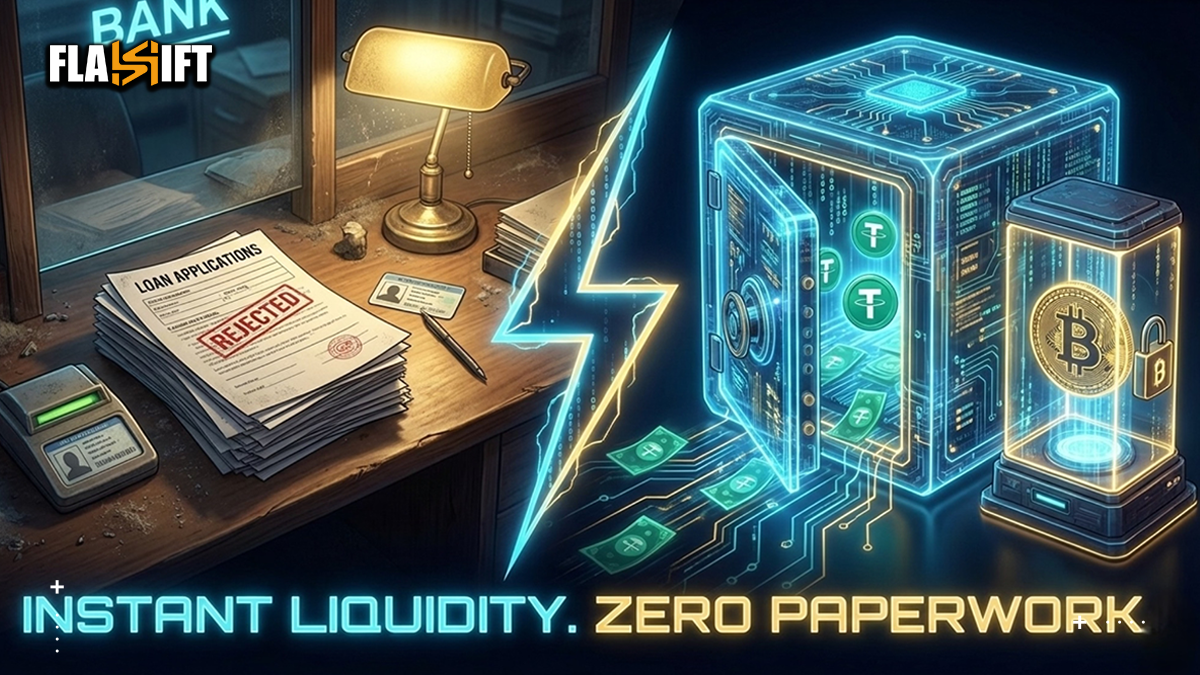
Forget centralized lenders that can freeze your account. If you want true privacy, you need a protocol. Here is a quick breakdown of the most secure platforms to borrow against your crypto right now:
1. THORChain (Native Bitcoin Lending)
If you hold native Bitcoin on the original chain and refuse to wrap it, THORChain is a game-changer.
- How it works: You deposit native BTC and borrow USD-pegged assets directly.
- Best Feature: No liquidations and no interest rates. The loan terms are fixed via the protocol’s slip-based fees when you enter and exit.
2. Sovryn (Bitcoin DeFi on RSK)
Built on Rootstock (RSK), a Bitcoin sidechain, Sovryn brings decentralized finance strictly to the Bitcoin ecosystem.
- How it works: You bridge BTC to RBTC (Rootstock Bitcoin) and borrow stablecoins.
- Best Feature: True Bitcoin alignment without relying on Ethereum smart contracts.
3. Aave V3 (The Global Liquidity Giant)
Aave is the largest lending protocol in the world, operating across Ethereum, Arbitrum, and Base.
- How it works: You deposit assets like WBTC (Wrapped Bitcoin) or ETH, and instantly borrow USDC or USDT.
- Best Feature: Massive liquidity and highly audited, battle-tested code.
4. Liquity (For the ETH Maxis)
Liquity offers the most attractive terms if your portfolio leans heavily toward Ethereum.
- How it works: You lock ETH and mint LUSD (their native stablecoin).
- Best Feature: 0% Interest Rate. You only pay a one-time borrowing fee (usually under 1%) when opening the loan.
Understanding “Flash Loans”: The True Instant Loan ⚡
You will often see the term “Instant Crypto Loan” in search results. In DeFi, this has a specific technical meaning: The Flash Loan.
A Flash Loan allows you to borrow millions of dollars in crypto with zero collateral and zero KYC.
- The Catch: You must borrow the funds and repay them within the exact same blockchain transaction block (roughly 12 seconds on Ethereum).
- The Use Case: Traders use this for Arbitrage.
- Relevance to You: Unless you are a coder or use an arbitrage bot, you likely won’t use Flash Loans. For standard borrowing, stick to the Collateralized Loans listed above.
The “Collateral Swap”: How to Enter DeFi Loans 🔄

Collateral is the backbone of every no-KYC loan. Since you’re not providing an ID or credit score, the loan’s security comes from the crypto you lock into the protocol. The more reliable and liquid the collateral, the better terms you’ll get.
Popular Choices (BTC, ETH, Stablecoins)
- Bitcoin (BTC): The most common collateral thanks to its liquidity and market dominance. Many platforms offer BTC-backed loans.
- Ethereum (ETH): Widely accepted, especially on DeFi platforms like Aave, Compound, and MakerDAO. ETH’s deep liquidity makes it a strong choice.
- Stablecoins (USDC, USDT, DAI): Sometimes used as collateral in protocols, especially when borrowing another asset. They help reduce volatility risk.
These are preferred because they’re highly liquid and trusted across DeFi lending markets.
Overcollateralization Explained Simply
No-KYC loans almost always require overcollateralization—meaning you must deposit more value than you borrow.
- Example: To borrow $5,000 in USDC, you may need to lock up $7,500 worth of ETH.
- Why? This ensures the protocol is safe if asset prices drop.
It may sound restrictive, but it’s what allows loans to happen instantly without paperwork or trust in a third party.
Managing Collateral Ratios to Avoid Liquidation
If your collateral drops too close to the value of your loan, the platform will liquidate it automatically. That’s how the system protects itself from bad debt.
- Keep a healthy buffer (e.g., 150–200% collateral ratio).
- Use tools like DeFi dashboards to track loan health in real time.
- Add collateral or repay part of the loan if prices fall sharply.
Smart borrowers treat crypto loans like margin positions—manage them carefully to avoid losing your stack.
📌 Pro tip: Sometimes you don’t have the right crypto on hand for collateral. For example, a platform may only accept ETH, but you’re holding altcoins. In that case, you can instantly swap your tokens into ETH or stablecoins without giving up custody or privacy.
How to Enter in short:
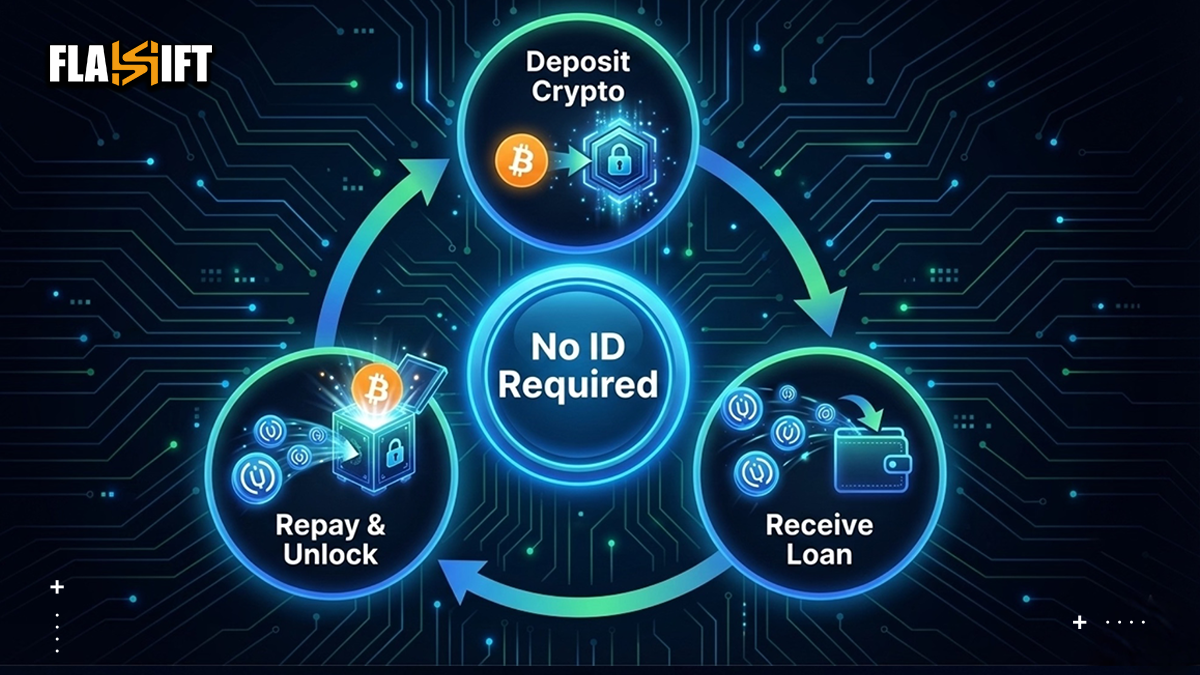
By initiating automated asset swaps directly from your hardware or non-custodial wallet, you can transform your disparate multi-chain holdings into the precise collateral asset required by the lending protocol. This process ensures that your transaction flow remains secure, private, and free from external friction.
Safety & Risk Guide: Borrowing Responsibly 🛡️
No-KYC loans give you financial superpower, but you are entirely responsible for your risk management.
- Manage Your Health Factor: Because crypto is volatile, your collateral’s value can drop. If you deposit $10,000 to borrow $5,000, and the market crashes hard, the protocol will automatically sell your crypto to cover the debt. Rule of thumb: Never max out your borrowing power. Keep a massive buffer (e.g., only borrow 20-30% of your collateral’s value).
- Smart Contract Risk: You are trusting code. Stick to “Blue Chip” protocols with billions of dollars securely locked inside them. Avoid brand-new, un-audited platforms that promise unrealistic terms.
Final Thoughts: Borrow Smart, Stay Private
The days of begging a bank for a loan using your own money as proof are over. In 2026, a No-KYC loan lets you unlock the purchasing power of your digital assets while maintaining your privacy, avoiding tax events, and keeping your market upside intact.
Keep your keys safe, manage your collateral health responsibly, and use non-custodial routers like Flashift to move seamlessly between assets without leaving a trace.
FAQ
-
What is a no-KYC crypto loan?
A no-KYC crypto loan lets you borrow against your digital assets without submitting identity documents like a driver’s license or Social Security number. Instead, the loan is backed by your collateral, which is held in a smart contract until repayment.
-
Why would I borrow against my crypto instead of selling it?
Borrowing helps you avoid capital gains taxes, stay invested in long-term assets like Bitcoin and Ethereum, and still access liquidity for real-world expenses. Selling might give you cash, but it could cost you both in taxes and missed market upside.
-
How much collateral do I need to borrow?
DeFi loans are typically overcollateralized—you deposit more than you borrow. For example, to borrow $5,000 in stablecoins, you may need to lock up $7,500 in ETH. This protects the system if crypto prices drop.
-
Can my collateral be liquidated?
Yes. If your collateral value falls below the platform’s safety threshold, it will be automatically sold to cover the loan. To avoid liquidation, keep a healthy buffer (e.g., 150–200% collateral ratio) and monitor your loan regularly.
-
Is it legal to use no-KYC loans in the U.S.?
Yes—borrowing through decentralized protocols is legal. However, you’re still responsible for tax reporting (liquidations may be taxable events) and complying with U.S. regulations. Always use reputable, audited platforms.
-
How can I prepare the right collateral if I don’t have ETH or BTC?
If the platform only accepts ETH, BTC, or stablecoins and you hold other tokens, you can instantly swap into the right asset using Flashift. This lets you get the exact collateral you need—without KYC and without losing custody of your funds.