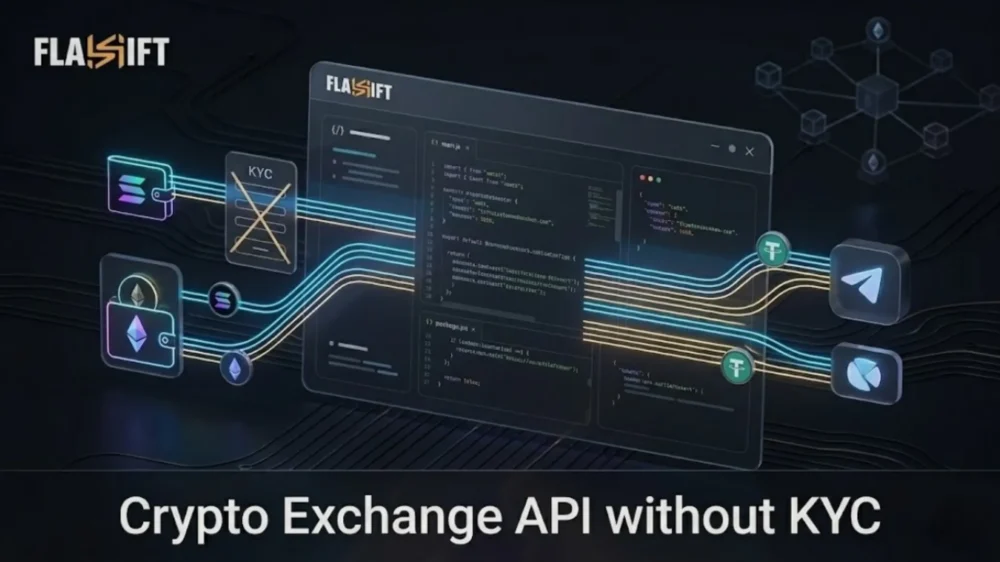

Need to bridge BTC to SOL quickly without creating multiple accounts, giving up custody of your funds, or paying excessive fees? Go ahead. The fastest way to exchange Bitcoin for Solana is by using a kind of platform that automatically changes Bitcoin into Solana assets. This helps people move their Bitcoin to Solana in a few minutes and they usually do not have to sign up or verify their identity to do this. More and…
Direct API Integration vs. AI-Driven Routing: How to Optimize Your Web3 Swap Infrastructure 🚀 For Web3 developers building wallets, dApps, or portfolio managers in 2026, integrating a seamless swap flow is the ultimate way to boost user retention. When choosing your backend infrastructure, you generally face two choices: Direct integration with a single industry-leading swap provider. Integrating an AI routing layer that dynamically aggregates multiple premier providers under a single gateway. One of the most…
Derive a Private Key from a Blockchain Transaction | Every time you broadcast a transaction, you expose your wallet address, public key, and cryptographic signature to a global public ledger forever. For high-volume traders and long-term HODLers, this visibility triggers a critical anxiety: Could an observer, an advanced blockchain analytics firm, or a malicious actor analyze this public data to reconstruct your private key? With sovereign custody being the only defense against centralized platform freezes…
Moving funds between blockchains should not feel complicated or expensive. Yet many users trying to swap USDT on TRON into Toncoin often face confusing bridge steps, network compatibility issues, and unexpected fees during the process. As the TON ecosystem continues to grow, the demand for a faster and simpler way to move assets into the network is increasing rapidly. A modern cross-chain solution removes these barriers by allowing users to swap USDT to TON without…
The year 2026 has marked a turning point in financial history. With the MiCAR (Markets in Crypto-Assets Regulation) now in full effect across Europe, the “safe” centralized exchanges of yesterday have become the data-tracking hubs of today. For users in the UK and EU, the choice is no longer just about which coin to buy, but how to maintain Self-Custody in an era of total transparency. How MiCAR is Changing the European Crypto Landscape in…
The multi-chain world of 2026 is no longer about mere connectivity; it is about Sovereign Execution. While the foundational chains like Ethereum, Solana, BNB Chain, Arbitrum, and Polygon continue to thrive, professional traders face a much greater challenge: how to move native liquidity instantly and securely without falling victim to the multiplied Technical Debt of fragmented bridges. If your cross-chain strategy still relies on custodial bridges that create Honeypot risks, you are trading in the…
Buy Bullion with Crypto | Gold is the ultimate hedge. Crypto is the ultimate speed.For decades, investors had to choose between the two. If you wanted gold, you dealt with slow dealers, high shipping fees, and physical storage risks. If you wanted crypto, you dealt with volatility. In 2026, you can have both. The narrative has shifted. Smart money isn’t waiting for a FedEx truck to deliver a 1oz bar. They are buying Tokenized Gold (RWA). Whether…
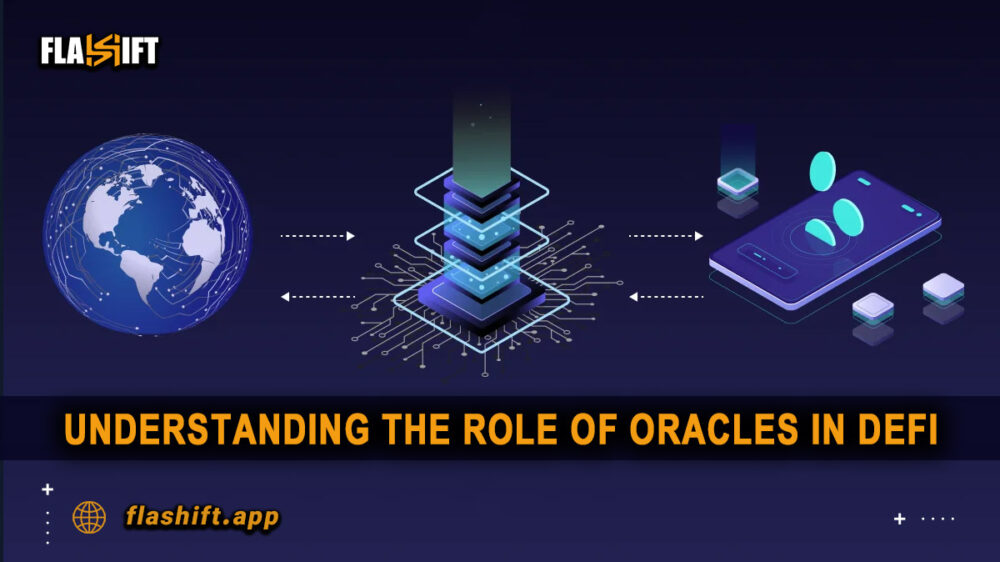
Smart contracts have a fatal flaw: on their own, they are actually “dumb.” They are trapped inside their own blockchain. An Ethereum contract cannot see the price of Tesla stock, the result of the World Cup, or even the gas fees on the Solana network. It is isolated. This isolation limits the potential of Decentralized Finance (DeFi) to basic token swaps. Chainlink breaks down this wall. It is the industry-standard bridge connecting blockchains to the…
Stop letting centralized exchanges hold your capital hostage. We all remember the “Gray Freeze” of late 2025. Major exchanges paused withdrawals just as XRP broke resistance levels, leaving retail traders stranded while candles printed without them. In a bull market, access to liquidity is more important than the purchase price. This guide outlines the exact tactical steps to bypass exchange bureaucracy and swap XRP instantly. You will maintain full custody of your assets in the…
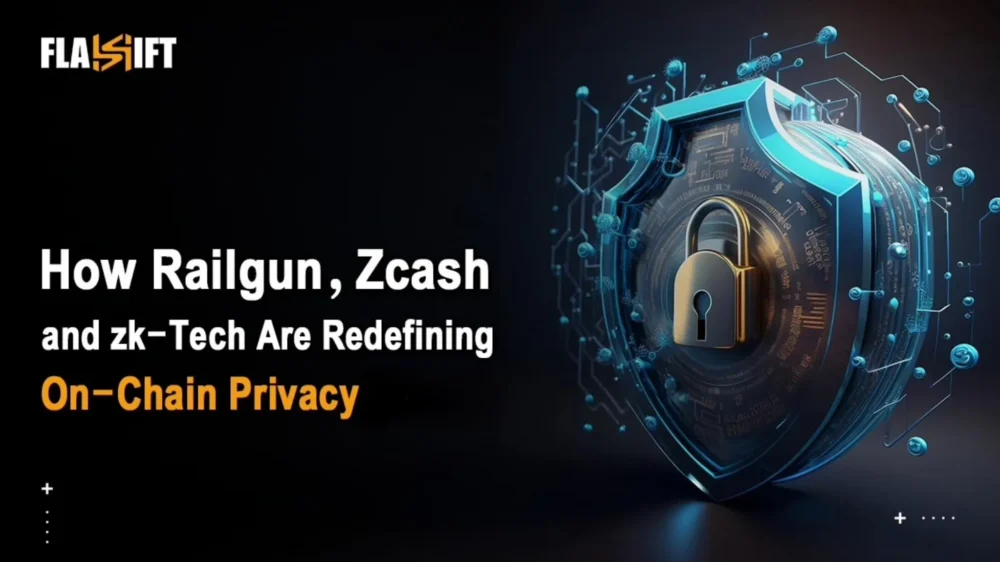
In 2025, the conversation around crypto has shifted from hype and speculation to privacy and technological depth. Projects like Railgun crypto and Zcash zk-SNARKs are leading a quiet revolution; one focused on on-chain privacy, shielded transactions, and the evolution of zk technology 2025. As regulators tighten oversight and users demand greater control over their data, privacy DeFi is emerging as the next frontier of innovation.
In this article, we’ll explore how zk-proofs, anonymous crypto systems, and new cryptographic standards are shaping the future of Web3 privacy; far beyond price charts and token pumps. Whether you’re a developer, investor, or privacy advocate, understanding these tools is essential to navigating the decentralized world that’s becoming more transparent (yet paradoxically, more private) than ever before.
The Rise of Privacy Tech in DeFi

From Transparency to Confidentiality: How On-Chain Privacy Emerged
DeFi was built on transparency — that was the whole point. Every wallet, every trade, every token movement could be tracked in real time by anyone with a block explorer. It was revolutionary… until it wasn’t. The same transparency that fueled trust also stripped users of privacy. Traders’ strategies became public knowledge, fund movements could be front-run, and entire financial histories were laid bare for anyone to see.
That’s when developers started asking a different question — not how to hide, but how to protect. The answer came in the form of cryptographic innovations like zk-SNARKs, first used by Zcash to enable shielded transactions that proved validity without exposing details. Later, projects like Railgun took that philosophy further, embedding on-chain privacy directly into the DeFi layer. The goal shifted from secrecy to sovereignty — giving users control over what they reveal, and to whom.
Privacy DeFi in 2025: Where Anonymity Meets Function
Fast forward to 2025, and privacy in DeFi is no longer a niche idea — it’s becoming infrastructure. Tools built on zk technology now power private swaps, hidden balances, and anonymous liquidity pools that still pass on-chain verification. Railgun crypto has demonstrated that privacy and compliance don’t have to be enemies; they can exist within the same ecosystem if the technology is designed right.
What’s emerging is a new era of privacy DeFi — one where financial data is encrypted by default, yet transactions remain provable on-chain. It’s not about escaping visibility; it’s about creating a digital economy where confidentiality is a right, not a loophole. In this world, anonymous crypto isn’t a rebellion against regulation, it’s the natural evolution of trust in an open system.