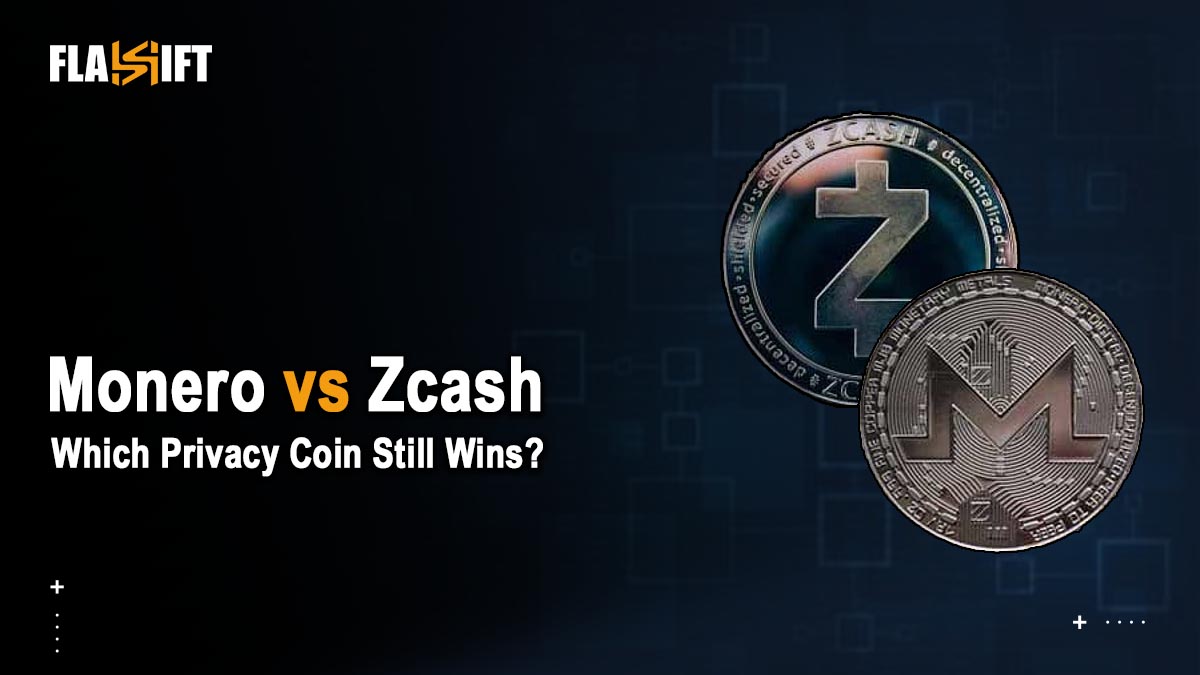
In 2025, the debate of Monero vs Zcash is more relevant than ever. As regulators tighten their grip on crypto privacy and blockchain analysis tools grow sharper, the demand for truly anonymous transactions hasn’t faded—it’s evolved. Monero and Zcash still lead the pack, but their paths remain starkly different. Monero’s ring signatures and stealth addresses keep every transaction hidden in a web of decoys, while Zcash’s zk-SNARKs bring a more mathematical, cryptographic approach—encrypting data so perfectly that validation happens without ever revealing the details. Both technologies promise privacy, but in entirely different languages.
Now, in 2025, these two giants are being tested like never before. Monero has refined its adaptive privacy model, resisting tracking attempts while staying fully decentralized. Zcash, on the other hand, has leaned into scalability and optional transparency, trying to bridge privacy with institutional trust. The real question isn’t just about technology anymore—it’s about resilience.
Which coin can preserve true anonymity in a world that’s becoming increasingly transparent? Let’s find out which still earns its spot among the best privacy coins 2025 and why the battle of zk-SNARKs vs ring signatures continues to define the future of private finance.

Why privacy coins matter?
Privacy coins matter because money is personal. When every blockchain transaction is public, anyone can map your spending, link you to services, or build a profile that you never agreed to share. Privacy coins push back on that by giving people a choice: spend or move value without turning your life into searchable data. That matters for journalists, small businesses, dissidents, and regular folks who just don’t want their finances broadcasted to the internet.
If you care about the mechanics, the Monero vs Zcash debate is a good place to start. Monero leans on ring signatures and stealth addresses to mix transactions so they look like everyone else’s — simple, resilient, and privacy-by-default. Zcash uses zk-SNARKs to cryptographically prove a transaction is valid without revealing amounts or parties — elegant, powerful, but more complex and optionally private. The zk-SNARKs vs ring signatures choice really comes down to what kind of privacy you need and how you weigh auditability, performance, and decentralization.
Monero Technology & Adoption in 2025
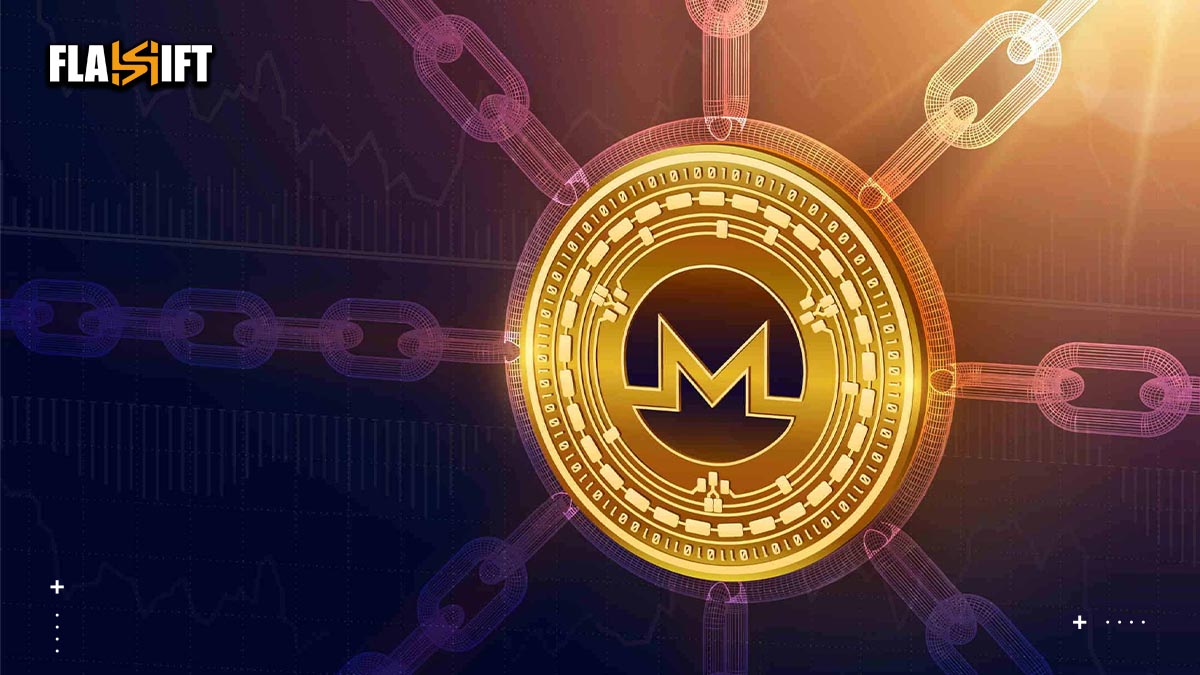
When it comes to true on-chain privacy, Monero (XMR) remains the gold standard. Since its launch in 2014, it’s been built around one clear principle: keeping financial data private by default. Monero’s core tech stack relies on three main privacy pillars: ring signatures, which blend your transaction among others to obscure the sender; stealth addresses, which generate a one-time address for every payment; and RingCT (Ring Confidential Transactions), which hides the transaction amount. Together, these make Monero transactions unlinkable, untraceable, and practically opaque to outside analysis.
Under the hood, Monero’s RandomX proof-of-work algorithm keeps mining decentralized and ASIC-resistant, meaning it can still be mined profitably with CPUs and GPUs — a rare thing in 2025. The network continues to evolve too: upgrades like Bulletproofs+ and view tags have reduced transaction sizes and sped up wallet syncing. Developers are constantly refining Monero’s cryptographic libraries, optimizing speed and verification efficiency while keeping privacy airtight.

Adoption: Real-World Use and Community Growth
Despite regulatory pressure, Monero adoption is quietly growing. More people are turning to it for everyday transactions, especially in regions or industries where privacy is critical. Merchants who value discretion — like VPN providers, hosting services, or digital marketplaces — are increasingly accepting XMR as a payment option. On the community side, Monero’s open-source ecosystem thrives. The Community Crowdfunding System (CCS) funds new features, wallet integrations, and privacy tools through grassroots contributions, ensuring that Monero’s development stays independent and community-driven.
That said, challenges remain. Regulators and centralized exchanges often restrict or delist Monero due to its strong anonymity features. Privacy comes at a computational cost too — transactions are heavier, and nodes require more resources to process and verify them. On top of that, mainstream user adoption still lags behind Bitcoin or Ethereum due to tighter regulations and a steeper learning curve for newcomers.
The Bigger Picture
Even with those hurdles, Monero stands tall among the best privacy coins of 2025. Its privacy is default, not optional. Its mining is open and fair. And its community is one of the most resilient in crypto. In a time when most blockchains are bending to regulatory surveillance, Monero hasn’t compromised.
The future challenge is balance — keeping privacy uncompromised while improving scalability and user experience. If Monero continues to innovate without losing its core values, it won’t just survive the privacy coin era, it’ll define it.
Understanding Zcash’s zk-SNARKs Technology
At the core of Zcash’s privacy model lies one of the most fascinating cryptographic innovations of our time — zk-SNARKs, short for Zero-Knowledge Succinct Non-Interactive Arguments of Knowledge. The name sounds intimidating, but the concept is surprisingly elegant. In simple terms, zk-SNARKs allow one party (the sender) to prove that a transaction is valid without revealing any of its details — not the sender, not the receiver, and not even the amount being transferred.
Imagine paying someone and being able to prove to the blockchain that the transaction follows all the rules, yet no one can see who paid whom. That’s what zk-SNARKs do. They work through zero-knowledge proofs, a cryptographic technique where knowledge of information can be verified without disclosing the information itself. This keeps the system transparent for validation, but completely private for users.
How zk-SNARKs Work in Practice
A zk-SNARK transaction starts with a shielded address, where all transaction data is encrypted. When a user initiates a payment, the system generates a cryptographic proof that confirms the transaction obeys the blockchain’s consensus rules — that the sender has enough balance, that no coins are double-spent, and that the transaction format is correct. The proof is small, fast to verify, and doesn’t require the two parties to interact (hence “non-interactive”).
Because of this efficiency, zk-SNARKs have a big advantage over older privacy methods like ring signatures (used by Monero). Ring signatures depend on mixing transactions together, which makes privacy scale linearly — the more users, the more anonymity. But zk-SNARKs achieve privacy cryptographically, which means even one transaction can be completely shielded, regardless of how many others exist on the network.
Ring signatures vs zk-SNARKs: A Tale of Two Philosophies
The Monero vs Zcash debate is really a clash of philosophies. Monero uses ring signatures to blend your transaction with others, relying on obfuscation and decentralization to create privacy. It’s simple, reliable, and always-on. Zcash, on the other hand, uses the math-heavy zk-SNARKs system, giving users the option to stay public or private. This flexibility makes Zcash more appealing in regulated environments, where selective disclosure might be required — something Monero intentionally avoids.
The Future of zk-SNARKs and the Best Privacy Coins of 2025
As zk-SNARKs become more efficient, Zcash is entering a new phase of adoption. The latest iterations, such as Halo 2 and Halo Arc, have removed the need for a trusted setup — one of the biggest criticisms of early Zcash versions — making the system more decentralized and secure. These advances are helping Zcash hold its ground as one of the best privacy coins of 2025, even as global regulations tighten.
In the ongoing zk-SNARKs vs ring signatures conversation, Zcash proves that privacy and accountability don’t have to be opposites. It’s privacy with precision — not hiding from the system, but controlling what the system gets to see. And in a future where financial surveillance keeps expanding, that kind of control may turn out to be the most powerful feature of all.
Liquidity & Exchange Support: Monero vs Zcash
When you talk about privacy coins, it’s impossible not to bring up the tension between privacy and accessibility — and nowhere is that more obvious than in the case of Monero and Zcash. Both aim to protect user privacy, but the way they interact with exchanges couldn’t be more different.
Monero: Privacy Comes with a Price
Monero is a purist’s dream. It’s built from the ground up for complete anonymity, using ring signatures, stealth addresses, and confidential transactions to make tracing nearly impossible. But this perfection in privacy has turned into a liability when it comes to liquidity.
Over the past few years, Monero has been delisted from several major exchanges — Coinbase, Kraken (in certain regions), and Binance in some countries — due to growing regulatory pressure. Governments and exchanges want transparency for compliance; Monero gives them none.
As a result, most of Monero’s trading happens in decentralized spaces like Bisq, Haveno, or through peer-to-peer deals. Liquidity still exists, but it’s fragmented — strong among privacy advocates, weak in the mainstream trading world.
Zcash: Balancing Privacy and Compliance
Zcash took a more diplomatic route. Instead of going all-in on anonymity, it gives users a choice: make a transparent transaction (fully visible on the blockchain) or a shielded one (protected by zk-SNARKs).
This flexibility is what’s kept Zcash on major exchanges like Coinbase, Binance, and Bitfinex. Regulators tolerate it because it can operate transparently when needed. In turn, liquidity remains relatively high, and traders don’t have to jump through hoops to buy or sell it.
The Real Trade-Off
If you compare Monero vs Zcash, it’s less about which is “better” and more about what you value. Monero fights for uncompromising privacy — even if that means swimming against the regulatory tide. Zcash tries to bridge two worlds: privacy enthusiasts and institutions that play by the rules.
So, when people talk about the best privacy coins of 2025, they’re really choosing sides. Do you want the raw, underground resilience of Monero — or the pragmatic balance that lets Zcash stay liquid and exchange-friendly?
At a Glance: Monero and Zcash Comparison
| Feature | Monero (XMR) | Zcash (ZEC) |
| Privacy Technology | Ring Signatures, Stealth Addresses, Confidential Transactions | zk-SNARKs (Zero-Knowledge Proofs) |
| Default Privacy | Always private — all transactions are obfuscated | Optional — users choose between transparent or shielded transactions |
| Regulatory Compliance | Limited — difficult to audit or verify | Easier — transparent mode supports compliance requirements |
| Exchange Availability | Restricted or delisted on several centralized exchanges | Widely supported on major exchanges (Coinbase, Binance, etc.) |
| Liquidity | Moderate — stronger in decentralized and P2P markets | High — strong institutional and retail liquidity |
| Transaction Speed | Around 2 minutes per block | Around 75 seconds per block |
| Scalability | Moderate (larger transaction size due to privacy tech) | Better scalability with zk-SNARK compression |
| Use Case Focus | Maximum anonymity, privacy-first transactions | Flexible privacy with regulatory compatibility |
| Community & Development | Open-source, community-driven, privacy maximalists | Backed by Electric Coin Company (ECC) and Zcash Foundation |
| Best For | Users demanding total anonymity | Users wanting privacy with exchange convenience |
Best fit in 2025: which one? Monero vs Zcash
The debate between Monero and Zcash in 2025 is essentially about the kind of privacy the user wants — complete anonymity or regulated discretion. Monero, which uses ring signatures and stealth addresses, is still the gold standard for complete privacy in transactions. It is designed for people who are convinced that privacy is a right and not a feature — traders, developers, and communities who want full control without supervision.
However, this uncompromising privacy has caused Monero to be less accessible on major exchanges which in turn has moved users to decentralized markets. The technology behind Monero’s privacy is sound and trustworthy, but its limited scalability and compliance issues are the main reasons why it is hard for the institutions to adopt it.
On the other hand, Zcash has made a transition from being a purely privacy-centric to a more regulation-friendly coin through its zk-SNARKs technology. In 2025, its selective transparency gives it an edge for firms, investors, and users who want to keep their affairs private without being sidelined by the mainstream.
Its quicker transaction processing as well as widespread exchange support add to its daily and cross-border use convenience. To put it simply, Zcash is the go-to for the adaptable privacy seekers, while Monero still leads the market being the total secrecy demanders. In an environment where regulators are tightening their grip, Zcash might be the more practical option — but Monero still sets the standard for what real privacy is all about.
FAQ
- Why are privacy coins like Monero and Zcash still relevant in 2025?
Because transparency in crypto has become the default — and not everyone wants that. As more exchanges, wallets, and tax systems enforce traceability, privacy coins offer what Bitcoin once promised: true financial confidentiality.
- Has regulation completely killed Monero’s liquidity?
Not quite. While many centralized exchanges have dropped it, Monero’s liquidity has quietly shifted to DEXs and peer-to-peer markets. It’s harder to find, yes, but the demand from privacy-focused users hasn’t gone away — it just moved underground, in a way that fits Monero’s ethos.
- Is Zcash’s “optional privacy” actually private enough?
For most people, yes. zk-SNARKs encrypt transactions so effectively that even auditors can’t see the details unless you choose to reveal them. The catch? Most Zcash users still use the transparent mode, which means its full privacy potential often goes underused.
- Which one is more future-proof — Monero or Zcash?
It depends on the world we’re heading into. If governments continue tightening crypto regulations, Zcash’s flexible privacy model makes it easier to survive. But if decentralization and censorship resistance become top priorities again, Monero will outlast every “compliant” coin out there.
- Can Monero and Zcash ever coexist or complement each other?
Absolutely. Monero sets the privacy standard — the “pure” option — while Zcash bridges privacy with usability. Think of Monero as the off-grid safehouse and Zcash as the smart home with privacy locks. Both serve different needs, and together they define the privacy spectrum of crypto.
- Which one is better for traders versus long-term holders?
Traders might lean toward Zcash because of its exchange support and liquidity, while long-term privacy advocates stick with Monero for ideological and technical reasons. It’s a split between convenience and conviction — and in crypto, both camps are growing.