
If you live in or deal with the EU, or you want the most regulation-friendly dollar stablecoin, hold USDC. If you trade across many exchanges, use Tron for cheap transfers, or need the deepest global liquidity, USDT is still the practical choice. Many people split between the two. Either way, you can switch between them with a no-account swap in a few minutes. Why is everyone asking “USDT or USDC?” right now? October 2026 gave…
What Happens When Binance Pool Shuts Down? Binance Pool, Pool Savings, Cloud Mining and Transaction Accelerator all stop on November 10, 2026, at 07:00 UTC. After that moment, any hashrate still pointed at Binance Pool earns nothing. To avoid losing income, you need to: Point your miners to a new pool before the deadline. Redeem any active Pool Savings positions. Confirm your Binance account can receive outstanding balances. Export your payout history before the pool…
Monero has had a loud year, and not always for good reasons. In June, CoinDesk reported that about $120 million in USDT was pushed through a chain of swaps, including large XMR purchases that moved the price from roughly $330 to $438. Tether later froze $72 million of it. If you hold XMR and want out, the cleanest route is a direct crypto-to-crypto swap into BTC or a stablecoin, with no account to open. Pick…
The Zcash Sprout freeze is a key change planned for the NU7 upgrade, targeted for November 5, 2026, at block height 3,543,405. Under ZIP 2003, version 4 transactions will no longer be accepted after activation, leaving any ZEC still held in the Sprout pool unspendable through the current protocol. Your private key may remain valid, but that alone will not let you move the funds. 👉 [Swap ZEC ⇄ BTC] or any other cryptos Move…
On October 7th, LetsExchange officially shut down its operations, leaving thousands of traders, developers, and privacy-conscious users scrambling for a reliable platform. When a heavily relied-upon centralized service goes dark, it exposes the critical flaw of single points of failure in the crypto market. If you are a former LetsExchange user, you need more than just a temporary replacement, you need a Sovereign Execution layer. You need a platform that guarantees 100% uptime, zero identity…
To swap to ZEC without KYC, use a non-custodial swap aggregator such as Flashift. Choose the coin you already hold, set ZEC as the destination, paste your Zcash address, and send the deposit to the address shown. No account is created and no ID is requested at the aggregator level. Searches for “swap to ZEC” or “bridge to ZEC” both describe roughly the same goal: getting Zcash into a wallet you control without filing an…
If you’re holding USDT and want Monero instead, the process is shorter than most guides make it sound. Choose USDT as the coin you send and XMR as the coin you receive, paste a fresh Monero address from your own wallet, send the deposit, and wait. On Flashift that usually takes 3 to 5 minutes, and there’s no account to create. Exchange USDT to XMR on Flashift → The swap itself is the easy part.…
Looking for coins with wallets that support no KYC swaps? SUI, Aptos, Cronos, Basic Attention Token (BAT), and MultiversX (EGLD) are five projects worth exploring. Some crypto wallets and ecosystem apps offer built-in swap features that let users exchange supported tokens without creating an account or completing traditional identity verification. However, availability depends on the wallet, the trading route, and the provider powering the swap. In this guide, you’ll learn what no-KYC swaps are, and…
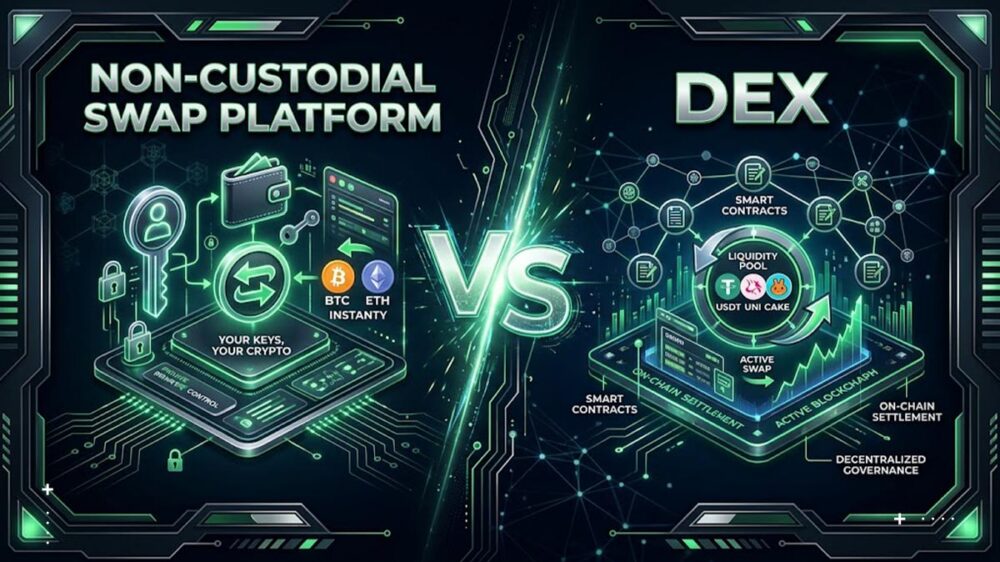
Choosing between a non-custodial swap and a DEX boils down to how you want your trades handled. A DEX relies purely on smart contracts and pools of crypto to make trades happen directly from your connected wallet. Meanwhile, a non-custodial swap acts more like a personal shopper. It hunts for the best prices across various places while still letting you keep total ownership of your crypto, so you never actually deposit anything into a central…
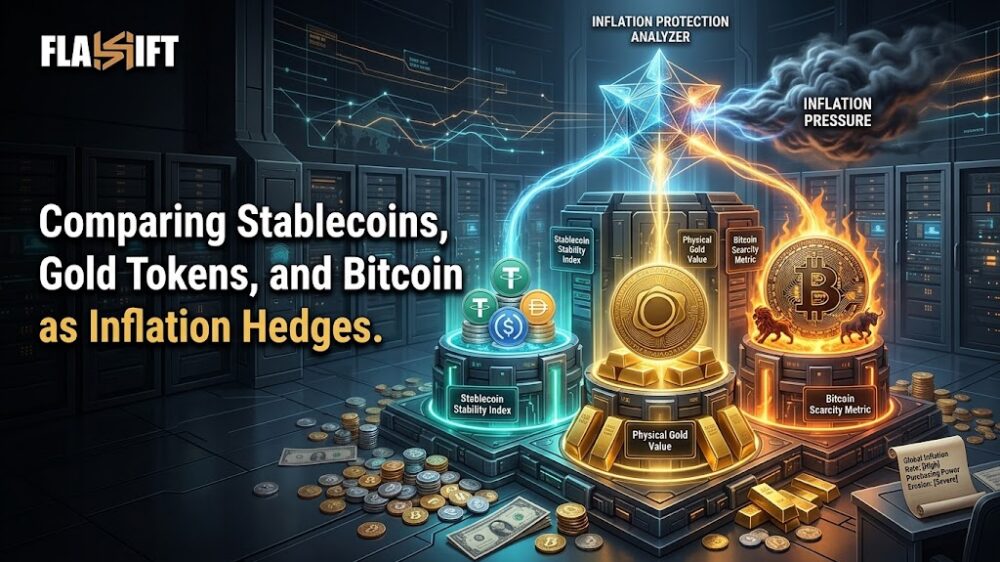
In times of macroeconomic uncertainty, investors search for assets that can preserve their wealth against rising prices. Every period of economic turbulence leaves operators in Tier-1 jurisdictions (US, UK, DE) asking the same question: how do I protect the purchasing power of my capital? Inflation eats away at savings quietly but relentlessly, and in 2026, the pace of currency erosion requires more than just traditional strategies. While physical gold has long been the classic inflation…