
Category

Cryptocurrency Wallets

Category

Cryptocurrency wallets are digital tools that allow users to securely store, send, and receive various types of cryptocurrencies. These wallets come in different forms, including hardware wallets, software wallets, and online wallets, each offering different levels of security and convenience.

If your Monero wallet balance is not updating, suddenly shows zero, or fails to display a recent transaction, the issue is almost always related to syncing or node connectivity, not missing funds. A Monero wallet does not store your coins locally; it scans the blockchain for outputs that belong to your keys. When the wallet or node is out of sync, behind the current block height, misconfigured, or using the wrong restore height, your balance…

You’ve just completed a transaction with Monero (XMR). The blockchain confirms it, the sender shows it as done — yet when you open your wallet, your Monero balance not showing (or doesn’t reflect the expected amount). Frustrating, right? Don’t panic, this doesn’t mean you’ve lost your funds. Monero’s privacy-driven technology and unique wallet mechanics introduce a few extra layers compared to other cryptocurrencies. For example, your wallet must scan new blocks, verify your transactions, and…

When it comes to trading or swapping cryptocurrencies, choosing the right wallet is just as important as picking the right exchange. Swap aggregators like Flashift.app combine liquidity from multiple exchanges to offer you the best prices. But here’s the big question: should you connect a hardware wallet or a software wallet when using these platforms? This article gives you a clear, practical comparison of both wallet types specifically for using swap aggregators. You’ll learn how…

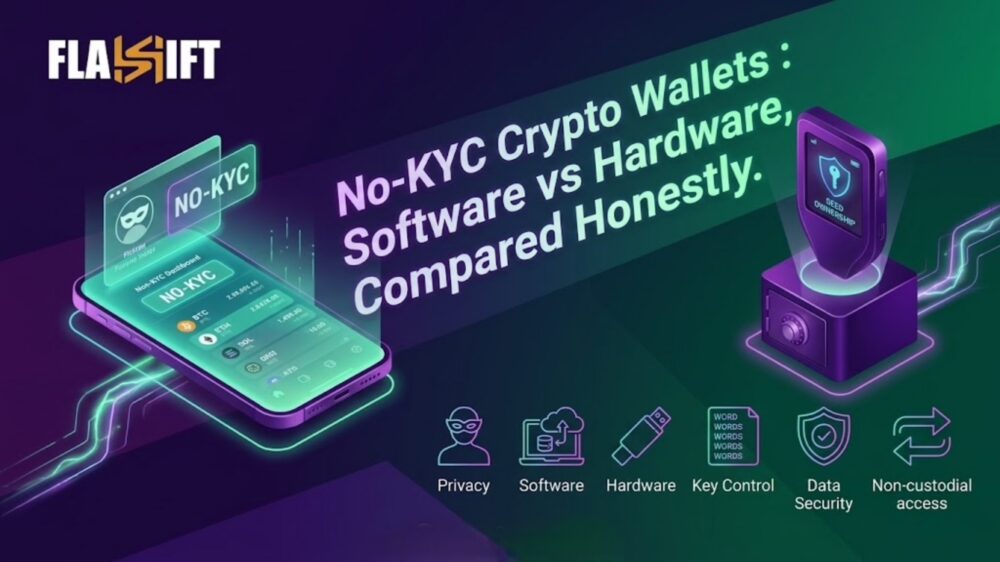
Privacy in crypto has become more important than ever. As regulations tighten worldwide and centralized platforms increase surveillance, many users are searching for no-KYC crypto wallets that allow them to store, send, and manage digital assets without revealing personal information. A no-KYC wallet does not require identity verification, email registration, or personal data collection. These wallets empower users with full control of their private keys while offering varying levels of privacy, security, and usability. In…

Protecting Your Crypto | In 2024 alone, U.S. crypto investors lost over $3.9 billion to hacks, scams, and thefts. And here’s the worst part: once your coins are gone, the odds of getting them back are almost zero. Cybercriminals are getting smarter, faster, and more convincing—using phishing links, fake recovery agents, and even deepfake video calls to steal your assets. Many victims lose everything not because they were careless, but because the attack was so…

Crypto wallets vs exchanges | With increasing threats of cyber-attacks, evolving regulations, and sophisticated storage technologies, the choice between using a private wallet or leaving assets on a crypto exchange is more critical than ever. The question is: Which one is better for holding digital assets? This article will explain the difference between crypto wallets and exchanges, weigh security and convenience trade-offs, explore regulation considerations, and lead you toward the best decision for your unique…

Mistakes happen, especially in the fast-paced world of crypto transactions, and sending crypto to the wrong address is a common, yet stressful, error. Unlike traditional banking, crypto transactions are irreversible, which raises the question—can anything be done to recover lost funds? While it can be difficult and sometimes impossible to recover crypto sent to the wrong address, there are specific steps you can take to increase your chances. This guide explores what to do if…

Best Crypto Wallets | Choosing the right crypto wallet in 2025 is no longer just about storage — it’s about how easily you can use it for swaps, staking, and secure trading. Whether you’re holding Bitcoin for the long term or making fast swaps through platforms like Flashift, your wallet defines how much control and flexibility you truly have. Here, we are pitting the best crypto wallets of the day against each other, measuring their…

In 2025, selecting the right crypto wallet is essential for secure management of digital assets. Whether you’re trading frequently, storing long-term, or interacting with DeFi, understanding different wallet types and implementing the strongest security practices, like seed phrase backups, hardware devices, and multi-factor authentication, can protect your funds and your peace of mind. This guide is your go-to resource for choosing, setting up, and securing your crypto wallet. Swap BTC to ETH now! What is…

How to Secure Cryptocurrency Transactions | Cryptocurrencies were changing the face of finance; they had decentralized peer-to-peer systems for digital currencies offering levels of privacy and autonomy far greater than the traditional banking system. With the increase of mainstream adoption of digital assets—specifically Bitcoin, Ethereum, and its gigantic universe of altcoins—so grows the importance of providing security to such transactions. The increased security nature of decentralized, irreversible transactions with cryptocurrencies comes with its challenges and…

Outrun the Radar: Swap and Win $1000!