

- Why DOGE ETF matters
- 1. Makes Dogecoin Accessible to Traditional Investors
- 2. Adds a Layer of Legitimacy to a Meme-Driven Asset
- 3. Potential for Increased Liquidity and Market Stability
- 4. Gives Investors a Regulated Alternative to Direct Crypto Ownership
- 5. Introduces DOGE to Portfolio Strategies That Were Previously Inaccessible
- 6. Signals a Larger Shift in How Markets Treat Meme-Coins
- Dogecoin ETF | is there currently a tradable ETF for Dogecoin?
- SEC’s Stance on Dogecoin ETF
- Risks & Volatility of a Dogecoin ETF
- 1. Dogecoin’s Price Is Still Driven by Sentiment, Not Fundamentals
- 2. Sharp Intraday Swings Can Affect ETF Tracking
- 3. Liquidity Gaps Can Amplify Moves
- 4. ETF Structure Doesn’t Eliminate Crypto-Style Risks
- 5. Regulatory Uncertainty Can Trigger Market Shocks
- 6. Emotional Trading Risk Is Higher With Meme Assets
- Long-Term Impact on Retail Investors
- What Will Happen in the Future?
- FAQ
Dogecoin has slipped back into the spotlight Over the past few weeks; not because of a viral meme, but because whispers of a potential Dogecoin ETF are starting to sound more like real momentum. The market reaction has been hard to ignore. DOGE, which usually thrives on community hype, suddenly began moving alongside institutional narratives, hinting that the token may be stepping into a different league this time.
If a Dogecoin ETF makes it through regulatory filters, it won’t just be another headline. It could mark the moment when DOGE officially crosses from internet culture into mainstream finance. For everyday investors, that shift carries weight: easier access, cleaner exposure, and a product wrapped in a structure they already trust. But it also brings bigger questions — how will ETF demand affect liquidity, price stability, and long-term market behavior for an asset built on volatility?
This isn’t just another meme-coin rally. It’s the early phase of a structural change that could reshape how retail investors interact with Dogecoin, and maybe even the broader meme-asset sector. Let’s explore more!
Why DOGE ETF matters
1. Makes Dogecoin Accessible to Traditional Investors
A dogecoin ETF removes the technical hurdles that usually come with buying crypto. No wallets, no private keys, no worrying about exchanges freezing withdrawals. Retail investors can open their regular brokerage app and gain exposure to DOGE the same way they buy a stock or a gold ETF. This ease of access can significantly widen the investor base, especially among people who were curious about Dogecoin but never stepped into crypto platforms.
2. Adds a Layer of Legitimacy to a Meme-Driven Asset
Dogecoin has always lived in a strange intersection of humor, speculation and community culture. The arrival of a dogecoin ETF signals something different: institutional capital and regulated financial products are taking DOGE seriously enough to package it for the mainstream. That shift doesn’t change its meme origins, but it does change how the broader market perceives it. For many retail investors, legitimacy matters as much as price.
3. Potential for Increased Liquidity and Market Stability
ETFs typically attract steady inflows, especially if they’re listed on major exchanges. If a dogecoin etf collects meaningful assets under management, part of that capital will flow into spot DOGE markets. More liquidity generally means smoother price movements and fewer abrupt liquidity gaps during volatility. It doesn’t erase Dogecoin’s inherent swings, but it can soften some of the sharper edges.
4. Gives Investors a Regulated Alternative to Direct Crypto Ownership
Security breaches, hacked exchanges, mismanaged keys—these risks come with holding crypto directly. A dogecoin ETF shifts those responsibilities to professional custodians under regulatory oversight. For risk-averse investors who still want exposure to DOGE, this setup feels safer. It also helps financial advisors include Dogecoin exposure in diversified portfolios without worrying about crypto-native logistics.
5. Introduces DOGE to Portfolio Strategies That Were Previously Inaccessible
Many retail investors, and even some institutions, only allocate to assets that fit inside familiar wrappers: ETFs, mutual funds, structured notes. By putting Dogecoin inside an ETF structure, it becomes eligible for strategies that previously ignored it—everything from tax-advantaged accounts to automated portfolio rebalancers. In other words, a dogecoin etf can integrate DOGE into mainstream asset allocation in a way direct crypto can’t.
6. Signals a Larger Shift in How Markets Treat Meme-Coins
Perhaps the bigger story is symbolic. Approving a dogecoin etf means regulators and institutions are no longer dismissing meme-coins as temporary noise. They’re acknowledging investor demand and building formal channels around it. Whether you see that as progress or a warning depends on your risk appetite, but either way, it’s a structural milestone for the crypto market.
Dogecoin ETF | is there currently a tradable ETF for Dogecoin?
At this point, the short answer is yes. At least one Dogecoin ETF is officially live and trading in the U.S. The first mover is the REX-Osprey DOGE ETF, listed under the ticker DOJE, and it began trading in late 2025. This means Dogecoin has crossed a milestone that even many established altcoins haven’t reached: it now has a regulated, exchange-listed product built around its price.
For everyday investors, the practical effect is straightforward: you can now buy a dogecoin ETF through a normal brokerage account just like you would any other ETF, without using crypto exchanges or managing wallets.
There are also additional Dogecoin ETF proposals sitting in the regulatory pipeline from issuers like Bitwise and 21Shares. These are not tradable yet, but their presence shows growing institutional interest in packaging Dogecoin for mainstream markets. If even one more approval comes through, DOGE exposure will become even more accessible across major platforms.
In simple terms, Dogecoin has officially entered the ETF era. It’s early, the product lineup is still limited, and the structures vary—but the door is open, and DOGE is now part of the regulated investment landscape.
Buy DogeCoin Anonymously!
SEC’s Stance on Dogecoin ETF
The SEC’s position on a Dogecoin ETF right now is cautious, but shifting — reflecting both regulatory prudence and a quiet openness to crypto innovation.
Regulatory Delay, Not Rejection
For much of 2025, the SEC has repeatedly delayed decisions on proposed Dogecoin ETFs rather than flat-out rejecting them. For example, the SEC extended its review period for Bitwise’s DOGE ETF to June 15, signaling that it wants more time to assess the structure, risk, and market mechanics.
These delays don’t necessarily mean a no; they more likely point to the regulator taking a methodical, case-by-case approach.
Market Surveillance & Manipulation Concerns
One of the SEC’s main sticking points with crypto ETFs continues to be market manipulation risk. Because Dogecoin trades on many exchanges — some less regulated than others — the SEC is carefully weighing how sponsors will protect investors with surveillance-sharing agreements and other safeguards.
They also appear to be scrutinizing custody arrangements very closely: who holds the underlying DOGE, how secure the storage is, and whether that structure meets their investor-protection standards.
Rule-Change Momentum
At the same time, momentum is building at the regulatory level. Exchanges like NYSE Arca and Nasdaq have filed for generic listing standards for commodity-based trust ETFs — including Dogecoin ETFs. These rule changes could significantly streamline how spot crypto ETFs (like a Dogecoin ETF) get listed in the future.
What’s striking is that these new standards were initiated by the SEC itself, suggesting a more structured, scalable regime for crypto ETFs is underway.
Multiple ETF Players in the Ring
The SEC isn’t just reviewing one application — there are several major providers vying for approval. Bitwise submitted a proposal for a pure DOGE-trust structure.
21Shares is also pushing its own dogecoin ETF, with filings to list via Nasdaq.
This shows that the question is not whether a Dogecoin ETF exists, but rather which version the SEC will approve — and under what rules.
Balancing Act: Innovation vs. Investor Protection
Overall, the SEC seems to be walking a tightrope. On one hand, there’s recognition that crypto products like a dogecoin ETF are no longer fringe ideas — they are being proposed by big-name firms, and investor demand is very real. On the other, the SEC is deeply aware of the speculative nature of DOGE, the volatility, and the potential for abuse in less transparent markets.
They’re not dismissing the concept — but they are insisting on a framework that ensures the playing field isn’t tilted against investors. Whether that means tougher listing rules, stronger custody, or stricter surveillance is still being worked out.
• Read More: SEC Crypto ETF Rules 2025
Risks & Volatility of a Dogecoin ETF
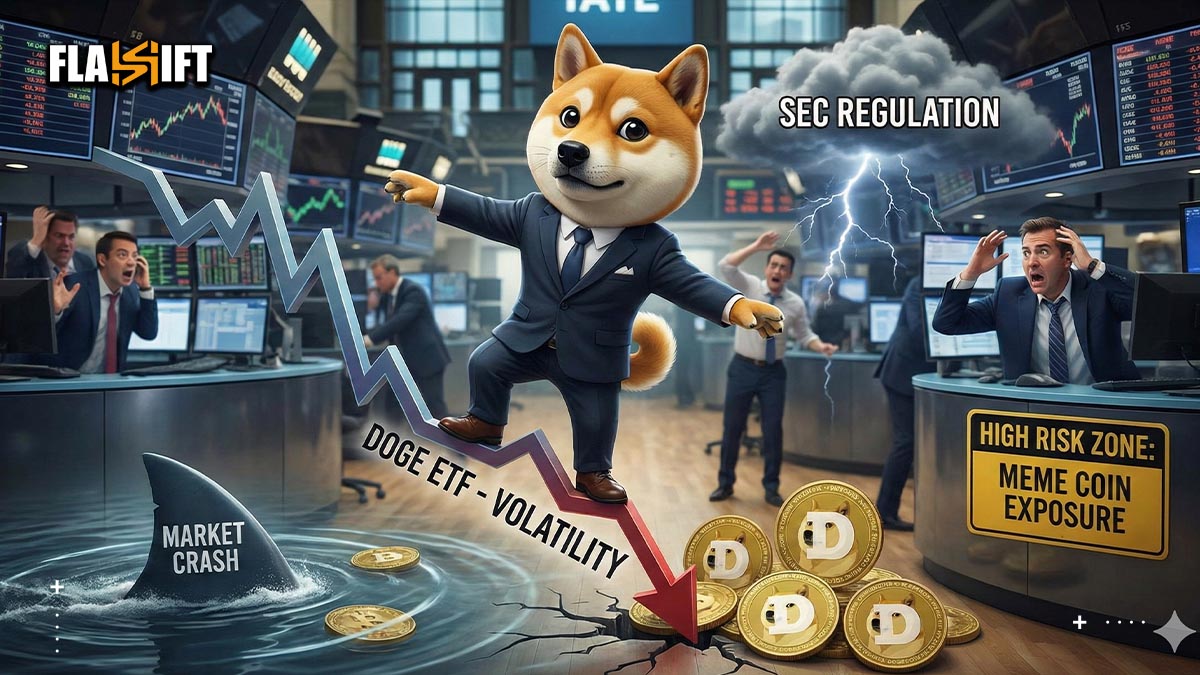
A Dogecoin ETF might sound like a cleaner, more regulated gateway into the meme-coin universe, but the risks underneath the surface don’t disappear just because the asset sits inside an ETF wrapper. If anything, the volatility of DOGE becomes more visible once it enters traditional markets. Here’s a grounded look at what investors should genuinely expect.
1. Dogecoin’s Price Is Still Driven by Sentiment, Not Fundamentals
DOGE has always lived and died by market mood. Social media waves, viral posts, celebrity comments, and sudden community hype can send the price flying or falling with almost no warning. Wrapping that behavior inside an ETF doesn’t soften the core reality — the underlying asset is still a meme-token with no capped supply and limited real-world utility. A Dogecoin ETF simply transports that same instability into broker dashboards.
2. Sharp Intraday Swings Can Affect ETF Tracking
Because DOGE is so reactive, the ETF may struggle to track its price perfectly, especially during periods of rapid spikes or sell-offs. If the fund uses a mix of spot DOGE and DOGE-linked ETPs, those layers can create small delays or mismatches. Investors might see moments where the ETF lags behind the live price of Dogecoin, especially on days with unusually heavy volatility.
3. Liquidity Gaps Can Amplify Moves
Dogecoin is highly liquid during peak market cycles but can thin out quickly when hype cools. Low liquidity often magnifies swings: a modest buy can push the market up, and a moderate sell can drag it down. An ETF built on such an asset inherits these liquidity sensitivities. If sentiment turns, the outflows from a Dogecoin ETF could accelerate downward pressure.
4. ETF Structure Doesn’t Eliminate Crypto-Style Risks
Even though the fund is regulated, the underlying DOGE must still be held somewhere — usually by institutional custodians. If the crypto market experiences network congestion, exchange freezes, or extreme volatility, the ETF may face operational challenges that wouldn’t affect a traditional equity-based fund.
5. Regulatory Uncertainty Can Trigger Market Shocks
Any shift in the SEC’s stance, new listing rules, or changes to crypto-related oversight can hit a Dogecoin ETF hard. Regulatory headlines often move DOGE in outsized ways, and an ETF only magnifies the impact because traditional investors react too.
6. Emotional Trading Risk Is Higher With Meme Assets
One of the subtle dangers is investor psychology. Dogecoin’s playful branding and viral history can blur the line between entertainment and investment. When a meme coin enters the ETF arena, some retail traders may take on more risk than they realize, assuming the regulated structure somehow stabilizes the asset. It doesn’t.

Long-Term Impact on Retail Investors
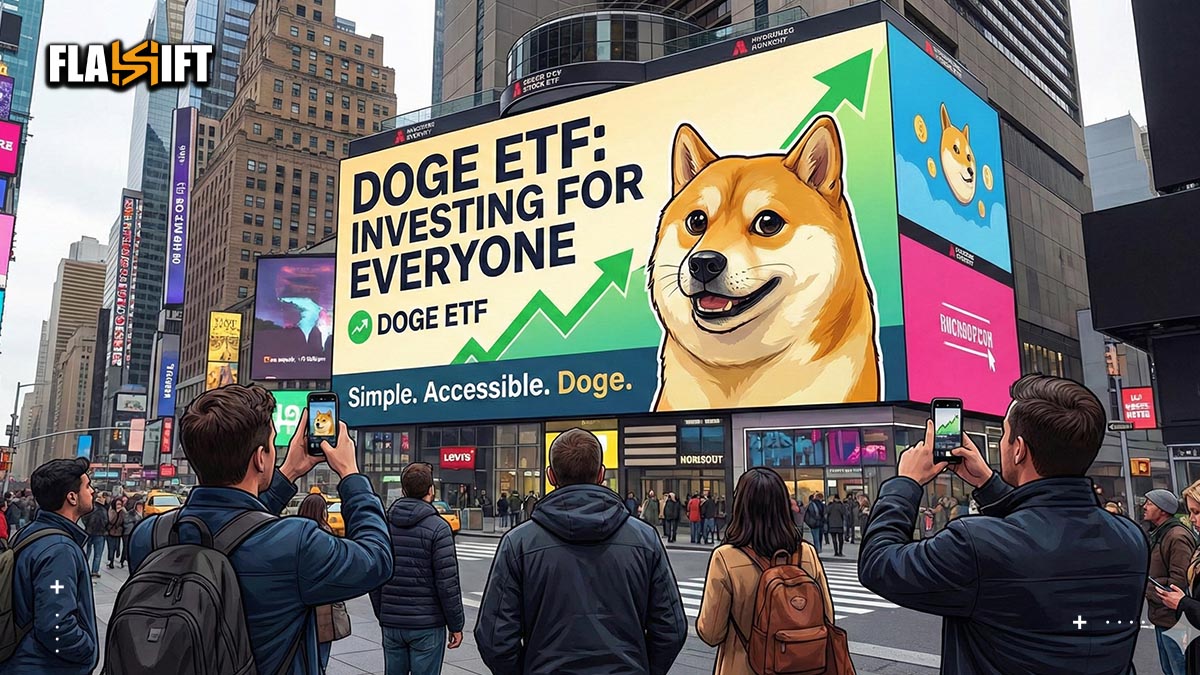
For everyday investors, the arrival of a Dogecoin ETF—if it eventually gets the green light—could reshape how retail money interacts with the meme-driven corners of crypto. The effect wouldn’t be dramatic overnight, but the shift in behavior and expectations would be noticeable.
In practical terms, an ETF gives retail investors something they’ve never had with DOGE: a regulated, familiar gateway. No exchanges to learn, no wallets to manage, no worries about transferring coins to the wrong address. That convenience alone tends to pull in a different crowd—people who avoided crypto simply because the process felt too technical or “too crypto.” Suddenly, exposure to Dogecoin sits next to Apple stock and S&P 500 ETFs in the same brokerage app.
The psychological shift is just as important. When a meme asset becomes “ETF material,” it changes perceptions. Retail traders often interpret this as a stamp of legitimacy. That kind of sentiment shift can feed new cycles of speculation, sometimes pushing people toward oversized bets they wouldn’t make otherwise. The danger, of course, is that an ETF doesn’t make DOGE any less volatile; it only makes the volatility easier to access.
What Will Happen in the Future?
Over time, a Dogecoin ETF could amplify both sides of the story. More stable inflows from traditional brokers might reduce some of the wild intraday swings, but broader participation also means more emotional trading during hype cycles. Retail investors benefit from easier access and better regulatory protections, but the temptation to chase momentum becomes stronger too.
The long-term outcome ultimately depends on how investors treat it: as a fun speculative instrument they size appropriately, or as a shortcut to fast gains in a market that has never moved in a straight line.
FAQ
- Would a Dogecoin ETF actually hold real DOGE, or just track the price?
It depends on the structure regulators approve. If the SEC ever greenlights a Dogecoin ETF, it will likely follow the spot model, meaning the issuer would purchase actual DOGE and store it with a qualified custodian. But there’s also a possibility of a futures-based approach, similar to early Bitcoin ETFs, which would track DOGE derivatives instead of real tokens.
- Does an ETF reduce the risks that come with buying DOGE directly?
It reduces some but not all. You’re free from wallet management, exchange hacks, or sending coins to a wrong address. But the core volatility of Dogecoin stays the same. An ETF cleans up the user experience. If DOGE swings 15% in a day, the ETF will follow the same arc.
- Could a Dogecoin ETF change DOGE’s price behavior?
Definitely. Large issuers buying DOGE in bulk for ETF inflows can create new demand pressure. At the same time, redemptions can add heavy sell-side liquidity. This institutional rhythm often smooths out some of the chaos but can also make the moves bigger during high-volume windows. In other words, the character of DOGE may evolve, but not necessarily toward stability.
- How would a Dogecoin ETF affect market sentiment?
Sentiment is where the real impact shows. Having DOGE appear alongside traditional ETFs in brokerage accounts subtly shifts how people view it (less as an internet joke and more as a high-beta speculative asset). This perception upgrade could attract investors who would never open a crypto exchange account, bringing a new wave of mainstream curiosity and, inevitably, speculation.
- Would a Dogecoin ETF make DOGE more suitable for long-term portfolios?
Not automatically. An ETF adds regulatory oversight, clearer pricing, and more straightforward tax reporting, which makes it easier to include in a portfolio. But suitability depends on strategy. DOGE remains a meme-driven, sentiment-sensitive asset. The ETF simply makes the packaging cleaner; it doesn’t change the coin’s nature.
- Could the ETF face unique regulatory challenges, compared to BTC or ETH ETFs?
Absolutely. Bitcoin and Ethereum earned ETF approval partly because of their scale, liquidity, and established market infrastructure. Dogecoin doesn’t enjoy the same institutional reputation. Its meme origins, retail-dominated liquidity, and unpredictable narrative cycles give regulators more to think about. Any approval process would likely be slower, more cautious, and subject to much tighter scrutiny.