

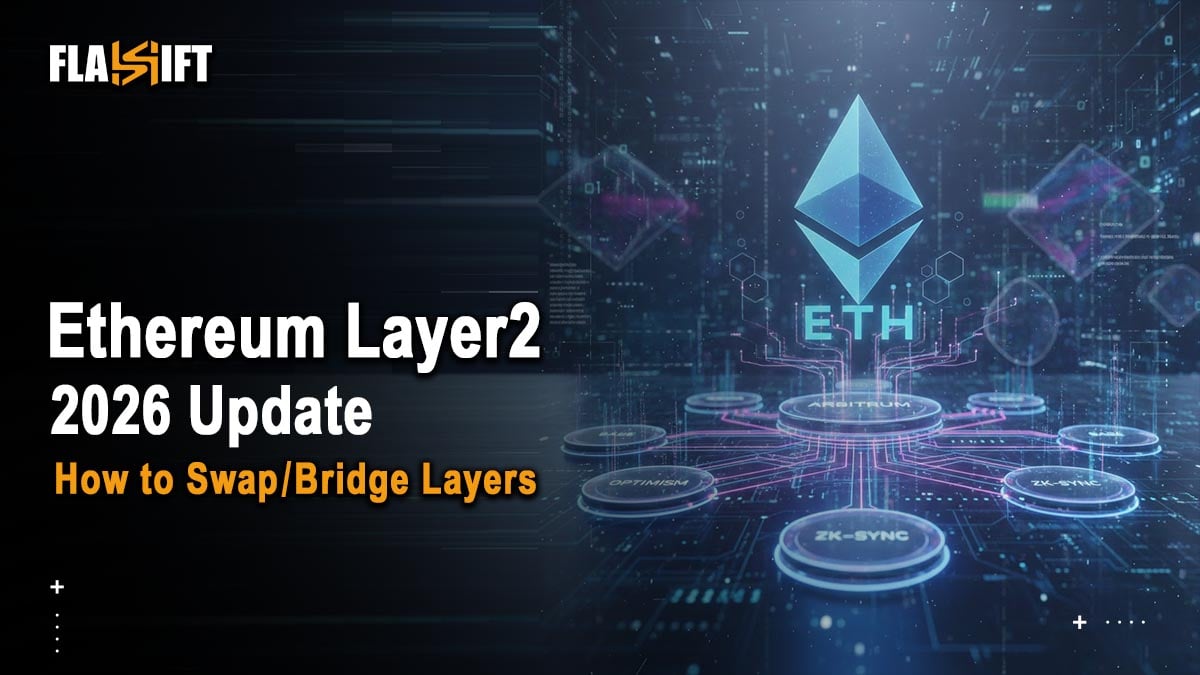
As Ethereum Mainnet transitions fully into a base settlement layer, executing daily trades on L1 is a rapid way to bleed capital through gas fees. For advanced operators, mastering how to bridge assets from Ethereum to Layer 2 solutions in 2026 is no longer optional—it is a baseline requirement for capital efficiency.
However, blindly using official native bridges traps your capital in 7-day withdrawal timelocks and exposes you to high mainnet friction. This execution guide eliminate the theoretical fluff to show you the fastest, non-custodial routes to swap liquidity directly into Arbitrum, Optimism, and ZK-rollups without surrendering your financial sovereignty.
The Liquidity Landscape: Where Should You Route Your Capital?
When you migrate capital to a Layer-2, you are executing a trade-off between transaction speed, ecosystem incentives, and liquidity depth. Here is the 2026 breakdown of where institutional and retail volume is flowing:
- Arbitrum (ARB): The undisputed king of DeFi liquidity. If your strategy involves perpetual DEXs (like GMX), lending protocols, or high-frequency trading, Arbitrum offers the deepest order books and tightest spreads.
- Base: Backed by Coinbase, this OP-Stack chain has captured massive retail momentum. It is the primary destination for consumer dApps, memecoin liquidity, and onboarding new market participants.
- Optimism (OP): Focused on public goods and the “Superchain” vision. It offers highly predictable fees and is favored by long-term ecosystem builders and governance participants.
- zkSync Era & Starknet: The frontiers of Zero-Knowledge (ZK) rollups. They offer mathematical security and near-instant finality, making them ideal for high-throughput automated trading.
💡 Execution Tip: If you are capturing a yield farm on Base but your capital is currently stuck on Arbitrum, routing your assets through a Zero-Approval cross-chain aggregator allows you to execute the rotation instantly—completely eliminating Ethereum Mainnet and saving you significant L1 gas fees.
📊 Execution Matrix: Native Bridges vs. Sovereign Aggregators
When deciding on the best ways to bridge assets from Ethereum to Layer 2, institutional and active traders evaluate routes based on slippage, speed, and custody risks.
| Routing Method | Settlement Speed | Exit Timelock (L2 to L1) | Privacy & Sovereignty | Best For… |
| Native Bridges (Arbitrum/OP Gateway) | 10 – 20 Minutes | 🔴 7 Days (Optimistic Rollups) | Fully On-Chain | Moving massive 7-figure deep storage capital. |
| Centralized Exchanges (CEX) | Depends on Network | None (Internal Ledger) | 🔴 Zero (Requires KYC & Custody) | Fiat on-ramping only. |
| Cross-Chain Aggregators (Flashift) | 🟢 Under 3 Minutes | 🟢 None (Instant Cross-Chain) | 🟢 Zero-Approval / No-KYC | Rapid portfolio rebalancing & avoiding L1 gas entirely. |
⚡ Execute Your Cross-Chain Swap: The Flashift Terminal
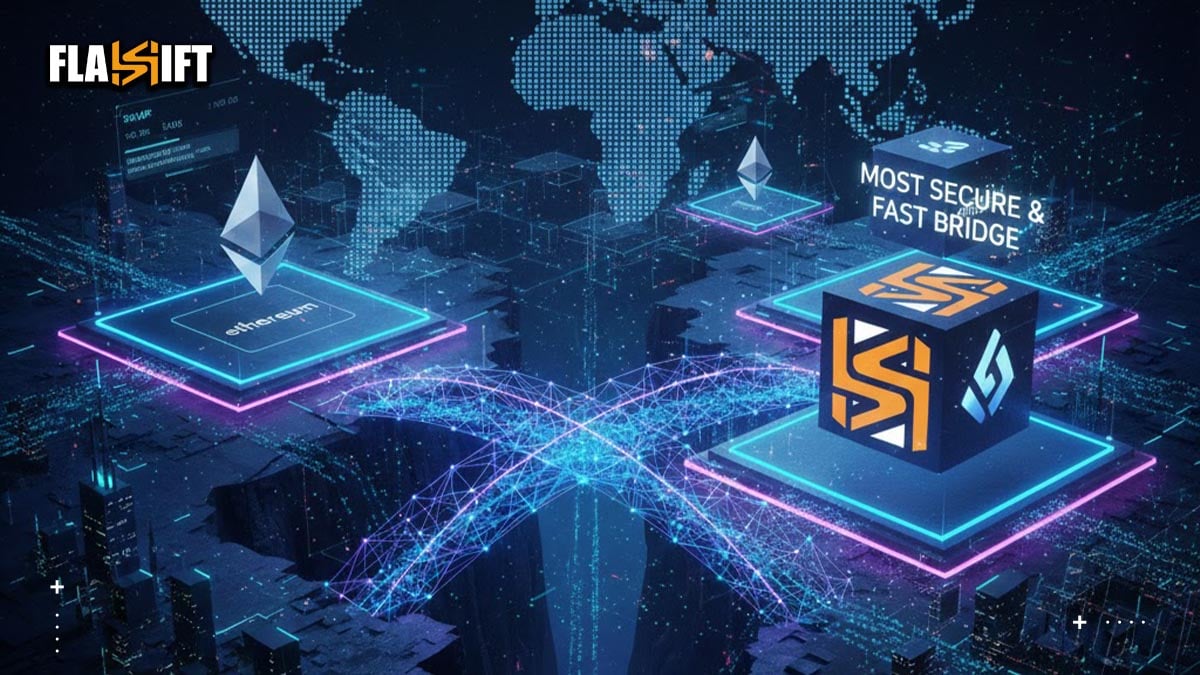
Professional operators do not move liquidity back to Ethereum Mainnet just to switch L2 ecosystems. If you need to rotate capital from Arbitrum directly to Base or Polygon zkEVM, executing an L2-to-L2 swap is the only capital-efficient move.
🛡️ Sovereign Cross-Chain Execution: Flashift operates as a pure Chain Abstraction layer. You can bridge and swap assets across all major Layer 2 networks instantly, without creating accounts, enduring 7-day optimistic timelocks, or paying mainnet gas fees.
🔗 How to Bridge / Swap to Ethereum L2s (Secure, Fast, and Easy)
Before aggregators and one-click swaps, Ethereum users relied on official L2 bridges. This is still the most direct and protocol-native way to move ETH to Layer-2.
Below is the traditional method, using the main platforms that power Ethereum L2 bridging.
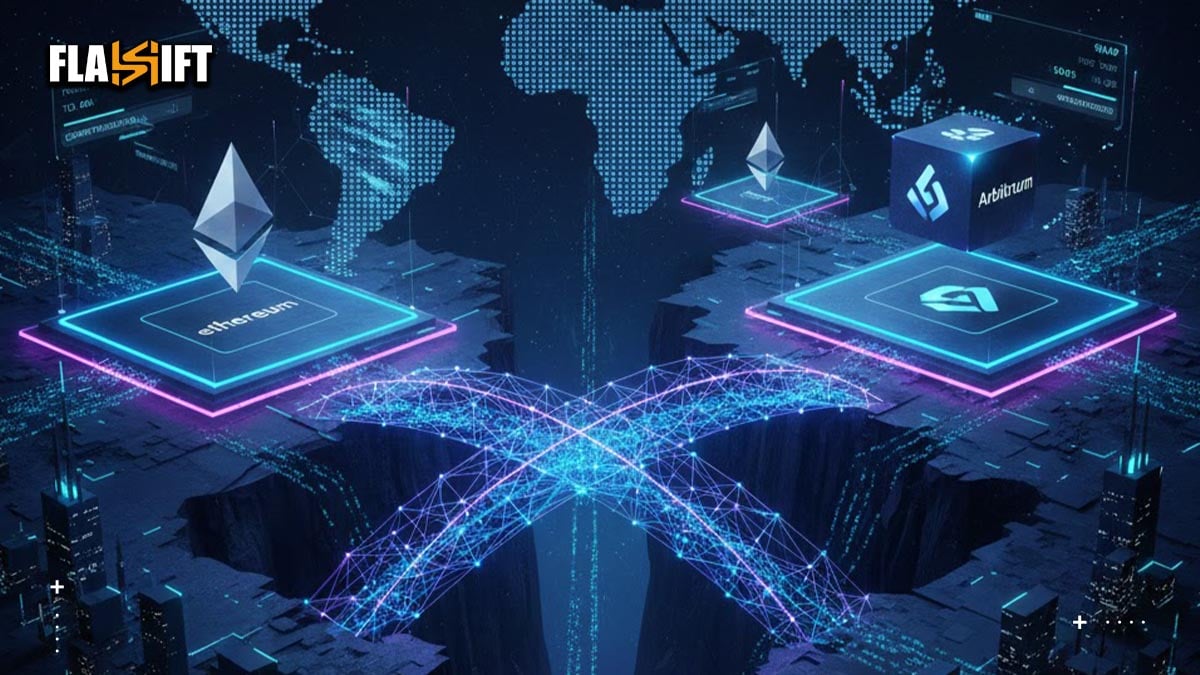
The traditional ETH L2 bridge (official platforms)
Each Layer-2 runs its own native bridge, fully controlled by the L2 protocol itself.
Main platforms used
- Arbitrum Bridge (for Arbitrum One & Nova)
- Optimism Gateway (for Optimism)
These are considered the canonical ETH L2 bridge solutions.
How the process works (step by step)
- Connect your wallet (usually MetaMask)
- Choose Ethereum Mainnet as the source
- Select the target L2 (Arbitrum or Optimism)
- Approve and send ETH
- ETH is locked on L1 and credited on L2
No middlemen. No liquidity providers. Pure protocol logic.
Pros and Cons of official ETH L2 bridges
| Pros | Cons |
| Highest security level | High Ethereum gas fees |
| Fully non-custodial | Slow exits to mainnet |
| Maintained by the protocol itself | Not optimized for frequent swaps |
| * This is why large transfers still prefer the native route | *This makes it less practical for active users. |
So, the traditional way to bridge ETH to Layer-2 uses official platforms like Arbitrum Bridge and Optimism Gateway. It’s the slowest and most expensive.
That’s why many users comparing optimism vs arbitrum now use faster swap-based solutions, while still trusting native bridges as the security baseline. What is the best opstion to bridge/swap Ethereum Layer-2s?
A full guide but an simple way to learn how to convert ETH to XMR.
Final Words
Flashift integrations turn complex Ethereum scaling into a simple action. Instead of choosing between bridges or worrying about optimism vs arbitrum, users get the fastest path, automatically.
That’s why Flashift fits perfectly into the modern ETH L2 workflow.
FAQ
- Is using an ETH L2 bridge always cheaper than staying on mainnet?
Not always. For small or one-time transactions, Ethereum mainnet fees can sometimes be comparable. The real savings appear when you make multiple transactions on L2 after bridging.
- Why do some users prefer to swap to Arbitrum instead of Optimism?
Liquidity depth is the main reason. Arbitrum hosts more active DeFi protocols and trading volume, which can mean better pricing and faster execution compared to Optimism.
- What’s the real risk difference between official bridges and platforms like Flashift?
Traditional official bridges expose your capital to massive security vulnerabilities. Historically, bridge smart contracts and wrapped assets act as decentralized honeypots, resulting in billions of dollars lost to protocol exploits.
Flashift completely eliminates this systemic vulnerability by bypassing bridge architecture entirely. Instead of locking your funds in high-risk smart contracts to mint synthetic wrapped tokens, Flashift utilizes direct cross-chain routing. This engine executes the exchange and delivers native assets directly to your destination wallet, reducing bridge-related smart contract risk to absolute zero.
- In optimism vs arbitrum, does the bridge choice affect security?
No. Both use optimistic rollups with similar security assumptions. The difference is not the bridge mechanism, but how quickly and efficiently users can move liquidity inside each ecosystem.
- Can I move funds directly between L2s without returning to Ethereum?
Yes. Modern platforms like Flashift.app allow L2-to-L2 swaps, skipping mainnet entirely. This is now one of the most efficient ways to rebalance capital across Ethereum Layer-2s.