
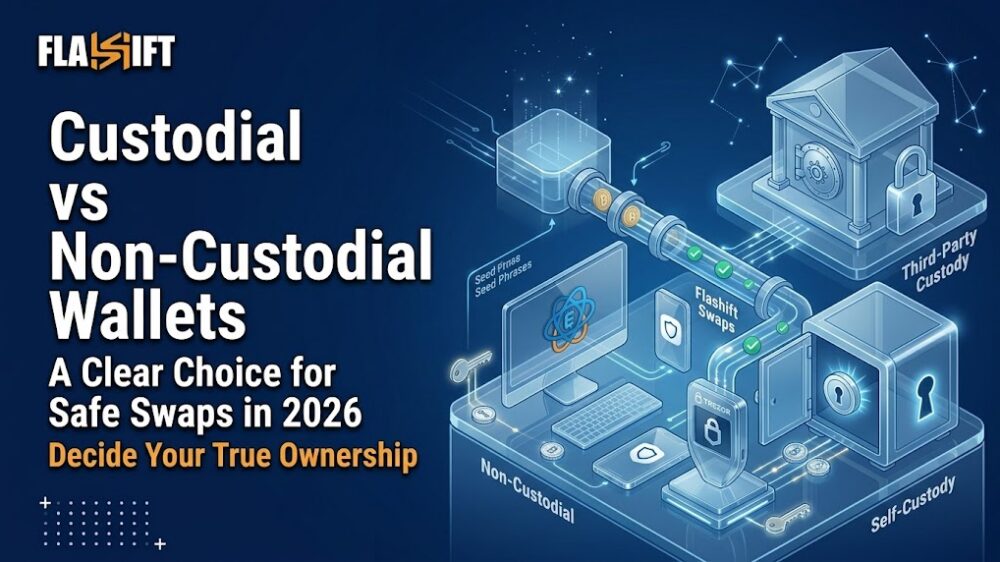
So, you bought some digital assets, but now you face a critical crossroads: who truly holds your capital? The core difference between a custodial vs non-custodial crypto wallet comes down to private key ownership. In a custodial setup, like a centralized exchange, a third party controls your keys, exposing you to sudden account freezes and KYC limits. Conversely, a non-custodial wallet grants you absolute financial sovereignty, giving you direct, uncensored control over your funds and…
If you are searching for the exact non kyc compliance meaning in the modern Web3 landscape, it simply translates to total financial sovereignty. KYC (Know Your Customer) requires centralized financial institutions to collect your identity documents, physical address, and facial biometrics before allowing you to access your funds. A decentralized wallet no kyc, on the other hand, operates purely on cryptographic code. It generates private keys directly on your device, ensuring that you—and only you—control…
The Rise of Meme Coins | You’ve successfully ridden a 100x momentum wave on a viral meme token, only to watch your profits evaporate because of a sudden withdrawal limit or a surprise compliance hold on a centralized ledger. 💸 In the hyper-speed market of 2026, catching the parabolic trend is only half the battle; the true differentiator is execution sovereignty. If you are still routing volatile gains through slow, custodial gateways that require personal…
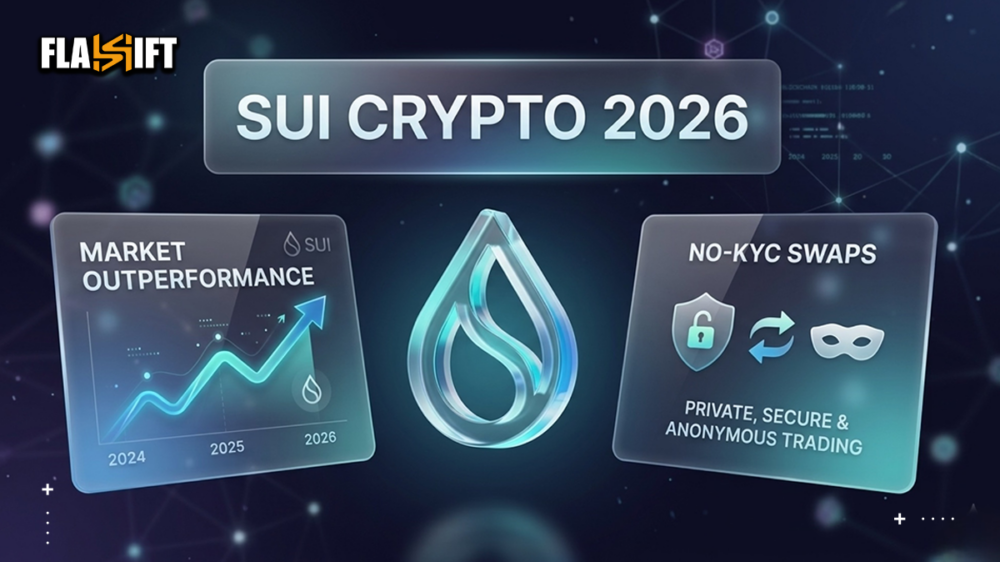
As legacy Layer-1 networks struggle with Layer-2 fragmentation and network congestion, Sui has transitioned from a high-beta speculative asset into a dominant infrastructural force. Sui’s market momentum is not a product of temporary retail hype. Instead, it is driven by a fundamental shift in how institutional capital and Web3 developers view smart contract architecture. With the historic launch of the Grayscale Sui Staking ETF (GSUI) on NYSE Arca and the deployment of Nasdaq-listed Spot Sui…
Crypto Arbitrage | In the cryptocurrency trading world, arbitrage opportunities are created because of price discrepancies across exchanges. However, usually, taking advantage of these differences involves complex processes, quick decision-making, and the risk of missed opportunities. This is where Flashift comes into play. Flashift, allows a user-friendly instant trade tailored to crypto arbitrage and makes it easy for traders to capitalize on market inefficiencies. In this step-by-step guide, you will see how Flashift simplifies the…
The Launch of RLUSD | The ever-changing landscape of cryptocurrency has seen another pivotal moment with Ripple’s introduction of RLUSD, a U.S. dollar-backed stablecoin. RLUSD is designed to offer stability and regulatory transparency, poised to enhance Ripple’s ecosystem and appeal to both institutional and retail investors. For investors in XRP, this development raises questions about how RLUSD (Understanding RLUSD) will affect the value, utility, and competitive positioning of XRP within the Ripple network. But beyond…
The RLUSD, is Ripple’s USD-pegged stablecoin, a state-of-the-art digital asset designed to answer the needs for stability and efficiency in the fast-changing cryptocurrency market. The RLUSD is issued on the XRP Ledger, and it’s pegged at a 1:1 basis with the US dollar to insure very low price-volatility. It maintains the speed and low cost of blockchain transactions. The following article will provide insight into the basic concept of RLUSD, its peculiar features, and its…
The world of cryptocurrency is moving so fast, and among all the promising projects, markets are very often saturated with speculative assets, better known as shitcoins. While some of these coins could impress investors with fancy marketing and short-term gains, they usually lack substance, utility, or long-term viability. As 2025 approaches, staying on top of potential pitfalls with your investments is key. In this cautionary guide, we go in-depth on the Top 5 Shitcoins to…
No-KYC cryptocurrency exchanges appeared as a good option, attracting users who value more privacy, speed, and accessibility from any part of the world. Such resources indeed provide significant advantages in conditions of refusing the classic procedures of Know Your Customer (KYC) verification-the things that can make registering slow and compromise users’ privacy. In this article, we’ll explore the key benefits of No-KYC exchanges, including the ability to facilitate secure anonymous crypto trading, and discuss some…
As of mid‑2025, the global cryptocurrency market is signaling renewed momentum: institutional crypto funds have climbed to a record $167 billion in AUM, with Bitcoin climbing over 15% in recent months. This resurgence marks a distinct shift in how crypto is viewed, not just as an alternative asset but as mainstream portfolio infrastructure. In this article, Flashift analyzes the forces shaping crypto in 2025: the rising tide of spot BTC/ETH ETFs, evolving global regulation (including the US…