

Whether you are seeking a non-custodial cross chain swap Polygon solution or you’re a trader tired of liquidity fragmentation, understanding Polygon’s current architecture is your biggest advantage.
To master Polygon execution, you must leverage three core mechanics:
- route cross-chain swaps through the cryptographically unified AggLayer to bypass fragmented pools,
- utilize wallet-free non-custodial aggregators to eliminate smart contract approval risks,
- and execute over the high-frequency PoS layer unless institutional-grade ZK-proof finality is required.
This direct approach minimizes your cost-basis while preserving absolute ownership of your private keys.
Secure multi chain swap engine POL in 2026
| Core Architectural Layer | Technical Solution / Operational Benefit | Gas Cost & Execution Profile | Security & Sovereign Trade Strategy |
| Polygon POL Tokenomics | Multi-chain validation model; validators stake POL to secure multiple networks simultaneously. | Near-zero fees 0.01 average overhead. | Avoid static holding; utilize dynamic aggregators to monitor real-time routing rates. |
| AggLayer Architecture | Unifies liquidity across PoS and zkEVM; enables instant, atomic cross-chain transactions. | Zero slippage pools via unified cryptographic state. | Route directly through AggLayer-compatible hubs to eliminate Layer-2 fragmentation. |
| zkEVM vs. PoS Delta | Dual-execution choices: high-speed PoS trading vs. Ethereum-backed zero-knowledge security. | PoS: Fractions of a cent.
zkEVM: Marginally higher (ZK-proof math). |
Use PoS for micro-transactions; deploy zkEVM for institutional-grade size and volume. |
| Chain Abstraction & Swaps | Trade assets directly without persistent wallet connections or signing infinite token approvals. | Absolute minimum routing fee without platform markup. | Mitigate contract exploits. Flashift’s AI automatically blacklists bait-and-switch or KYC-holding routers. |
Polygon POL Tokenomics 2026: What Traders Need to Know
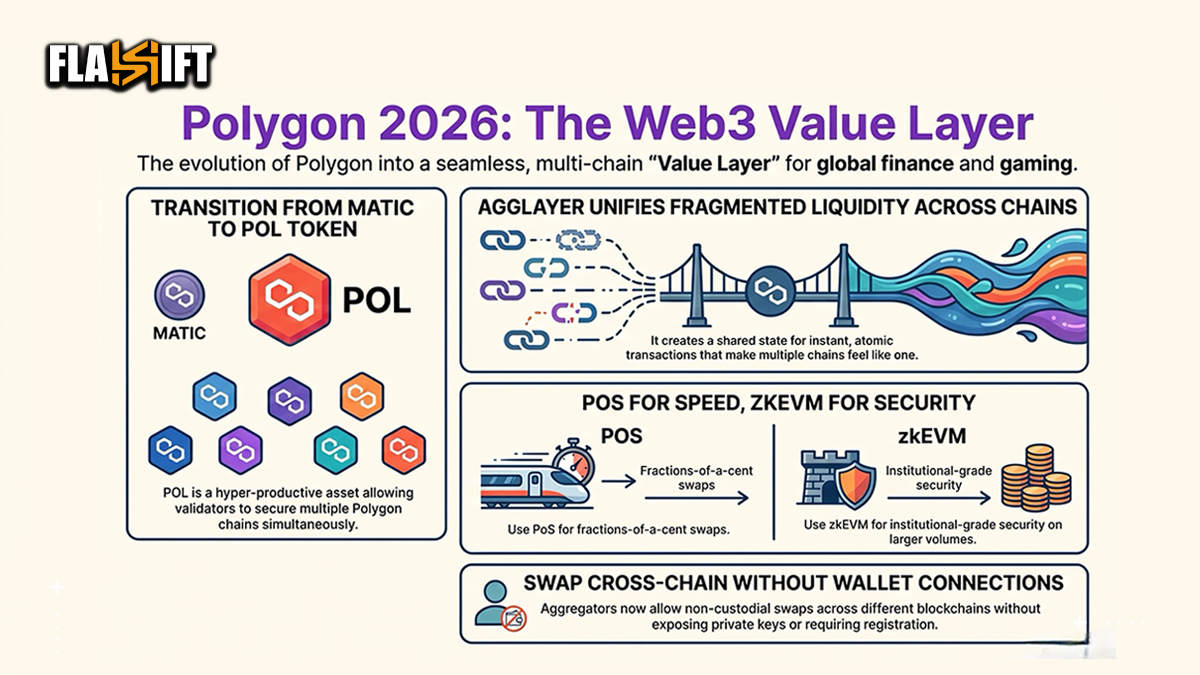
The evolution from MATIC to POL is officially complete, establishing a highly sustainable framework for the ecosystem. Under the updated Polygon POL tokenomics 2026, the POL token serves as a hyper-productive asset. Unlike the legacy setup, validators can now secure multiple chains within the network simultaneously, significantly increasing security across the board.
For everyday traders, POL remains the essential gas fee token. If you are hunting for the best routing rates for POL token, using a decentralized aggregator is crucial. Platforms that leverage a low fee crypto routing gateway POL infrastructure ensure that your transactions don’t get eaten up by network slippage, maintaining Polygon’s promise of fractions-of-a-cent execution.
Polygon AggLayer liquidity aggregation and Why it Matters
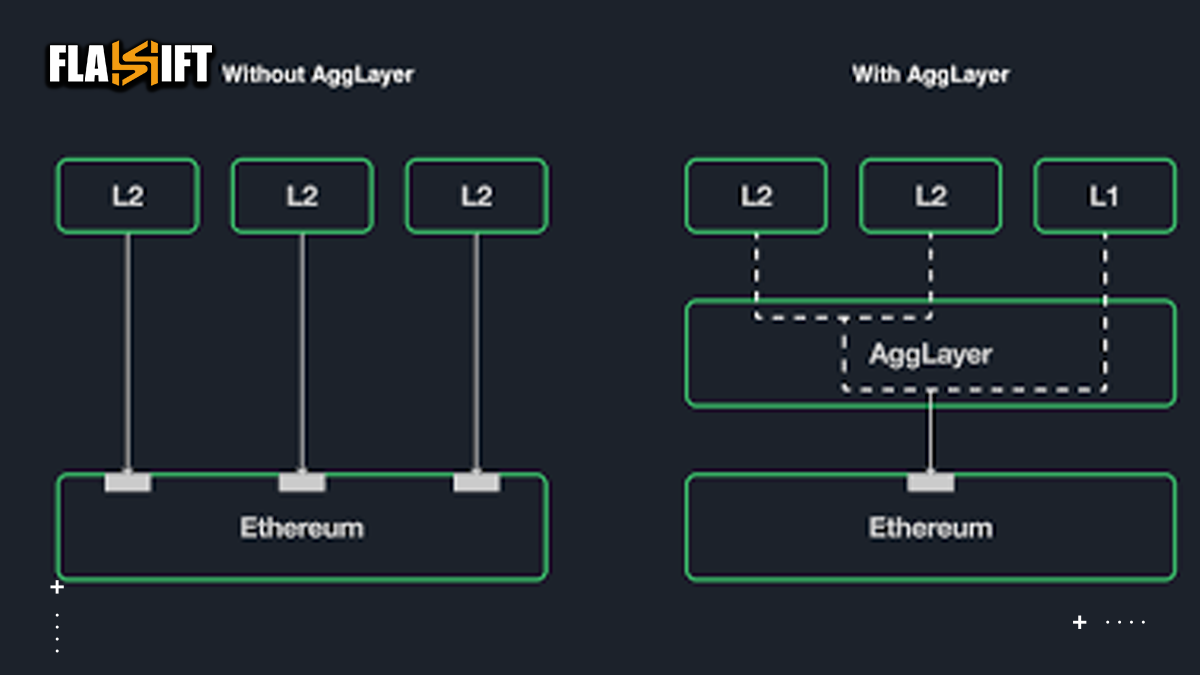
The biggest breakthrough in the ecosystem is the Polygon AggLayer liquidity aggregation layer. Historically, moving assets between Polygon PoS and zkEVM felt like moving between two different planets.
The AggLayer solves this by unifying liquidity across all Polygon-connected chains. It creates a shared state, allowing instant, atomic cross-chain transactions that feel like utilizing a single chain.
Polygon zkEVM vs PoS transaction fees 2026
When optimizing capital deployment across the ecosystem, understanding the exact cost delta between execution environments is mandatory. Here is the strict Polygon zkEVM vs PoS transaction fees 2026 breakdown:
- The PoS Chain: Remains the most highly optimized execution layer for high-frequency trading, costing fractions of a penny per swap.
- The zkEVM Layer: Carries a marginally higher gas cost due to the computational weight of cryptographic ZK-proofs submitted back to the Ethereum mainnet. However, it offers uncompromised, institutional-grade finality for massive DeFi volumes.
Because liquidity depths fluctuate violently across multiple AMM pools during high volatility, experienced traders verify execution paths through non-custodial aggregators to check real-time routing rates and prevent excessive slippage before executing across these dual layers.
How to Swap Tokens on Polygon Without Wallet Connection
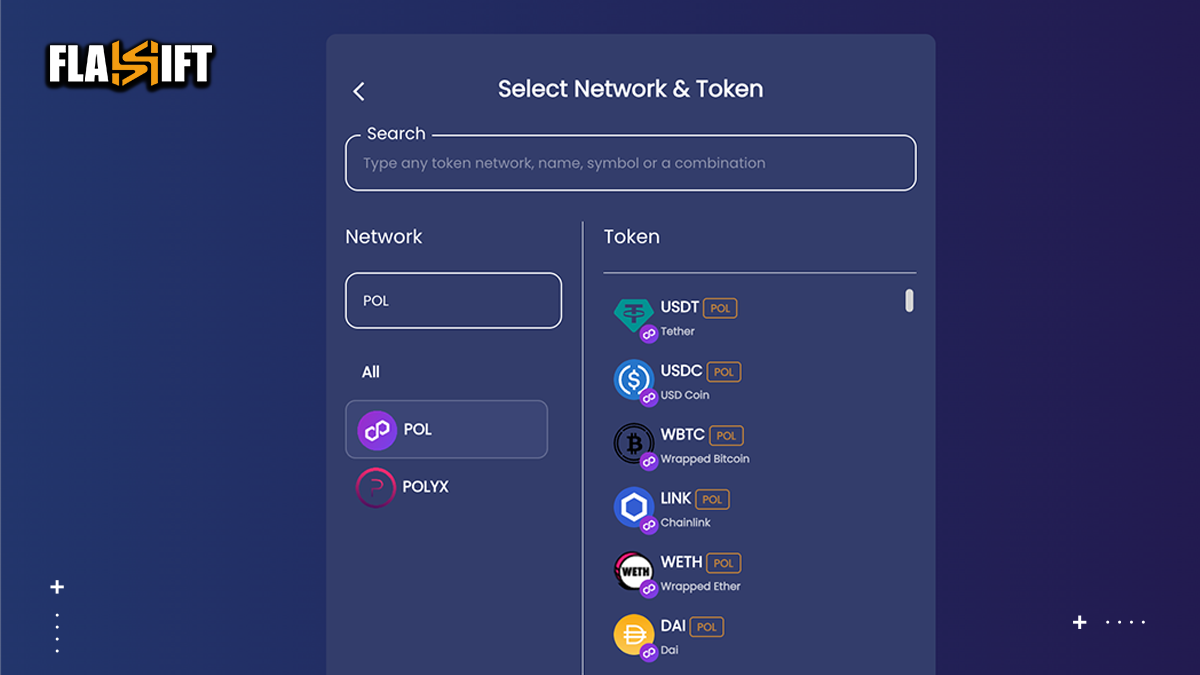
Most conventional decentralized exchanges force you to go through a tedious loop: download a wallet, secure seed phrases, connect to a risky smart contract, and pay onboarding fees. But what if you want a faster, safer alternative?
Through chain abstractions, the questions how to swap tokens on Polygon without wallet connection or mandatory registration have a practical answer. As a secure multi chain swap engine POL aggregator, our system scans floating and fixed rates from a wide range of exchange partners without storing your assets or asking for KYC.
Seamless Bridge Alternatives for Polygon Network
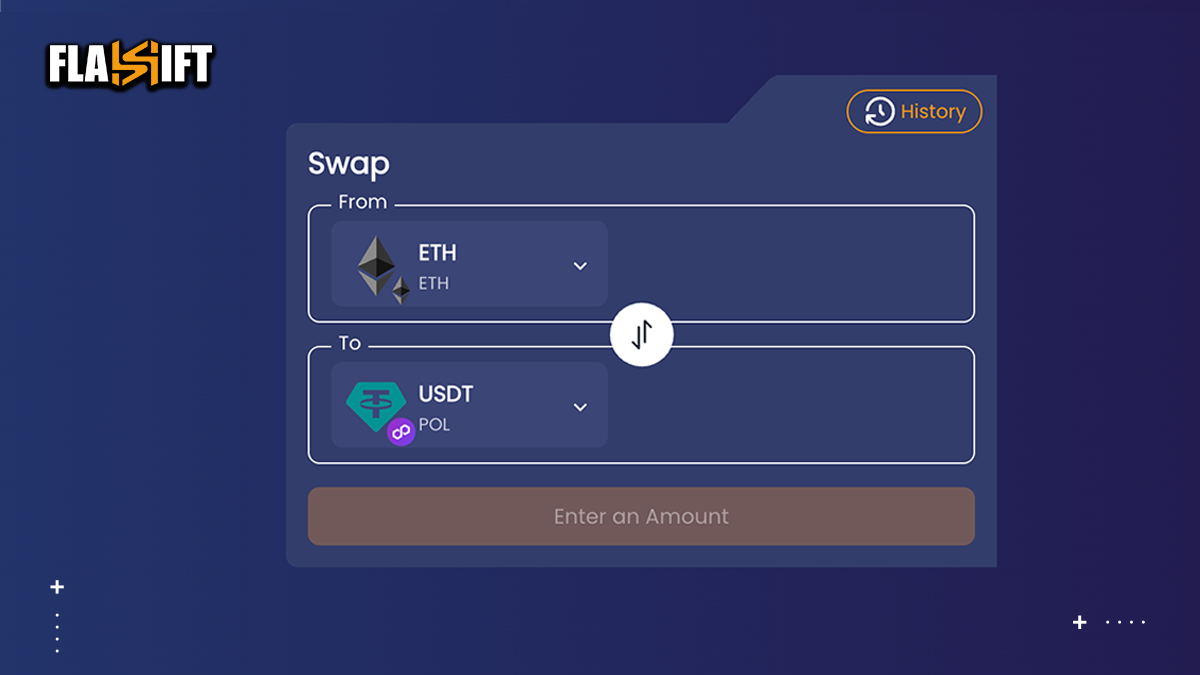
If you are holding assets on Bitcoin, Ethereum, or Monero and want to move them into the Polygon ecosystem, you don’t need to risk your funds on vulnerable, centralized cross-chain bridges. Aggregators like Flashift offers the ultimate bridge alternatives for Polygon network by letting you perform direct cross-blockchain swapping. You simply send your native coin and receive POL or any Polygon-based token directly in your destination address.
Automated Smart Tagging Crypto Exchange Polygon Integration
To eliminate routing inefficiencies, advanced aggregators deploy an automated smart tagging crypto exchange Polygon protocol. AI routing engines in aggregators like Flashift is not merely designed to scan for the absolute lowest nominal rates; instead, it executes continuous post-trade analysis on every transaction to automatically purge predatory platforms from the swap path.
By dynamically tracking execution data, the AI instantly flags and eliminates exchanges deploying bait-and-switch tactics, where attractive upfront quotes are masked by artificial slippage, or those triggering sudden, post-deposit KYC requests, thereby mathematically guaranteeing transaction security across the multi-chain gateway.
FAQ
Can I execute a non-custodial cross chain swap Polygon transaction without a bridge?
Yes. By using aggregators with AI routing engines like Flashift, you can swap tokens from entirely different blockchains (like BTC or XMR to POL) in a single action, coming over the need for traditional, asset-locking bridges.
What is the safest way to swap tokens on Polygon if I am worried about smart contract hacks?
The safest method is to use a gateway that doesn’t require a permanent dApp connection. non-custodial aggregators like Flashift allows you to trade on Polygon without a direct wallet connection, meaning your wallet is never exposed to ongoing token approvals or smart contract vulnerabilities.