
Can you still cash out Bitcoin in Europe without triggering a wall of identity checks? In 2026, the answer is no longer found in legal loopholes, but in understanding how transactional tracking is architected. With the full implementation of the Markets in Crypto-Assets Regulation (MiCAR) and the recast Transfer of Funds Regulation (TFR), the EU has permanently shifted the boundaries of transactional privacy. This guide outlines how the regulatory landscape operates in 2026, provides a…

Why are Web3 developers still forcing users to manually bridge tokens, calculate slippage, and manage gas across isolated networks?  The requirement of the modern market is Chain Abstraction, the ability to run a single logical application that natively spans multiple distinct ledgers. The solution is moving past the primitive “lock-and-bridge” token migration phase and deploying unified execution networks where: A decentralized credit market on Arbitrum can dynamically evaluate collateralized positions on Ethereum mainnet. A gaming…

Derive a Private Key from a Blockchain Transaction | Every time you broadcast a transaction, you expose your wallet address, public key, and cryptographic signature to a global public ledger forever. For high-volume traders and long-term HODLers, this visibility triggers a critical anxiety: Could an observer, an advanced blockchain analytics firm, or a malicious actor analyze this public data to reconstruct your private key? With sovereign custody being the only defense against centralized platform freezes…

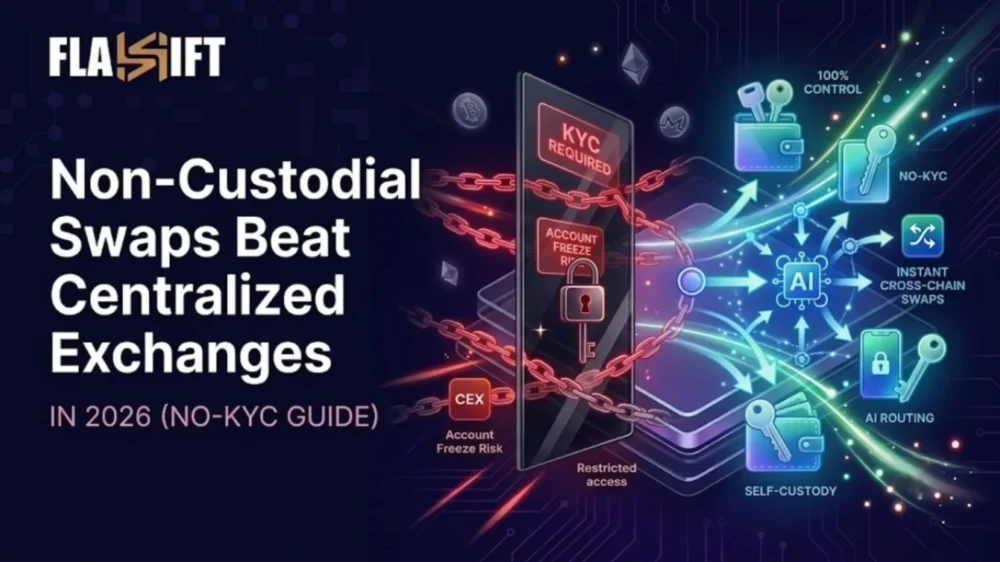
The year 2026 has brought unprecedented liquidity to the crypto markets, but it has also introduced a harsh reality for high-net-worth investors: centralized exchanges (CEXs) are no longer just trading venues; they are aggressive regulatory checkpoints. For whales and long-term HODLers, leaving assets on a custodial exchange—even for the few minutes required to execute a trade—violates the core ethos of decentralized wealth. The modern standard for high-volume traders is the Sovereign Swap. This architecture allows…

Moving funds between blockchains should not feel complicated or expensive. Yet many users trying to swap USDT on TRON into Toncoin often face confusing bridge steps, network compatibility issues, and unexpected fees during the process. As the TON ecosystem continues to grow, the demand for a faster and simpler way to move assets into the network is increasing rapidly. A modern cross-chain solution removes these barriers by allowing users to swap USDT to TON without…