
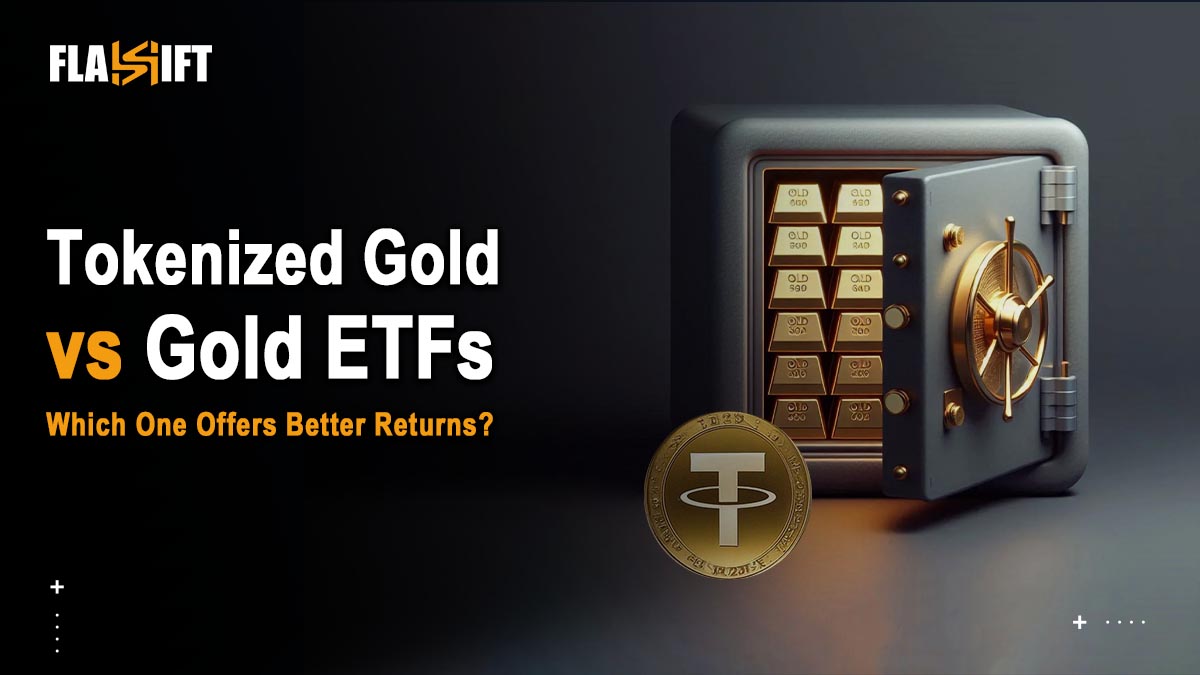
For centuries, gold has been the ultimate store of value, but the way people invest in it is changing fast. On one side, you’ve got Gold ETFs, a tried-and-true option that gives investors a simple way to track gold prices without holding the metal itself. On the other side, there’s the new kid on the block: tokenized gold, where blockchain technology turns gold into digital assets you can stake for extra yield.
Both sound appealing, but the question is: which one really pays off better in today’s markets?
As global inflation concerns rise and investors from the U.S. to the Middle East are rethinking their portfolios, this comparison isn’t just about technology, it’s about making the smarter choice for your money. So, let’s explore this treasury!
Introduction to Tokenized Gold and Gold ETF
Tokenized Gold Staking in Plain English
At its core, tokenized gold is straightforward: every digital token you hold represents a specific amount of physical gold stored in a secure vault. What makes it different is the ability to stake those tokens. By locking them up on a blockchain platform, you earn rewards (extra tokens or interest-like payouts).
This turns gold into something it has never been before: a yield-bearing asset. Traditionally, you’d hold gold simply to preserve value. Now, with staking, you can make that gold work for you while it sits in digital form. Of course, this comes with the risks tied to blockchain systems—smart contract bugs, the credibility of issuers, and a regulatory environment that’s still unsettled.
Gold ETFs: The Established Choice
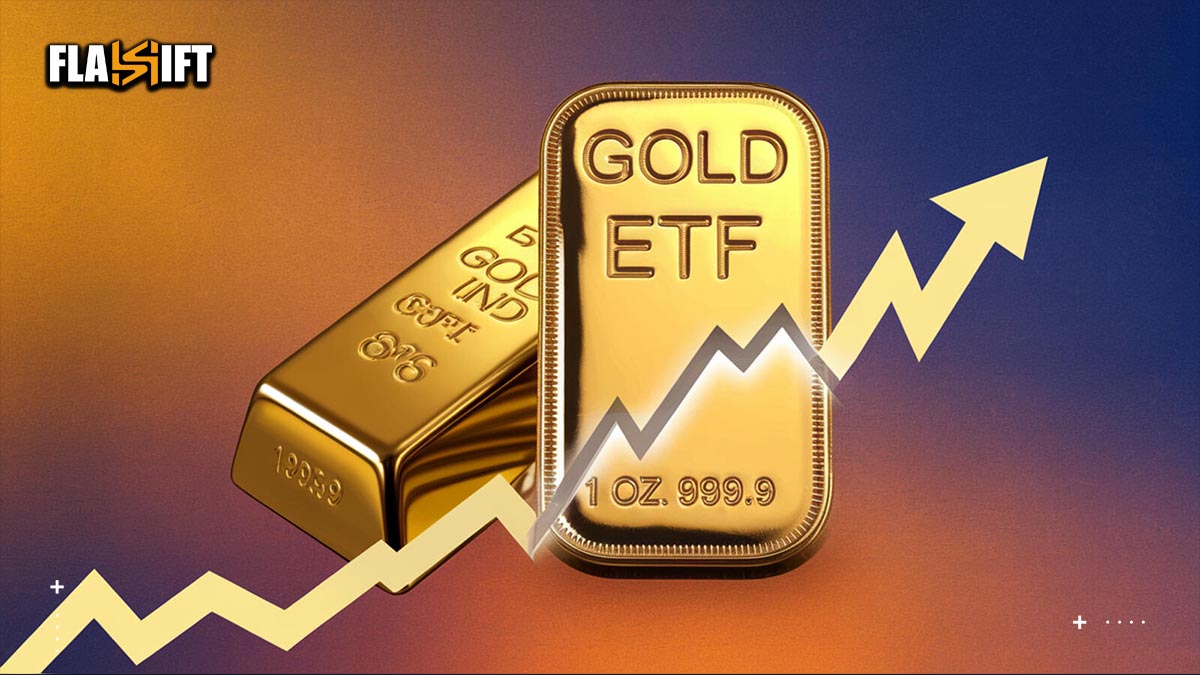
Gold ETFs, on the other hand, need little introduction. They trade on major stock exchanges, backed either by physical bullion or derivatives that track the gold price. Investors like them because they’re easy to buy and sell through regular brokerage accounts, they’re liquid, and they’re overseen by regulators.
What you don’t get with ETFs is yield. Returns are entirely tied to the direction of gold prices. If gold rises, your ETF shares rise. If gold falls, so does your investment. It’s predictable, transparent, and for many institutions, the only acceptable way to gain exposure to the metal.
Where the Differences Matter Most
When you compare the two, the gap isn’t just technical, it’s philosophical:
- Returns: Tokenized gold staking offers more upside because staking rewards stack on top of gold’s price moves. ETFs simply mirror gold’s performance.
- Liquidity: ETFs have deep markets and heavy daily trading volume, but they’re bound by stock exchange hours. Tokenized gold trades around the clock, though some tokens still suffer from low liquidity.
- Risk Profile: ETFs come with regulatory oversight and relatively low operational risk. Tokenized gold offers innovation but carries platform and regulatory risks that investors can’t ignore.
- Accessibility: ETFs are perfect for investors who live within well-developed financial systems. Tokenized gold, however, lowers the barrier to entry globally. You just need a wallet, not a Wall Street broker.
If you’re looking for innovation, higher potential returns, and global accessibility, tokenized gold staking opens up possibilities that ETFs can’t match. Let’s take a look at Gold Financial Analysis for this year.
Read More: Ripple (XRP) ETF Explained: Everything You Need to Know in 2025
2025 Financial Landscape: Gold ETF in the Spotlight
Gold has been on a tear this year—driving surprising momentum across both traditional and digital formats:
Gold’s price climbed sharply, driven by inflation concerns, geopolitical instability, central bank buying, and de-dollarization trends. Some reports peg the year-to-date rise around 25–27%.
Gold ETFs are surging: assets under management in global gold ETFs hit a new high of US $386 billion, with holdings reaching 3,639 tonnes, their highest since mid-2022. Investors poured roughly US $30 billion inflows into gold ETFs in H1 2025.
Gold-miner ETFs are outperforming traditional gold funds: Miners like GDX (+32 %), GDXJ (+30 %), and RING (+33 %) have noticeably outpaced large bullion ETFs like GLD and IAU, each around +15.5 %.
Innovative ETF structures like GOLY, blending gold futures with bond income, are seeing double-digit returns. GOLY has delivered ~23 % YTD and 37 % over 12 months, plus an annual bond yield (~5 %).
Tokenized Gold Staking: Financial Trends in 2025
Tokenized gold is showing strong signs of growth, though clear yield data remains sparse:
Market growth is undeniable: Tokenized real-world assets (excluding stablecoins) now total US $25 billion, a 120% year-over-year rise. Within that, gold-backed tokens have grown to about US $1.6 billion, and daily trading volumes are surging.
Institutional interest is climbing: Institutions are exploring tokenized gold for its liquidity, transparency, and programmability—especially now that physical gold markets are slipping under logistical constraints.
Gold’s robust performance supports the narrative: Investments around gold tokenization benefit from a gold price that has surged around 27% in 2025, making tokenization especially compelling.
Technology and infrastructure improvements: Platforms like Bybit are integrating tokenized gold (XAUT) on faster, cheaper blockchains (e.g., TON), improving settlement speed and usability.
Side-by-Side 2025 Comparison
| Metric | Tokenized Gold Staking | Gold ETFs (incl. Miners & Hybrid) |
| Price Appreciation | Mirrors gold’s ~25–27% rise | Similar for bullion ETFs; miners and hybrid ETFs outperform (~30 %+) |
| Additional Yield | Staking rewards possible (though data sparse) | Gold-miner ETFs: no yield; GOLY offers bond income + gold exposure (~5 %) |
| Market Growth | Rapid: Tokenized RWAs +120%; gold tokens ~$1.6 B | Massive inflows: +$30 B into gold ETFs in H1 2025; AUM at $386 B |
| Liquidity & Access | 24/7 global trading; increasingly easier via better platforms | High liquidity during market hours only |
| Institutional Adoption | Growing interest; tech enhancements improving trust | Solid demand, with insurance companies looking to invest (e.g. India) |
| Risk & Infrastructure | Smart contract + regulatory risks; custodian trust needed | Low operational risk; highly regulated and transparent |
In clearer terms:
Gold ETFs offer familiarity and steadiness with strong performance in 2025, while tokenized gold staking is the fast-rising disruptor, bringing new levels of utility. This year, the smartest players are using both to hedge uncertainty and capture opportunity.
Why Buying and Staking Tokenized Gold Makes Sense in 2025?
In 2025, owning gold doesn’t just mean locking it away, it can actually earn you income. That’s where tokenized gold like PAX Gold (PAXG) and Tether Gold (XAUT) comes in.
Both tokens are fully backed by physical bullion sitting in secure vaults, yet unlike traditional gold or even ETFs, they can be staked. In practice, that means you lock your tokens on a platform or protocol, and in return, you earn yield. It turns an asset that’s historically been passive into one that actively generates returns while still tracking the price of gold.
For investors, that’s a unique blend: the timeless safety of gold combined with the yield mechanics of crypto. And importantly, you’re not confined to Wall Street’s trading hours—tokenized gold moves on your terms, 24/7, across the globe.
What’s the Real ROI of Staking Tokenized Gold?
Here’s where it gets interesting. The return on staking depends on the token and the platform you choose, but 2025 has shown a clear trend:
- PAXG tends to offer modest but steady yields. On platforms like Nexo or YouHodler, investors see somewhere between 3% and 7% annually, sometimes a little higher. It’s not life-changing, but it’s reliable and comes on top of gold’s own price movements.
- XAUT can be far more aggressive. Certain platforms have advertised returns north of 10%, and some of them like CoinUnited.io, headline-grabbing figures of 50%+ APY. While that’s eye-catching, those higher yields usually come with higher risk, so credibility of the platform becomes critical.
| Token | Platform | Estimated Yield |
| PAX Gold (PAXG) | YouHodler, Nexo, CoinW | ~0.7% – 7% APR |
| Tether Gold (XAUT) | CoinUnited.io | ~55% APY (compounded) |
| Tether Gold (XAUT) | OKX and similar exchanges | ~12% APR |
| XAUT outlier | Unverified platforms | Up to 200%+ — risky |
The reality is this: even on the conservative side, earning a few percent a year on gold holdings is a big shift. Gold, by nature, doesn’t yield anything—yet staking flips that script. For long-term holders, that extra return compounds meaningfully over time, especially in years like 2025 where gold itself is already up more than 20%.
The bottom line? Tokenized gold gives you the chance to hold an age-old safe haven and still collect a yield. If you’re already bullish on gold, staking tokens like PAXG or XAUT simply makes the asset work harder for you, without sacrificing its underlying stability.
Make Your Gold Work Harder: Buy PAXG & XAUT using Flashift and Start Staking!

When it comes to investing in tokenized gold, safety and reliability are non-negotiable. That’s where Flashift stands out. As a secure and user-friendly platform, Flashift makes buying PAX Gold (PAXG) and Tether Gold (XAUT) simple, fast, and safe. Why let your gold sit idle when it can earn for you?
With Flashift, your gold doesn’t just hold value but generates it.
FAQ
1. Can staking tokenized gold outperform gold ETFs in a rising market?
Yes. Staking adds yield on top of gold’s price movements, potentially giving higher returns than ETFs, especially in a strong gold rally.
2. Is the extra yield from tokenized gold worth the added risk?
It depends on your risk tolerance. You gain higher potential returns but take on platform, smart contract, and regulatory risks not present with ETFs.
3. How liquid is tokenized gold compared to gold ETFs?
Tokenized gold trades 24/7, but liquidity varies by platform. ETFs are highly liquid but only during stock market hours.
4. Does geography affect which option is better?
Absolutely. In regions with limited access to ETFs, tokenized gold can be more accessible. In regulated markets like the U.S. or Europe, ETFs may feel safer.
5. Can I combine both for a smarter portfolio?
Yes. Many investors hold ETFs for stability and stake tokenized gold for yield, balancing safety with growth potential.