
The XRP ETF surge is gaining pace. Bitwise announced the launch of its new XRP fund, calling it a major leap for the world’s third-largest crypto asset and its mission to redefine global payments.
You’ve held the the world’s third-largest crypto asset before, watched the headlines. Now you’re wondering: “What’s really changed?”
The answer lies in the latest entry in the crypto-ETFs landscape: the first-ever spot XRP ETF, giving regulated access to XRP in a way that wasn’t possible until now. This isn’t just another product, this could mark a turning point for how altcoins integrate into mainstream finance.
This guide, is here to give you a clear, long-term view:
- what an XRP ETF is,
- how it works,
- who it helps,
- what the market is telling us so far,
- and how it fits into the future of altcoin ETFs.
Throughout, we’ll connect the dots with ETF rules and cross-chain regulation, so you understand not just the hype, but also the regulatory and structural context that will decide whether XRP ETFs are a short-term catalyst or a structural shift in how capital enters the XRP ecosystem.

What is an XRP ETF?
An XRP ETF (often called Ripple ETF in headlines) is a traditional exchange-traded fund that gives you price exposure to XRP through your regular brokerage account, without you having to buy or hold XRP directly.
Think of it as a wrapper: the fund owns XRP (or tracks XRP through an index or basket), and you trade shares of that fund on stock exchanges.
For many investors, especially in the U.S., this is the first time they can get regulated XRP exposure inside retirement accounts, robo-advisors, and institutional portfolios, under existing ETF infrastructure.
Read More: What is an ETF? (Exchange-traded Fund)
How XRP became an ETF asset
Until 2025, ETF access was mostly limited to Bitcoin and Ethereum, plus some offshore crypto ETPs. Spot XRP exposure lived on centralized exchanges or self-custody wallets.
Two big shifts changed that:
- New SEC crypto ETF rules in 2025 introduced clearer, standardized listing criteria for spot crypto ETFs. That removed a lot of one-off negotiation and opened the door for major altcoins like XRP and Dogecoin.
- Issuers like Canary Capital, Bitwise, and Grayscale filed and then received approvals for spot XRP ETFs, which are now listed on U.S. exchanges with hundreds of millions in inflows.
In other words: XRP moved from being a “crypto-exchange-only” asset to a Wall Street-compatible ETF asset.
Spot XRP ETF vs futures and ETPs
A few key distinctions:
Spot XRP ETF
- The fund holds actual XRP (via a custodian).
- Shares track the spot price more tightly.
Futures-based products
- Hold XRP futures contracts, not real XRP.
- Can have higher costs and tracking issues over time.
For most mainstream investors, the spot XRP ETF is the cleanest way to plug XRP into existing portfolios.
Read More: SEC Crypto ETF Rules 2025: Unlocking the Next Wave of Altcoin ETFs
How an XRP ETF Works
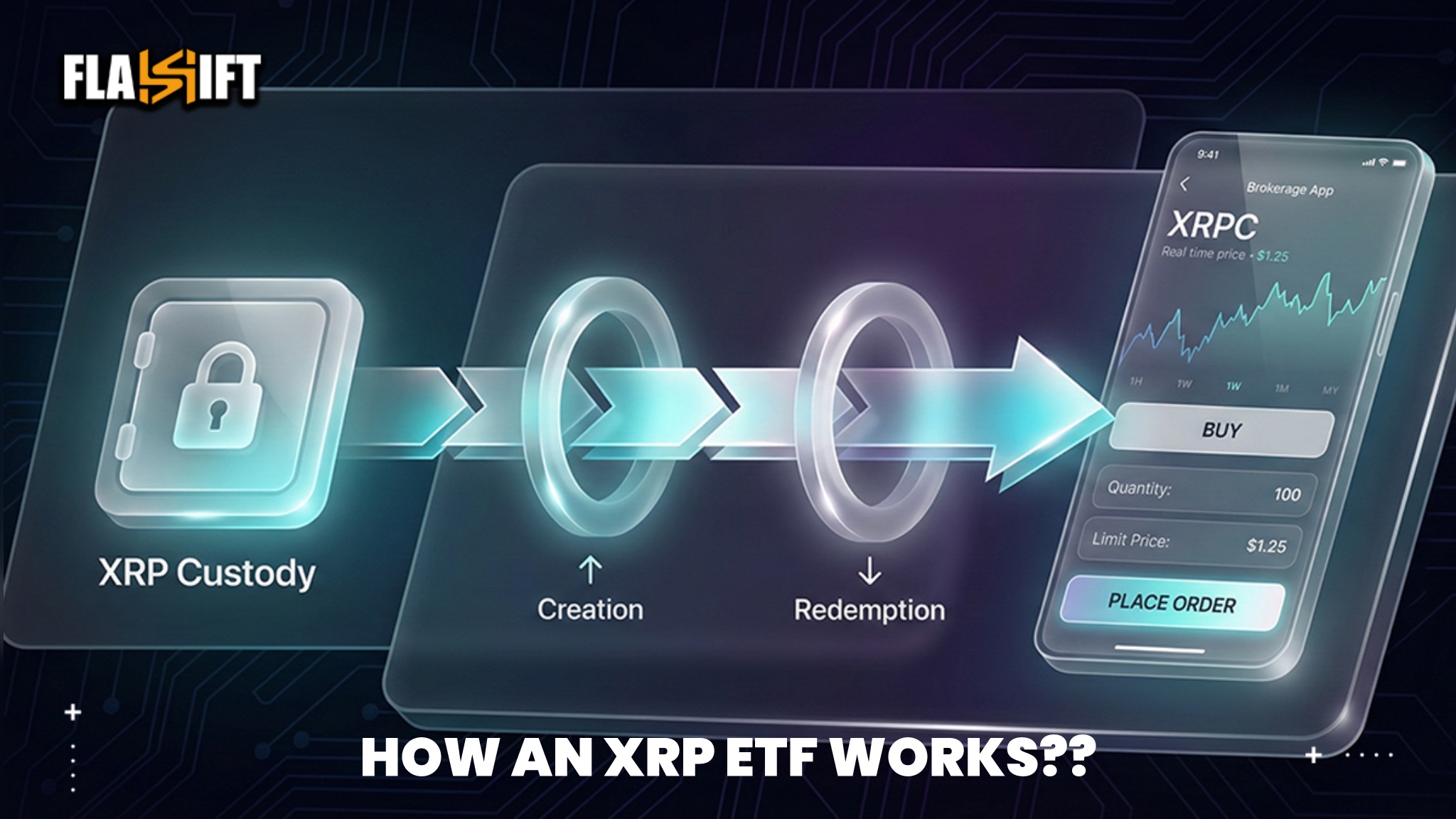
At a high level, a Ripple ETF / XRP ETF is built like any other spot crypto ETF: it holds XRP, issues shares, and tries to track the XRP price as closely as possible.
For you as an investor, it’s simple: you buy or sell ETF shares; under the hood, a regulated structure manages XRP custody, creation/redemption, and compliance.
How XRP ETFs track the underlying price
The XRP ETF ecosystem normally has three key participants:
- ETF issuer: Designs and oversees the fund.
- Authorized Participants (APs): Large trading firms that can create or redeem ETF shares in bulk.
- Custodian: Securely holds the underlying XRP.
When demand rises:
- APs deliver XRP (or, in some funds, cash) into the ETF structure.
- In return, they receive creation units of ETF shares.
- They can then sell these shares on the exchange.
When demand falls:
- APs buy ETF shares on the market and redeem them with the issuer for XRP or cash.
This creation/redemption loop helps keep the ETF’s market price close to the real XRP spot price. Canary’s XRP ETF supports in-kind creations, which analysts say contributed to its tight spreads and strong liquidity at launch, although cash creations/redemptions may also be used.
Read More: Ripple and Dogecoin ETF: What Investors Should Know Before Jumping In
What these funds actually hold
Behind the scenes, a spot XRP ETF typically:
- Holds XRP with a qualified custodian (cold storage, segregation, insurance, SOC audits).
- Relies on a handful of APs and market makers to keep spreads narrow and volume healthy.
- Charges an expense ratio, usually somewhere in the 0.45%–0.95% range (still evolving for altcoin ETFs).
For investors, that fee is the “price” of convenience: no private keys, no exchanges, no self-custody complexity.
How investors actually buy an XRP ETF
From the user side, it’s the easy part:
- Search the ETF ticker (e.g., XRPC) in your existing brokerage, robo-advisor, or trading app.
- Buy or sell shares like you would with a stock or S&P 500 ETF.
- In some regions, you can hold it in retirement accounts or managed portfolios.
You’re not interacting with blockchains directly; you’re buying a regulated, exchange-traded wrapper around XRP.
Benefits & Risks of a Ripple ETF
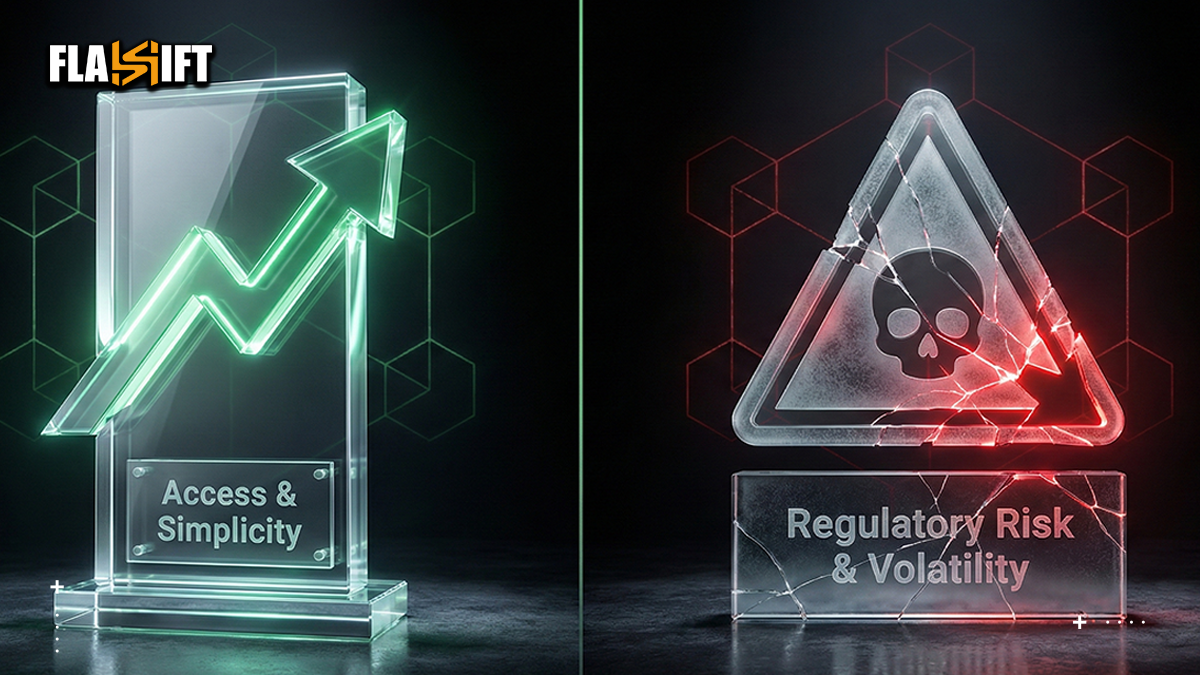
A Ripple ETF / XRP ETF isn’t automatically “better” than holding XRP directly—it’s just a different tool. Whether it works for you depends on your goals, jurisdiction, and risk tolerance.
Who an XRP ETF is really for
An XRP ETF especially makes sense for:
- Traditional investors who don’t want to manage wallets and private keys.
- Financial advisors & wealth managers who can’t touch unregulated exchanges but can allocate to ETFs.
- Institutional allocators with mandates that require exchange-traded, regulated products.
If you’re already comfortable using cross-chain swaps, self-custody wallets, and platforms like Flashift, the ETF is more about portfolio wrappers and tax structure than access.
Main advantages vs buying XRP directly
Key benefits of an XRP ETF:
- Easy access: No need to onboard to a crypto exchange or DeFi app.
- Regulation & oversight: Subject to securities laws, disclosure, and regular reporting.
- Custody handled for you: Professional storage, insurance, and operational security.
- Tax & accounting simplification: For some jurisdictions, tracking ETF shares is simpler than wallet-level UTXOs and swaps.
For many mainstream investors, that’s enough to justify the management fee.
Core risks
But there are real risks:
- Crypto volatility still applies: An XRP ETF doesn’t magically remove XRP’s price swings.
- Tracking error: Fees, spreads, and operational friction can create small gaps versus spot XRP.
- Regulatory shocks: Changing SEC or global policies on altcoin ETFs could impact AUM, liquidity, or even cause delistings.
- Liquidity risk: If ETF volume dries up or APs step back (e.g., in a crisis), spreads can widen.
For DeFi-native users, there’s another “risk”: by staying in an ETF wrapper, you may miss out on on-chain utility (staking, cross-chain yield, etc.) that direct XRP can access via tools like Flashift and cross-chain messaging protocols.
Read More: Tokenized Gold Staking vs Gold ETFs: Which Offers Better Returns?
Market Reaction to XRP ETFs
So far, the market reaction to XRP ETFs has been a textbook “ETF launch + crypto psychology” mix.
XRP price action before and after ETF approvals
Leading up to the approvals, XRP saw a speculative run-up as traders priced in ETF news. After the Canary ETF started trading with record inflows, XRP actually dropped around 9%—classic “sell the news” behavior seen previously with Bitcoin and Ether ETF events.
The key insight:
Short-term price doesn’t always move the way headlines suggest. ETF approval is often front-run by the market.
Flows, volume, and liquidity
The interesting part is not the day-one price, but:
-
The XRP ETF attracted $250 million on its debut, breaking the 2025 record. More launches are anticipated.
- Record ETF debut of 2025, surpassing both crypto and traditional ETFs so far this year.
- XRP ETF launches coinciding with a broader wave of altcoin ETFs (DOGE, SOL baskets, multi-crypto funds).
These flows show that there is real demand for regulated XRP exposure, not just on-chain speculation.
How traders are positioning around XRP ETFs
Traders seem to be using XRP ETFs in several ways:
- Directional exposure – Instead of opening an XRP position on an exchange, some traders buy XRPC in their brokerage for macro bets.
- Pair trades / relative value – Trading XRP ETF vs BTC or ETH ETFs as a way to express altcoin-vs-blue-chip views.
- Event-driven strategies – Front-running or fading ramp-ups ahead of new ETF launches (as we saw with XRP’s pre-approval rally and post-launch dip).
If you’re more DeFi-native, you might combine this with on-chain tools: e.g., using Flashift to move XRP across chains for yield, while using the ETF as a liquid off-chain hedge in your brokerage account.
Read More: What Is Ripple (XRP) and How Is It Disrupting Global Payments?
Future of Altcoin ETFs
The Ripple ETF / XRP ETF is not an isolated event; it’s part of a broader crypto ETF 2025 story.
XRP in the bigger picture — Solana, Dogecoin, and beyond
With XRP and Dogecoin now having U.S. spot ETFs, the market clearly moved beyond “just Bitcoin and Ethereum.”
Meanwhile:
- Index products from 21Shares bundle ETH, SOL, DOGE and others into crypto baskets.
- The Crypto Blue Chip ETF proposal from Trump Media includes a small allocation to XRP alongside BTC, ETH, SOL, and CRO.
- Analysts expect Solana, Chainlink, Polkadot and other large-cap altcoins to be next in line under the SEC crypto ETF rules 2025.
The pattern is clear: once Bitcoin and Ethereum ETF infrastructure proved itself at scale, regulators and issuers started looking at liquid altcoins with strong fundamentals and decent regulatory clarity.
How ETF rules and cross-chain regulation shape the next products
The new SEC framework does two important things:
- Makes the approval process more rules-based: if an asset meets criteria (liquidity, custody, regulatory status), listings can move faster.
- Enables in-kind creations with actual crypto, making ETF operations more efficient and attractive for APs and arbitrageurs.
At the same time, the rise of cross-chain ecosystems and messaging layers (Wormhole, LayerZero, Axelar) is pulling regulators into new territory: assets move across chains, liquidity fragments, and risk management becomes more complex.
What XRP and altcoin ETFs mean for portfolio strategy
For serious investors, the takeaway isn’t: “ETFs are good, spot is bad” (or vice versa). It’s:
- ETFs: great for regulated, plug-and-play exposure; ideal for certain accounts and mandates.
- Spot + Cross-Chain tools: best for DeFi participation, yield strategies, and privacy-preserving swaps (where platforms like Flashift shine).
A mature crypto portfolio in 2025 might combine:
- BTC / ETH / XRP / SOL via ETFs in a brokerage or retirement wrapper.
- Direct token exposure bridged or swapped via Flashift across chains for yield, liquidity, and tactical trades.
The Ripple ETF doesn’t replace XRP, it adds another route for capital to enter the ecosystem.
Final Thoughts
The Ripple ETF / XRP ETF is one of the defining milestones of crypto ETF 2025. It proves that altcoins with real liquidity and use-cases can graduate into the regulated ETF arena, not just live on exchanges and cross-chain rails.
Whether you choose the ETF, spot XRP, or a mix of both, the key is understanding:
- What exactly you’re buying
- How the product works
- Which risks you’re accepting (regulatory, tracking, liquidity)
- How it fits into your on-chain and off-chain strategy
In short: XRP’s ETF era has started. The question now isn’t if altcoin ETFs are here to stay, but how you’re going to position yourself around them.
FAQs:
- What exactly is a Ripple (XRP) ETF and how is it different from just buying XRP?
A Ripple ETF/XRP ETF is a regulated investment fund listed on a stock exchange that gives you exposure to the price of the digital asset XRP without having to directly buy, store, or manage XRP yourself. Instead of using a crypto exchange and wallet, you trade shares of the fund like any other stock or ETF.
2. How do XRP ETFs work behind the scenes, creation/redemption, custody, fees?
Behind an XRP ETF, several structural elements make it function:
-
Creation & Redemption: Authorized Participants (large firms) deliver XRP or cash to the fund issuer in exchange for new ETF shares (creation) and redeem shares back for XRP or cash (redemption).
-
Custody: The issuer uses regulated custodians to hold actual XRP (for spot ETFs) or manages derivatives for futures-based ETFs.
-
Fees & Tracking: The ETF typically charges an expense ratio (e.g., 0.50%), which covers operations, custody, and regulatory compliance.
3. What are the main benefits of investing in an XRP ETF versus direct ownership of XRP?
The key advantages of a crypto ETF 2025 format for XRP include:
- Accessibility & Simplicity
- Regulated Framework
- Custody Handled
- Portfolio Integration
4. What are the key risks specific to an XRP ETF (regulation, tracking error, liquidity, volatility)?
Yes, even as a regulated wrapper, an XRP ETF carries risks:
-
XRP itself has been subject to legal challenges
-
Fees, rebalancing or derivatives exposure (in non-spot ETFs) can cause performance to diverge from XRP’s real price.
-
If the ETF has low volume, large trades may suffer slippage; underlying XRP markets can remain volatile.
-
Holding the ETF doesn’t remove the inherent volatility of XRP.
-
If you want to use XRP for staking, bridging, or DeFi—an ETF may not give you that access.
5. How has the market responded so far to XRP ETF approvals and launches in 2025?
The market’s reaction to the first XRP ETF and other related filings in 2025 shows a mix of enthusiasm and caution. Major firms filed applications, suggesting institutional interest in crypto ETF 2025 for altcoins like XRP.