
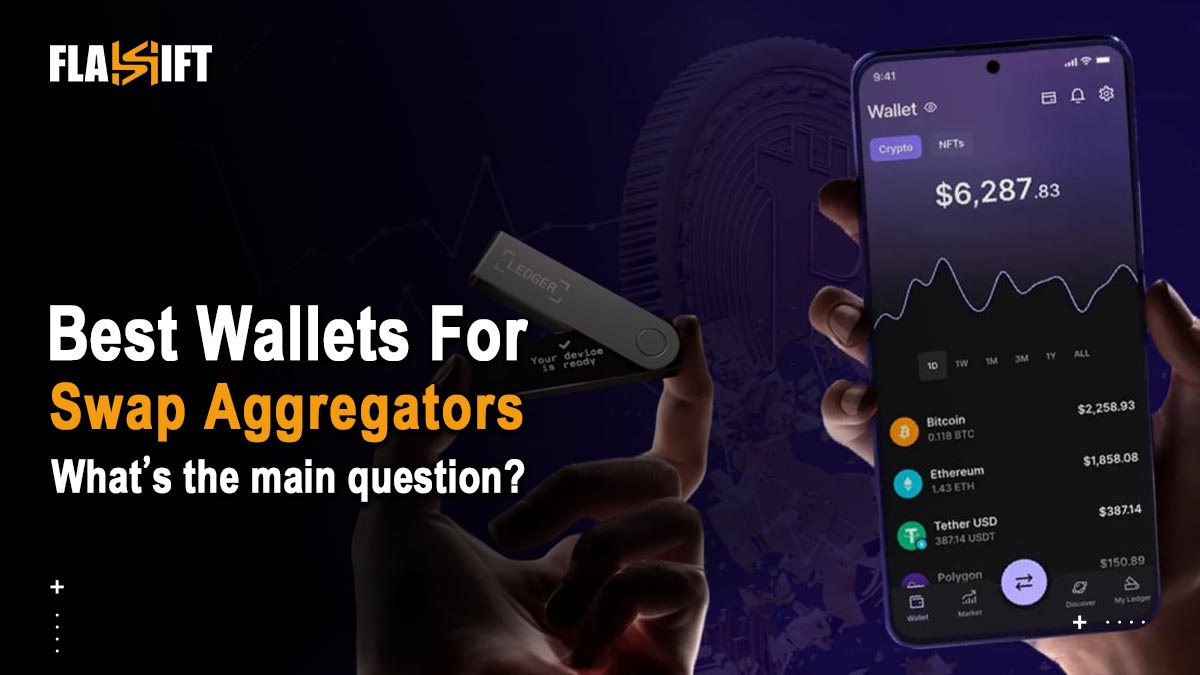
When it comes to trading or swapping cryptocurrencies, choosing the right wallet is just as important as picking the right exchange. Swap aggregators like Flashift.app combine liquidity from multiple exchanges to offer you the best prices. But here’s the big question: should you connect a hardware wallet or a software wallet when using these platforms?
This article gives you a clear, practical comparison of both wallet types specifically for using swap aggregators. You’ll learn how each option performs in terms of security, speed, transaction costs, and user experience, and which one is best depending on your goals, whether you prioritize safety or convenience.
Non-Custodial Swappable Wallets
When you step into DeFi and start using swap aggregators, one decision comes up almost immediately: what kind of wallet should you trust with your assets? The key here is non-custodial wallets. Unlike exchange accounts, these wallets don’t lock your funds behind a company’s servers. You hold the keys, you sign the transactions, and you decide when and where your assets move. That’s the whole point of decentralized finance, personal control without middlemen.
Now, non-custodial wallets come in two flavors. Both connect seamlessly to swap aggregators, but they approach the problem of security and convenience in very different ways.
Hardware Wallets
A hardware wallet is exactly what it sounds like, a physical device built for one job: keeping your private keys out of reach from the internet. Tools like Ledger and Trezor are essentially small vaults that you plug into your computer or connect via Bluetooth. The clever part is that the wallet never exposes your private keys. Even when you approve a trade on a swap aggregator, the signing happens inside the device, behind that layer of offline security.
This makes hardware wallets the safest option by far. But, of course, security has its price. Every swap requires you to physically confirm it, and that extra step can feel slow if you’re an active trader. Still, if you’re holding significant value, the peace of mind usually outweighs the friction.
Software Wallets
Software wallets sit on the other end of the spectrum. Think of MetaMask, Trust Wallet— apps that live in your browser or on your phone. They’re built for speed and accessibility. The risk is that software wallets are only as secure as the devices they run on.
If your phone gets infected with malware, or you fall for a phishing link, your keys are exposed. That doesn’t mean they’re unsafe, millions of people use them daily without issue, but it does mean you need to be careful. Use them for flexibility and everyday swaps, but don’t treat them as the long-term fortress for your largest holdings.
Which Wallet Is Best for Swap Aggregator?
A lot of people treat swap aggregators like they’re just another decentralized exchange. That’s not quite right. A DEX is where trades actually happen, while an aggregator is more like a search engine that scans across multiple exchanges to find you the best price and the best route.
It doesn’t hold your assets or run its own order book. Because of that, the role of your wallet is different too. You’re not connecting your wallet. You just need to send the asset you want to swap it. That’s it!
Given this, to make a swap on an aggregator, it doesn’t matter what wallet you have. So the real question isn’t “which wallet is best for swap aggregators?”, the right question is “which aggregator should I trust with my funds?”
How to Choose the Best Swap Aggregator
Swap aggregators are no longer a niche tool — they’re becoming the default way many traders execute swaps because they save time, cut costs, and give you better routes than picking a single DEX by hand. But with so many platforms out there, how do you know which aggregator deserves your trust? Forget the usual marketing fluff — here are five expert-level filters to use when making your choice.
1. Look Beyond Just “Best Price” Claims
Every aggregator says it finds the best price, but the reality is more nuanced. Some only pull from a handful of DEXs, while others scan across dozens. Check the breadth of liquidity sources the platform integrates — the wider the reach, the better your odds of consistently getting optimal routes.
2. Pay Attention to Slippage Handling
Not all aggregators manage slippage the same way. A strong aggregator won’t just throw you into the lowest fee pool — it will also adjust routes to minimize price impact, especially on larger trades. If you’re swapping mid- to high-volume tokens, this detail can save you real money.
3. Cross-Chain Capability Is a Game-Changer
The DeFi world isn’t just Ethereum anymore. If you trade across chains, you need an aggregator that handles cross-chain swaps seamlessly, not one that forces you through clunky bridges. This feature alone can make or break your experience.
4. Check Execution Transparency
Great aggregators show you exactly how your swap is being routed. If the interface is vague or hides steps, that’s a red flag. Transparency about which DEXs and routes are being used builds trust and lets you verify you’re not being overcharged.
5. Gas Optimization Is Underrated
Everyone talks about token prices, but fewer people think about gas. A smart aggregator doesn’t just find the right liquidity pool — it also optimizes for gas costs. On busy chains, this can be the difference between a profitable trade and a loss.
Why Flashift Stands Out as The Best Swap Aggregator?
Choosing the right swap aggregator isn’t just about who can shout the loudest about “best prices.” It’s about reliability, efficiency, and trust. This is where Flashift goes beyond the usual players. It’s designed not just to get trades done, but to give traders an edge in every aspect of the swapping process. Here’s why it’s different:
Multi-Chain Liquidity at Your Fingertips
Most aggregators still operate like they’re stuck in a single-chain world. Flashift doesn’t. It brings liquidity from multiple blockchains into one streamlined experience, so you don’t have to jump between platforms or risk assets on sketchy bridges. Whether you’re trading on Ethereum, BNB Chain, Polygon, or beyond, Flashift covers your routes in real time.
Smarter Gas Optimization
Gas costs can eat into profits faster than price slippage. Flashift actively optimizes transactions to reduce gas overhead, rerouting trades to pools and chains where execution is not only cheaper but faster. This means you’re not just saving on fees — you’re also cutting down on wasted time.
Transparency That Builds Trust
Many platforms give you a “take it or leave it” swap button with little explanation. Flashift takes the opposite approach. It shows you exactly how your swap is routed, which exchanges are involved, and what the fees look like before you hit confirm. That kind of visibility makes it easier to trade with confidence.
Cross-Chain Swaps Without the Headache
Bridging tokens across chains can be risky and frustrating. Flashift integrates cross-chain swaps directly, so you don’t have to juggle multiple tools just to move assets where you need them. It’s faster, safer, and eliminates one of the biggest pain points in DeFi.
Non-Custodial by Design and User Experience
With Flashift, your funds never leave your wallet until you authorize a trade. There’s no middleman holding your assets, no internal account you need to fund, and no single point of failure. You stay in control from start to finish. (Of cours, you can automate the transaction process and save time by clicking the Trust Wallet connection button).
Some aggregators feel like they were built for developers, not traders. Flashift is different. The interface is clean, intuitive, and designed for speed — whether you’re swapping a small token on the go or routing a large cross-chain trade. It’s powerful without being complicated.
In short: Flashift combines deep liquidity, lower gas fees, transparency, and cross-chain functionality — all wrapped in a non-custodial design. That’s why more traders are calling it the aggregator that finally gets it right.
Explore Flashift today and see why it’s quickly becoming the go-to aggregator for serious DeFi users. Start Swapping!
FAQ
- Do swap aggregators store my funds if I connect a wallet?
No. Aggregators never hold your funds. They simply route trades through your own non-custodial wallet. Whether you’re using a hardware or software wallet, your assets remain under your control until you approve the transaction.
- Will using a hardware wallet slow down my swaps on an aggregator?
Not in terms of pricing or execution speed — the route is the same. The only difference is user experience: with a hardware wallet, you’ll need to physically confirm each swap on the device, which adds an extra step compared to a software wallet.
- Are transaction fees different if I use hardware or software wallets?
No. Fees come from the blockchain and the swap route, not from the type of wallet. The aggregator calculates gas and slippage the same way regardless of the wallet you connect.
- Can I start a swap on a software wallet and later secure the funds on a hardware wallet?
Yes. Many traders use software wallets for quick swaps and then transfer assets to a hardware wallet for long-term storage. Aggregators don’t lock you into one type of wallet; you can mix approaches based on your needs.
- Is one type of wallet “better” for swap aggregators, or is it about preference?
There is no difference. Because you need to send assets to the aggregator’s specific address that will be provided for you. So there is no wallet connection and it’s absolutely safe. Flashift supports swapping with Trust Wallet connection that makes it easier for you to do transaction.