


Bitcoin and Ethereum remain the twin pillars of the digital asset economy, but they serve fundamentally opposing economic functions. Bitcoin functions as decentralized, unconfiscatable “digital gold” designed for long-term sovereign wealth preservation. Conversely, Ethereum operates as the foundational settlement and smart contract layer powering decentralized finance (DeFi), tokenized real-world assets, and institutional infrastructure.
For active operators in 2026, the question is rarely about picking one over the other; it is about managing the ETH/BTC liquidity ratio. When capital rotates from Bitcoin rallies into Ethereum’s decentralized ecosystem, managing this transition without centralized exchange holds or bridge vulnerabilities is critical to maintaining trading velocity and portfolio sovereignty.
📊 2026 Asset & Execution Matrix: Bitcoin vs. Ethereum
Before rotating capital between these assets, examine how their structural architecture and settlement rails compare:
🟢 Core Fundamental Divergence: Store of Value vs. Global Computer
🪙 Bitcoin: Macro Collateral and Scarcity: Bitcoin’s absolute 21-million supply cap and battle-tested Proof-of-Work network make it the premier digital reserve asset. Institutional treasuries and sovereign funds utilize BTC strictly as a long-term hedge against global fiat debasement. The Tactical Play: hold it strictly in Bitcoin self-custodial wallets.
⚡ Ethereum, The Programmable Liquidity Engine: Ethereum’s utility stems from active network usage. As institutional financial products migrate on-chain, ETH serves as the consumable fuel (“gas”) and primary decentralized collateral. The Tactical Play: Rotate into ETH when on-chain activity, DeFi volume, and Layer-2 scaling solutions show accelerating net transaction expansion.
🔴 The Pitfalls of Traditional BTC/ETH Trading: Bridges and Wrapped Assets
When traders decide to rotate capital between Bitcoin and Ethereum, they frequently make two critical operational mistakes:
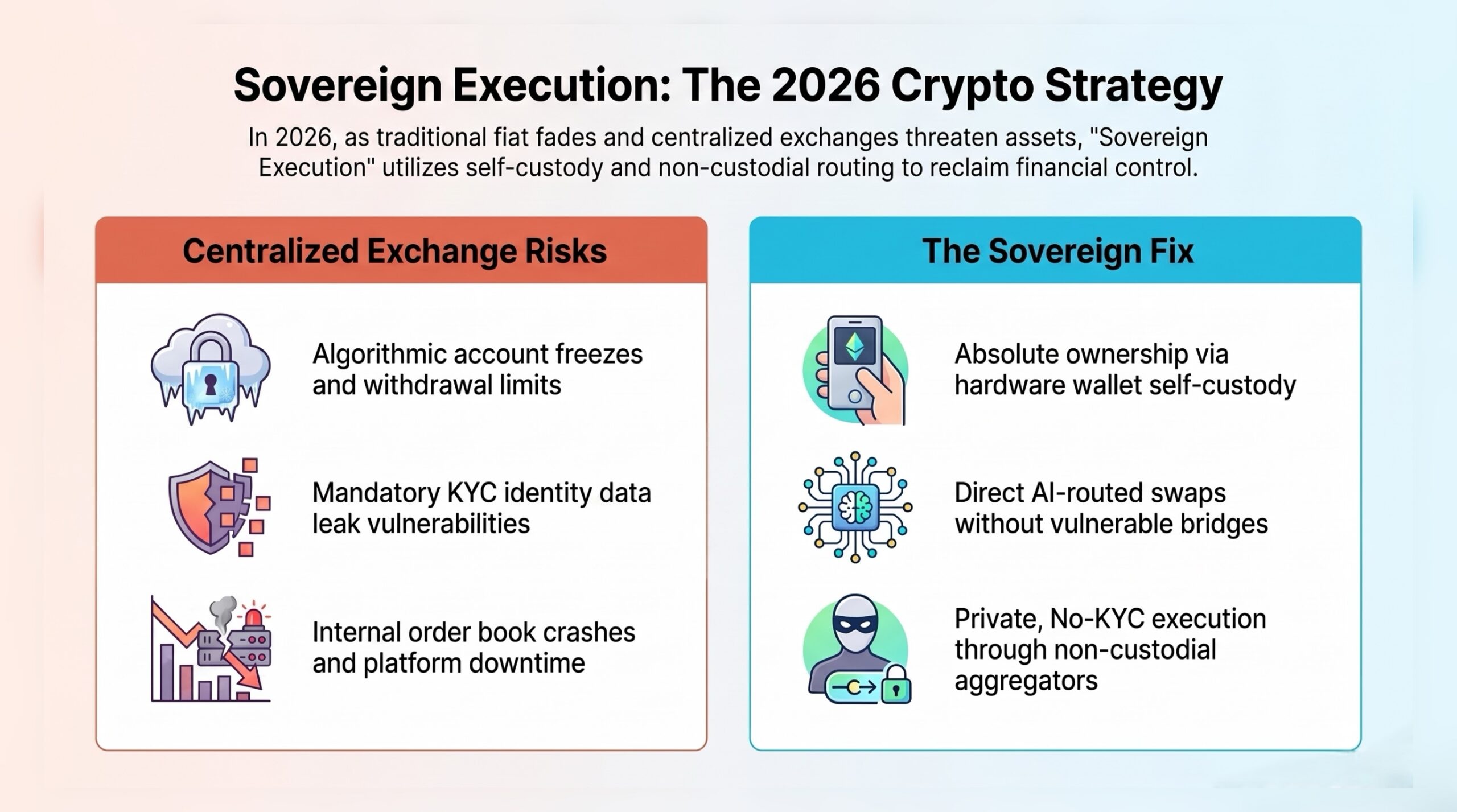
⚠️ Centralized Counterparty Traps: Moving large BTC positions to centralized exchanges to trade for ETH exposes your capital to sudden deposit holds, invasive source-of-funds verification, and withdrawal bottlenecks during high-volatility events.
🛑 The Synthetic Wrapped Asset Trap (WBTC & Bridges): To use Bitcoin on Ethereum, many protocols force users to lock BTC into bridges to mint synthetic “Wrapped Bitcoin” (WBTC). Decentralized bridges and synthetic assets represent massive, centralized honeypots that have historically suffered billions of dollars in protocol exploits.
⚡ Sovereign Execution: Swapping Native BTC to ETH via Direct Routing
Eliminating bridge vulnerabilities requires modern execution architecture. Advanced operators bypass centralized gatekeepers and synthetic tokens entirely by utilizing AI-driven direct routing layers:
-
🛡️ Native-to-Native Execution: Smart non-custodial aggregators like Flashift execute cross-chain swaps directly between native chains. You send native Bitcoin from your hardware wallet, and receive real, native Ethereum directly in your self-custody Web3 wallet.
-
🤖 AI Protection Against Bait-and-Switch KYC: Flashift’s algorithmic engine continuously evaluates integrated liquidity providers. Any provider that demonstrates a history of post-deposit transaction freezing or unexpected KYC traps is automatically blacklisted, guaranteeing an uninterrupted execution flow.
-
🔐 Zero-Approval Architecture: Because the transaction utilizes single-use deposit addresses, you never sign dangerous, infinite smart contract approvals that leave your wallet vulnerable to automated drains.
❓FAQ
Is Bitcoin or Ethereum a better investment in 2026?
Both serve distinct roles in an institutional portfolio. Bitcoin serves as a macro-reserve asset designed for balance sheet protection, whereas Ethereum provides asymmetric upside through network adoption, staking yields, and decentralized finance expansion. Experienced traders balance both based on broader macroeconomic liquidity cycles.
What is the safest way to swap Bitcoin for Ethereum?
The safest method is using a non-custodial cross-chain aggregator like Flashift. This allows you to swap native BTC for native ETH without creating an exchange account, surrendering your private keys, or wrapping your assets in vulnerable bridge contracts.
Why should I avoid using Wrapped Bitcoin (WBTC) on Ethereum?
Wrapped Bitcoin relies on centralized custodians or smart contract bridge rails to back the synthetic token. If the custodian faces legal insolvency or the bridge protocol suffers a contract exploit, the synthetic WBTC can decouple from actual Bitcoin, resulting in a total loss of capital.
How long does a direct BTC to ETH cross-chain swap take?
The settlement timeline is determined primarily by Bitcoin’s blockchain confirmations. Typically, once your native Bitcoin deposit achieves 1 to 2 network confirmations (around 10 to 20 minutes), the routing engine automatically settles native ETH directly into your destination wallet within seconds.