
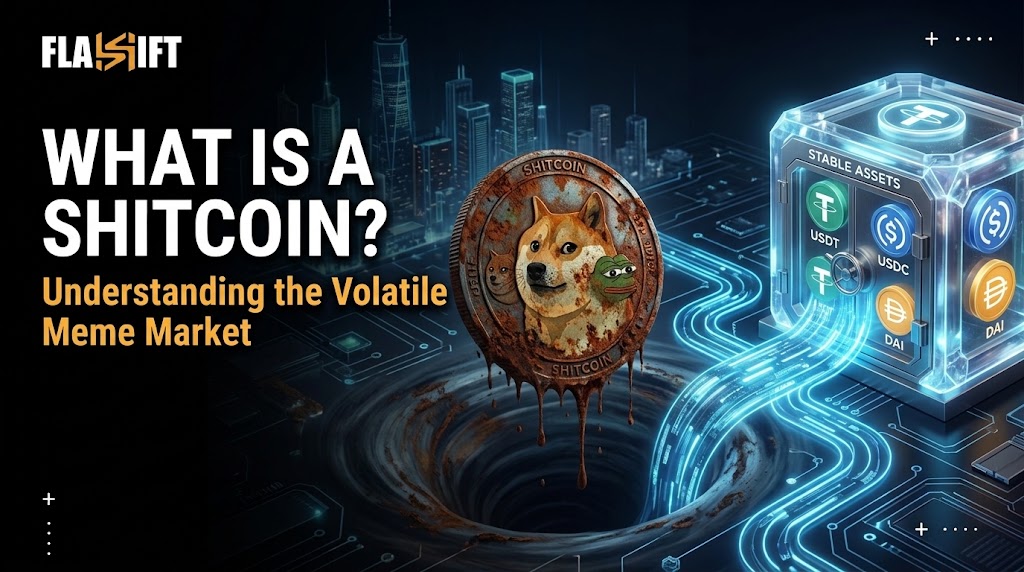
Shitcoin is a highly speculative cryptocurrency characterized by a lack of intrinsic value, vague tokenomics, and zero real-world utility. While established digital assets like Bitcoin or Ethereum are built to solve complex financial or technological problems, shitcoins are typically created to capitalize on short-term market hype.
If you are holding a token backed by an anonymous team, driven entirely by social media influencers, and lacking a clear whitepaper, you are likely holding a shitcoin. Because these assets possess no fundamental economic structure, their value is entirely dependent on speculative trading, making them highly susceptible to sudden liquidity crashes.
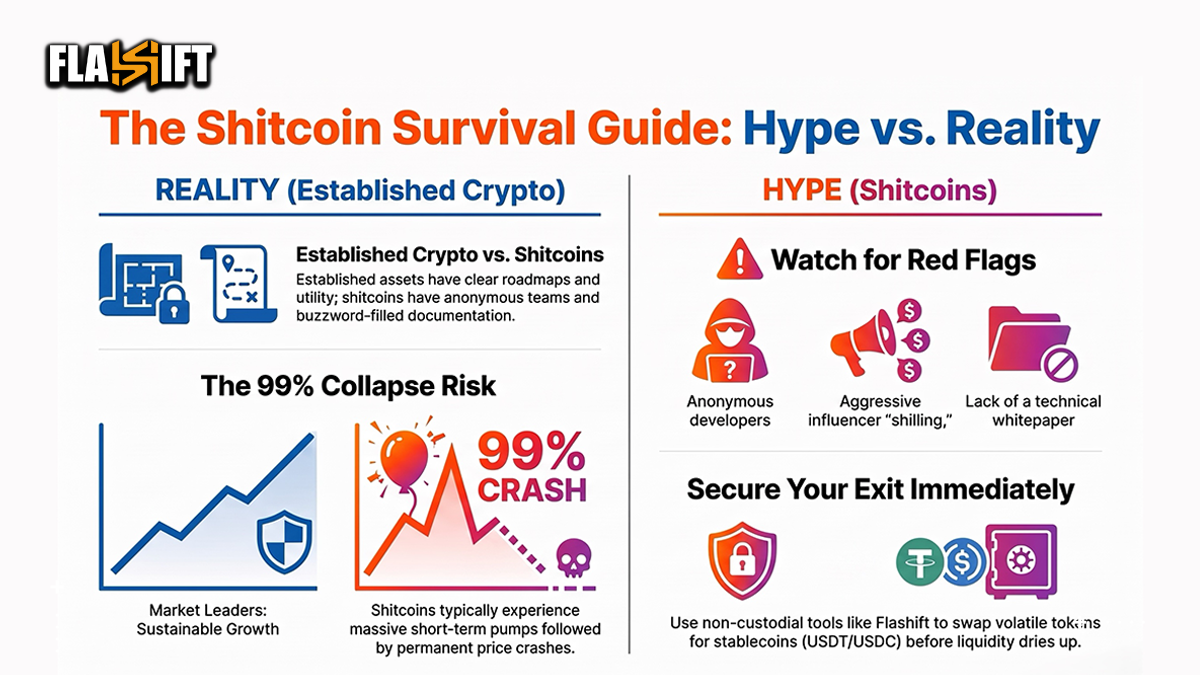
📊 The Value Matrix: Established Crypto vs. Shitcoins
To understand the meaning of a shitcoin, it is easiest to compare its infrastructure directly against established market leaders:
|
Aspect |
Established Crypto (e.g., Bitcoin, Ethereum) |
Typical Shitcoins (e.g., WEPE, SPONGEV2) |
|
Intrinsic Utility |
Powers decentralized finance, smart contracts, or acts as a sovereign store of value. |
Little to no utility; value is driven purely by meme culture or artificial hype. |
|
Transparency |
Open-source code, clear governance structures, and highly detailed technical whitepapers. |
Anonymous or pseudonymous developers; vague, buzzword-filled documentation. |
|
Tokenomics |
Mathematically verified supply caps and sustainable emission schedules. |
Unsustainable distribution; large percentages of the supply are often hoarded by insider wallets. |
|
Market Resilience |
Sustains value through multi-year bear markets due to active developer ecosystems. |
Experiences massive short-term pumps followed by permanent 99% collapses. |
How to Spot a Shitcoin Before It Dumps
The digital asset market is flooded with new tokens weekly. Creators often pay crypto influencers to aggressively “shill” the asset on Twitter, creating artificial FOMO to trap retail liquidity. To protect your capital, you must look for structural red flags such as unclear use cases, aggressive marketing tactics, and a history of pump-and-dump price action.
👉 Deep Dive: Do not invest blindly. Learn the exact technical red flags and on-chain metrics to look out for in our comprehensive guide: How to Spot a Shitcoin.
Some Well-Known Shit coins
Some shitcoins, on the other hand, are able to generate an audience of ardent supporters who work tirelessly to develop actual value for the coin.
Dogecoin, a dog-themed memecoin which was created on Shiba Inu viral videos, was one of the first shitcoins. Although Dogecoin was created by a group of people, it has subsequently evolved into an autonomous cryptocurrency.
Shiba Inu is a different famous shitcoin that is a fork of Dogecoin and aspires to replace it as the most popular memecoin. Shiba Inu was created as a joke by an unknown coder and has subsequently attempted to change course on becoming a more “serious” cryptocurrency by including DeFi capabilities.
The Distinction: Shitcoins vs. Meme Coins vs. Altcoins
While novice traders often use these terms interchangeably, understanding their structural differences is critical for risk management in 2026:
- Altcoins (Alternative Coins): These are legitimate projects driven by robust blockchain infrastructure and verifiable fundamentals. Altcoins (like Solana or Chainlink) solve real-world problems, possess active GitHub repositories, and offer long-term investment potential based on network utility.
- Meme Coins: Tokens like Dogecoin or Shiba Inu originated as internet jokes. However, a select few have survived multiple market cycles by developing massive, autonomous communities and securing deep decentralized liquidity, transitioning them from simple jokes to highly speculative, yet established, assets.
- Shitcoins: These are designed from day one with predatory tokenomics to enrich their creators. They lack intrinsic value, and their development activity is typically a façade. Unlike altcoins, the infrastructure behind a shitcoin is usually non-existent or a hastily executed copy-paste of an existing protocol, making them highly susceptible to pump-and-dump manipulation.
👉 Market Analysis: Want to see how these mechanics play out in the real market? Review the most notorious market crashes in our breakdown of the Top 10 Shitcoins of 2026.
Risks Associated with Investing in Shitcoins
Investing in shitcoins carries significant risks due to their speculative nature and lack of real-world value. Here are the primary financial risks:
- High Volatility
Shitcoins are extremely volatile, with prices often driven by market sentiment and hype rather than any tangible value or utility. This volatility can lead to rapid price spikes, but these gains are usually followed by steep declines, leaving investors with significant losses.
- Pump-and-Dump Schemes
These coins are particularly susceptible to pump-and-dump schemes, where a group of investors inflates the price by creating hype, only to sell off their holdings once the price reaches a peak. This leads to a sharp price collapse, harming those who bought in during the inflated phase.
- Regulatory Risks
Shitcoins are usually not transparent and are made without much consideration for the law. The moment regulatory bodies start to focus more on cryptocurrency markets, these coins could fall into legal trouble or be delisted from exchanges, making them even more worthless.
In a nutshell, while shitcoins may appear very attractive due to their high return possibility, they come with significant risks such as high volatility, manipulation through pump-and-dump schemes, and regulatory challenges. Investors should be cautious with such assets.
⚡ Operational Defense: How to Escape a Shitcoin Crash
If you realize you are holding a highly speculative asset that is beginning to lose momentum, speed is your only defense. When hype fades, liquidity pools dry up instantly. Furthermore, transferring these volatile tokens to a centralized exchange (CEX) often results in deposit delays or sudden KYC account freezes, causing you to miss your exit window.
To protect your portfolio, advanced operators use non-custodial aggregators. Flashift allows you to instantly swap volatile, high-risk altcoins into stable liquidity (like USDT or USDC) with Zero-Approval and No-KYC. You can seamlessly exit a dying shitcoin position directly from your self-custody wallet, entirely eliminating centralized bottlenecks.
FAQs:
- What is a shitcoin in cryptocurrency?
A shitcoin is a slang term used to describe a cryptocurrency with little to no value or utility. These coins are often launched without a clear purpose, roadmap, or real-world use case, and they typically rely on hype rather than substance.
- Why are shitcoins considered risky investments?
Shitcoins are risky because they are usually not backed by real technology, utility, or a reliable development team. Many are involved in pump-and-dump schemes or turn out to be scams, leading to significant investor losses.
- How can I spot a shitcoin before investing?
You can identify a shitcoin by looking for red flags such as anonymous developers, no working product, lack of whitepaper, unrealistic promises, and heavy reliance on influencer promotion without technical substance.
- Are all meme coins considered shitcoins?
Not necessarily. While many meme coins are speculative and short-lived, some like Dogecoin or Shiba Inu have managed to build communities and gain real market traction. However, they still carry high volatility and risk.
- Can you make money with shitcoins?
Yes, but it’s highly speculative and usually short-term. Some investors profit during pump phases, but most lose money as these coins tend to crash quickly. It’s more like gambling than investing.
- What are some real examples of shitcoins?
Notable examples include BitConnect, Squid Game Token, and SafeMoon (depending on opinion). These tokens saw rapid price rises followed by massive crashes, often due to fraud, poor design, or hype collapse.
- How can I protect myself from shitcoin scams?
Always do your own research (DYOR), check for audited code, research the development team, and only use trusted exchanges like Flashift. Avoid projects that promise guaranteed profits or lack transparency.