
Bitcoin and cryptocurrencies, in general, faced significant skepticism and derision from analysts and financial institutions worldwide. Critics often dismissed these digital assets as speculative, volatile, and lacking in intrinsic value. However, the narrative surrounding cryptocurrencies has undergone a profound transformation in recent years.
The increasing recognition of the importance and versatility of cryptocurrencies has become evident through their evolving role in the financial ecosystem. Over the past few years, we have witnessed a marked shift in perception as these digital currencies have demonstrated their utility and potential. Cryptocurrencies have progressively gained acceptance not only as a store of value but also as a practical means of transaction and investment.

What Exactly are Real Money and cryptocurrency?
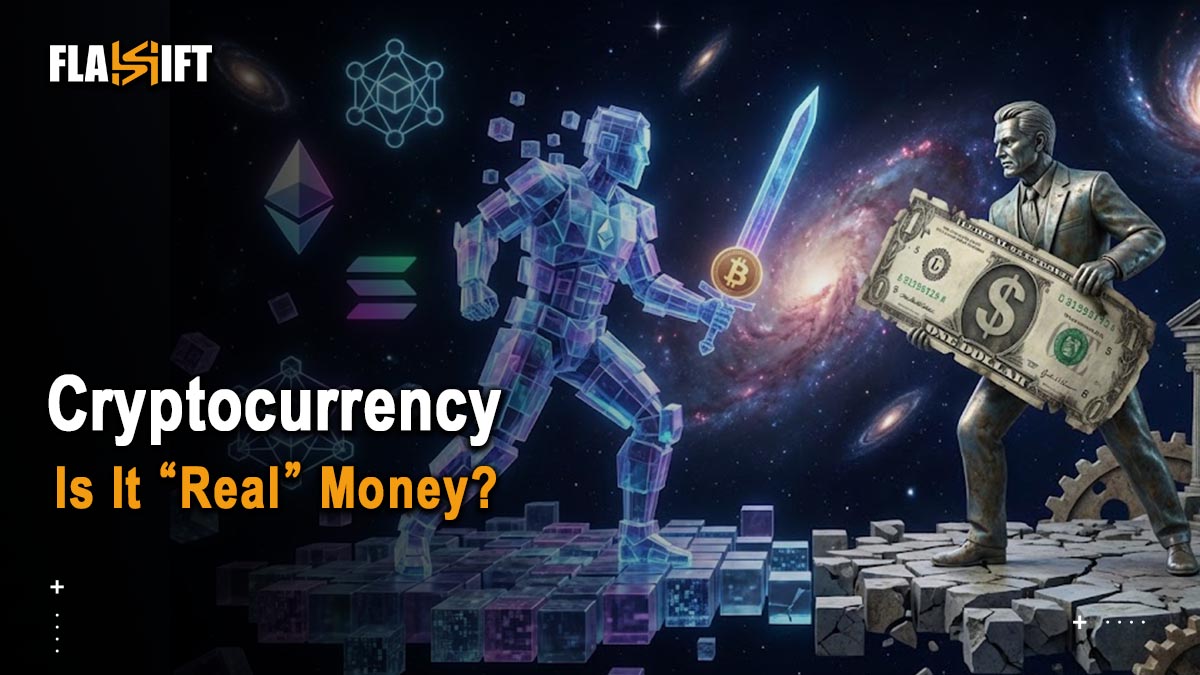
Cryptocurrency detractors may occasionally assert that digital currencies such as Bitcoin or Ethereum are not “real Money.” But what precisely does having real money imply?
Remember that currency is only a notion developed by humans to enable more efficient commerce.
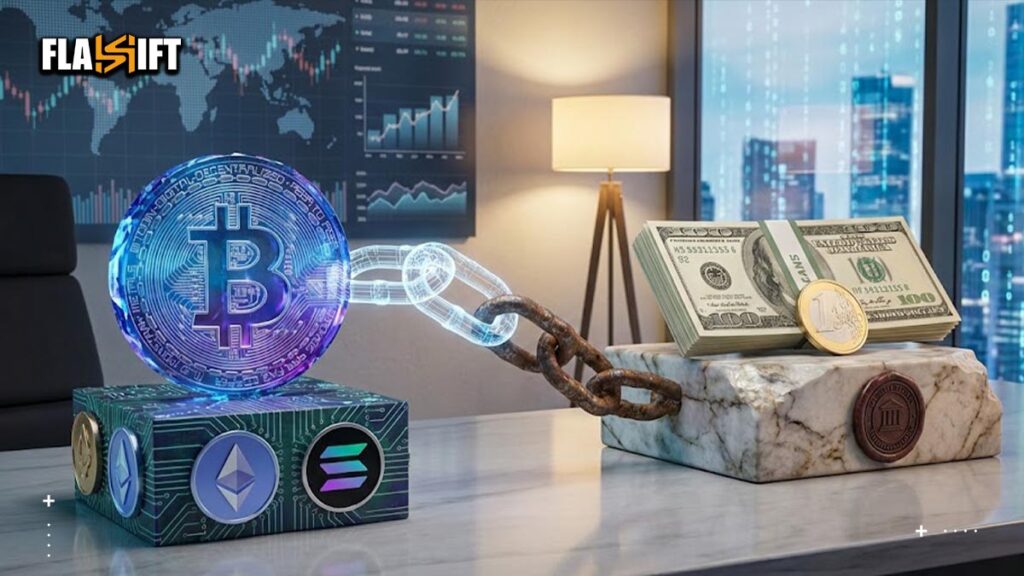
Cryptocurrency fans are presumably already seeing the significance of this: cash isn’t tied to anything real or valuable. It is worth something due to what we say it is. If the US authority vanished the next day, the US currency would additionally lose value because it isn’t “real” and possesses no practical significance or use.
Cryptocurrencies can be considered real money if enough individuals embrace digital currencies and begin trading with them. Yes, this means that anything can be considered genuine money. The key is to convince a large enough number of people to embrace a specific currency before it achieves critical socioeconomic power and becomes commonplace anywhere else.
Cryptocurrency is a digital form of currency that has no physical counterpart or token. Despite the dollar that can be literally held in one’s palm Bitcoin along with other digital currency tokens cannot be practically held.
To avoid cyber riches malware or fraud, you ought to save digital currency tokens in digital wallets. Cryptocurrencies are stored on blockchains, which are lengthy electronic documents that are publically accessible and validated to prevent massive fraud.
In some respects, it’s tempting to imagine of cryptocurrencies as gambling chips, pinball tokens, and other types of currency that you can’t always spend at the supermarket. In addition, in the present day, cryptocurrencies must be acquired with fiat currency or other crypto currencies.
It could develop; cryptocurrency has not yet become generally recognized sufficient to be acquired via other channels, owing partially to the manner in which new coins join commerce.
The majority of digital currencies reach distribution via the mining and producing procedure in which “miners” who periodically solve sophisticated encryption algorithms. Some crypto tokens, such as Bitcoin, impose a hard restriction on the number of coins that can ever enter circulation. Others, such as Dogecoin, may be less valued since they do not have similar constraints.
Can Cryptocurrencies Displace Other Forms of Payment?
In light of the advantages listed previously, cryptocurrency could eventually replace various other currencies. Cryptocurrencies and blockchain technology, for instance, are particularly useful for:
- Transferring money instantly over across borders with no costs or restrictions
- Utilizing electronic contracts and other comparable technologies to confirm payments
- Voting verification and safe voting methods
To summarize, digital currency technology is fast expanding and becoming increasingly common throughout the world. Consumers will begin to acquire digital currency tokens and attempt to utilize them at their preferred companies or online shops as crypto technology gets more and more commonplace.
While it is doubtful that cryptocurrency will ever completely substitute traditional currencies, they will surely become a prominent and widely recognized means of payment in the near future. We anticipate that most genuine shops will ultimately take both digital currencies and fiat currency in comparable quantity.
Read More: Stock Market and Cryptocurrencies
Conclusion
In the exact same manner that cash is real money, cryptocurrency is genuine money. The only distinction among Cryptocurrency and the US currency is that Cryptocurrency is not yet widely acknowledged by the general public. But that will change, and systems are working to assist retailers like you prepare for the coming economic transformation.
FAQ
1. If crypto isn’t backed by a government, can it still be “real money”?
Yes. Money is fundamentally a social agreement. Traditional currency has value because people trust government backing and legal systems, but cryptocurrencies derive value from network use, demand, and acceptance even without central authority.
2. Why do some people treat crypto like money while others see it as an asset?
Cryptocurrencies can function like money in some contexts (you can use them for payments, transfers, or trading), but in many places they are still treated as digital assets or property for tax purposes, not primary currency.
3. Does the ability to pay with crypto make it real money?
Acceptance in transactions is one key aspect of money. While some businesses accept crypto, it’s not widely used as a general means of payment worldwide yet, so its status as “money” remains partly dependent on adoption.
4. Can crypto hold value like traditional money over time?
This depends on the coin and market conditions. Some cryptos are viewed as stores of value by supporters, but volatility can make them less reliable for long-term purchasing power compared with established fiat currencies.
5. What would make cryptocurrency universally accepted as real money?
Broader global usage in everyday transactions, stable acceptance as a unit of account, and integration into formal financial systems would push crypto toward being perceived and used as “real money” on par with fiat.