
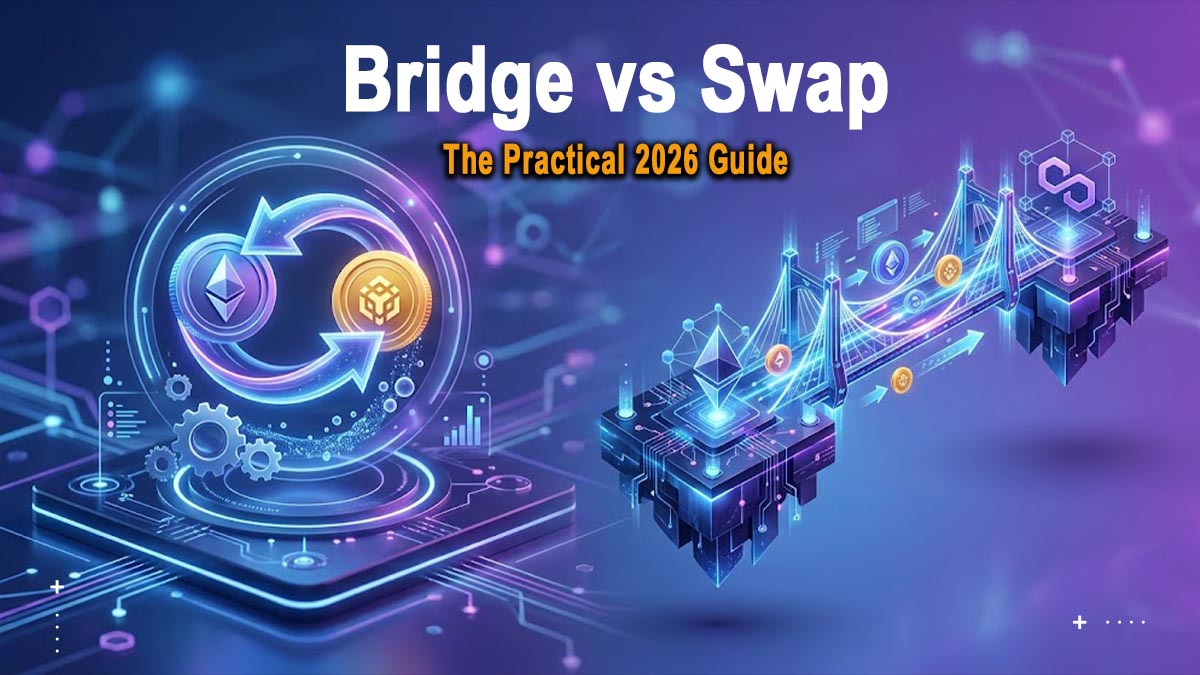
Bridge vs Swap: Are they the same thing? A bridge moves your existing crypto to a different blockchain, while a swap trades one coin for another.
That distinction becomes important when moving between ecosystems such as SOL-ETH, BNB-ETH, and BNB-BTC, because the best route depends on what you actually want to receive—not simply which network you are starting from.
For instance, taking value from Solana to Ethereum might mean using a bridge, while trading your SOL straight for ETH is done through a cross-chain swap. You’ll run into this exact same choice with routes like BNB-ETH and BNB-BTC.
This guide breaks down bridge vs swap in practical terms, explains when each method makes sense in 2026, and walks through the key differences between SOL-ETH, BNB-ETH, and BNB–BTC routes so you can choose the right option before sending your funds.
Bridge vs Swap: Conceptual Comparison
A bridge is primarily designed to move assets or their representations from one blockchain ecosystem to another. Instead of simply exchanging one coin for another, a bridge connects two networks and handles the cross-chain transfer. The process can involve locking an asset on the source chain and issuing a corresponding representation on the destination chain. Bridges are particularly useful when you want to keep exposure to the same asset while making it available on another network.
A swap, on the other hand, focuses on changing one cryptocurrency into another. You might start with SOL and end up with ETH, or exchange BNB for BTC, without needing to manually manage a wrapped version of the original asset. Cross-chain swap services can handle the conversion and routing behind the scenes. They’re useful when the actual goal is to receive a different cryptocurrency, rather than simply move the same asset between networks.
Why Swapping Is Simpler for Most Users?
You receive the asset you actually want.
If your goal is to turn SOL into ETH or BNB into BTC, a swap takes you directly toward that result. You don’t have to first bridge your asset, receive a wrapped version, and then figure out where to exchange it.
There are fewer moving parts to manage.
A typical bridge transaction can involve choosing networks, checking token compatibility, understanding wrapped assets, and sometimes completing additional steps on the destination chain. A swap can package much of that complexity into a single transaction flow.
It is easier to compare the real cost upfront.
With a swap, you can usually focus on the amount of BTC or ETH you will actually receive after the applicable fees and rate differences. That makes it easier to compare routes before committing funds, especially for cross-chain pairs such as SOL-ETH, BNB-ETH, and BNB-BTC.
How to Swap BNB to BTC Instantly Without Account Creation
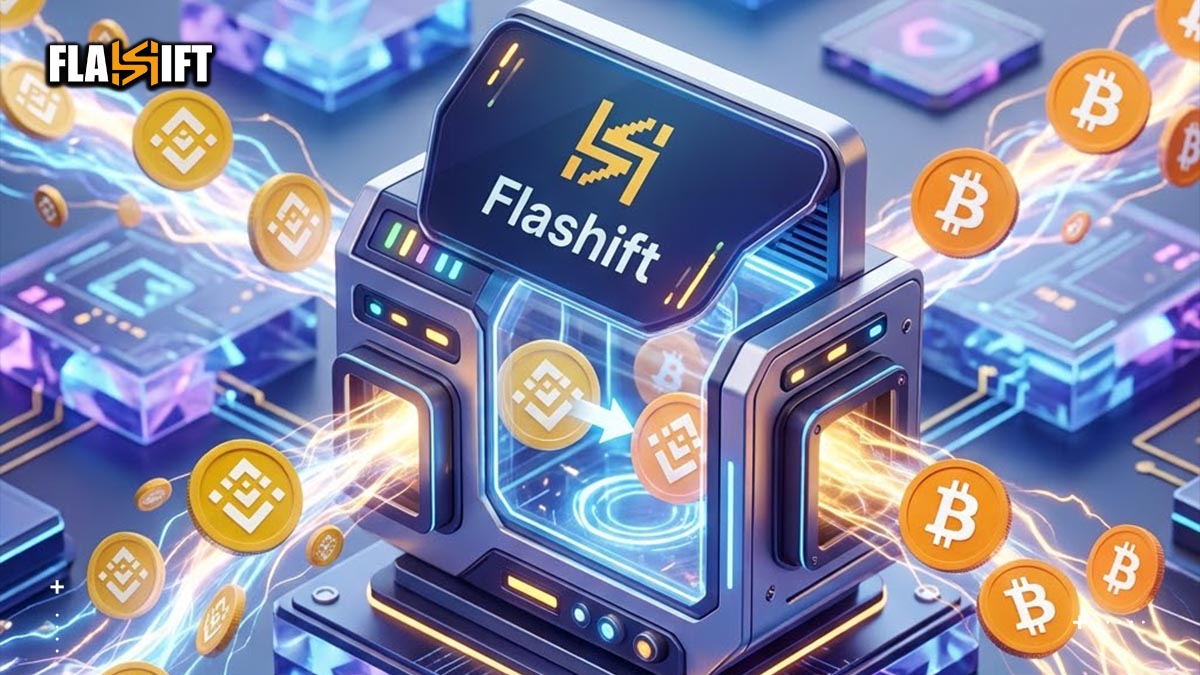
You don’t need to create an exchange account just to convert BNB into Bitcoin. With Flashift, you can compare available cross-chain swap offers and send BNB directly from your wallet, with the resulting BTC delivered to your chosen Bitcoin address.
This guide is usable for BNB-ETH and SOL-ETH swaps, too.
1. Select BNB and BTC
Open Flashift and select BNB as the asset you want to send and BTC as the asset you want to receive. Enter the amount you want to swap and check that the selected BNB network matches the network holding your funds.
2. Compare the Available Offers
Flashift aggregates offers from different swap providers, allowing you to compare the expected BTC amount before committing. Look beyond the headline rate and check the final amount you’ll receive, along with any applicable fees and rate conditions.
3. Add Your Bitcoin Wallet Address
Enter the BTC receiving address where you want your Bitcoin delivered. Take a moment to verify every character and make sure the address is compatible with the Bitcoin network. A blockchain transaction generally cannot be reversed once it has been sent.
4. Send Your BNB
Review the transaction details, then Flashift will provide the deposit instructions for the selected provider. Send the required amount of BNB from your wallet to the provided deposit address. If the swap requires an exact amount, make sure your transfer matches the requested amount.
5. Receive BTC in Your Wallet
Once the provider receives and processes your BNB, the corresponding BTC is sent to the Bitcoin address you entered. The exact completion time can vary depending on blockchain confirmations, provider processing, and network conditions.
No account creation is required on Flashift itself, although the third-party provider handling your selected swap may have its own requirements, including KYC in some cases.
But there is good news! Flashift’s AI monitors exchanges in real-time and labels any platform that might require KYC for suspicious transactions with a ‘KYC Hold Risk’ tag, allowing you to easily avoid them.
Comparison of Time and Fees with Well-Known Bridges
Bridge speed and cost can look very different once you move beyond the headline “bridge fee.” Some protocols use market-based pricing, while others combine protocol, re-layer, liquidity, and gas costs. The table below gives a practical 2026 comparison based on the current published specifications of several well-known cross-chain protocols.
| Bridge / Protocol | Typical Transfer Time | Fee Model | Practical Cost Consideration |
| Across | ~2 seconds for most fills | Dynamic LP + relayer + gas fees | No flat bridge toll; the quote changes by route, liquidity, gas, and amount |
| Stargate V2 | Near-instant with “Taxi”; potentially longer with “Bus” | Dynamic transfer fee + destination gas | Bus mode can reduce gas costs but may introduce waiting time |
| Wormhole | Route-dependent | Network/message fees + relayer costs where applicable | Some routes have additional relay charges; Ethereum L1 can be significantly more expensive |
| Traditional canonical bridges | Minutes to days, depending on chain | Primarily network gas costs | Optimistic-rollup withdrawals can take substantially longer than fast liquidity-based bridges |
What this means for users: a bridge that advertises a low fee is not necessarily the cheapest option for your particular transaction. The number that matters is the final amount received after all fees, together with how long you have to wait. For example, Across calculates its total fee from the difference between the deposited amount and the amount received, while its relayer fee can include gas, capital, and risk costs. Stargate V2 similarly gives users a choice between a faster “Taxi” mode and a potentially cheaper “Bus” mode, where batching can reduce gas costs at the expense of waiting for the destination message.
For routes such as SOL-ETH, BNB-ETH, and BNB-BTC, there is another important distinction: a bridge may be designed primarily to move the same asset between networks, whereas a cross-chain swap is designed to change the asset itself.
That means comparing bridge fees alone can be misleading when your actual goal is to turn BNB into BTC or SOL into ETH. In those cases, compare the complete swap quote—including network costs, liquidity, slippage, and the final BTC or ETH amount—rather than treating the bridge fee as the whole cost.
Final Thoughts
The choice between a bridge and a swap ultimately comes down to your end goal. If you need to move the same asset across networks, a bridge may be the right tool. If you want to turn one crypto into another—such as SOL-ETH, BNB-ETH, or BNB-BTC—a cross-chain swap is often the simpler route. Before confirming, compare the final amount received, total fees, slippage, and estimated completion time rather than looking at the headline fee alone.
Swapping is cheaper and faster in most cases. So, crypto swap platforms are popular today. Use a non-custodial swap platform like Flashift to see how fast you can swap your assets.
FAQ
- Can I use a bridge to convert SOL directly into ETH?
Usually, not in the same way as a direct swap. A bridge primarily transfers an asset or its representation between networks, while converting SOL into native ETH requires an asset exchange as part of the route. For SOL–ETH, a cross-chain swap can therefore be more straightforward than bridging SOL first and swapping afterward.
- Why can a BNB–BTC swap cost less than using a bridge plus a separate exchange?
Using a bridge and then swapping can create multiple fee layers: the bridge transaction, destination-chain gas, and the subsequent exchange. A cross-chain swap can combine the routing and asset conversion into one flow, so the relevant comparison is the final BTC received, not the advertised bridge fee alone.
- When does bridging make more sense than swapping?
Bridging is generally more appropriate when you want to keep the same asset but use it on another blockchain—for example, moving an asset into another ecosystem for DeFi or lower-cost transactions. If your end goal is a different asset, such as BNB–ETH or BNB–BTC, a swap is usually the more direct route.
- Why does the cheapest bridge quote sometimes result in less crypto received?
The displayed bridge fee is only one part of the transaction cost. Network gas, liquidity conditions, relayer charges, price impact, and the destination transaction can all affect the final amount. Always compare the amount arriving in your destination wallet rather than choosing a route based solely on its stated fee.
- Is SOL–ETH handled differently from BNB–ETH or BNB–BTC?
Yes. These routes involve different blockchain architectures, liquidity sources, and transaction requirements. As a result, confirmation times, available routes, fees, and slippage can vary significantly between the three pairs.