
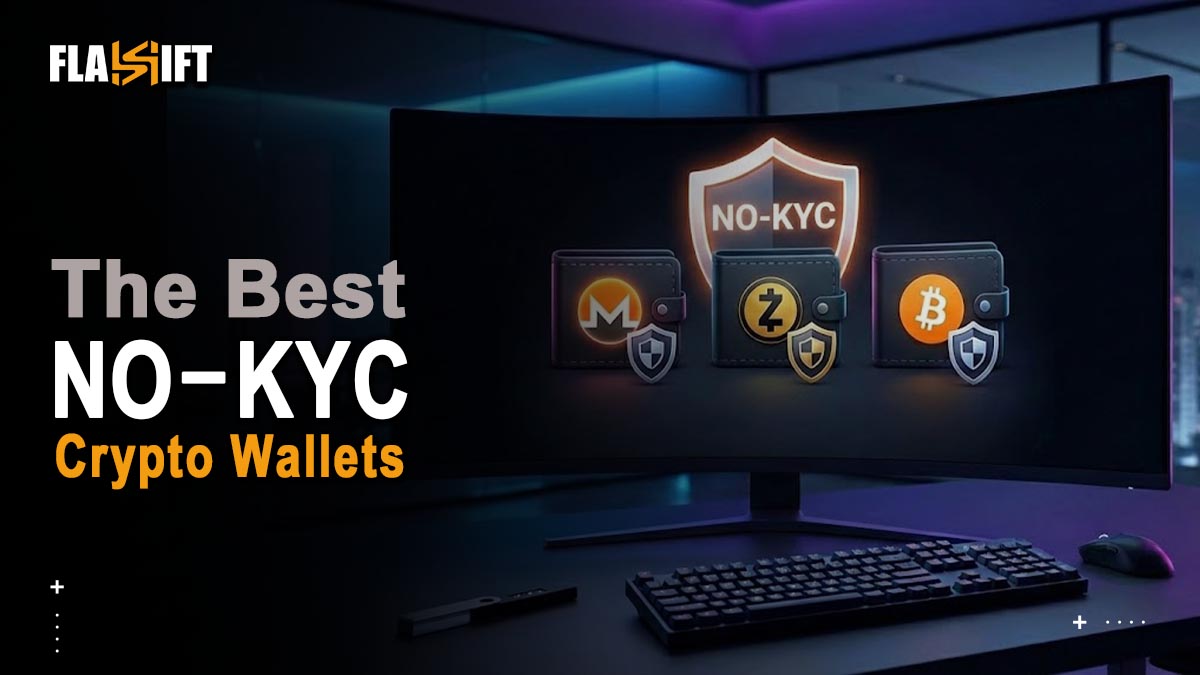
Setting up a no-KYC crypto wallet is only 50% of the privacy equation. The critical failure point for most users in 2026 is funding. If you create a privacy-focused wallet but fund it directly via a withdrawal from a centralized exchange (CEX) linked to your passport, your entire financial footprint is permanently exposed to blockchain analytics.
To achieve true financial sovereignty, you must combine zero-data storage (like Monero GUI or Sparrow) with non-custodial capital routing. In this technical guide, we will break down the top privacy wallets of 2026 and reveal exactly how to fund them instantly without triggering regulatory tripwires or centralized identity checks.
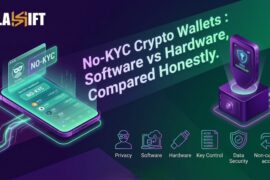
Comparison of the Best No KYC Crypto Wallets
| Wallet | Privacy Features | Ease of Use | Ideal For | Downsides |
| Monero GUI Wallet | Full Monero privacy stack: stealth addresses, ring signatures | Moderate (needs setup) | Hardcore Monero users who want maximum privacy & full node security | Heavy setup, not beginner-friendly |
| Zecwallet Lite | Supports shielded transactions for private transfers | Easy to Moderate | Zcash users who want lightweight, privacy-first wallets | Shielded txs can be resource-heavy |
| Sparrow Wallet | Coin control, address management, Tor integration | Moderate | Users who want privacy without compromising advanced Bitcoin features | Interface can feel complex for beginners |
| Electrum | Connect to own server, multisig, hardware wallet support | Moderate | Experienced Bitcoin users who want flexibility and reliability | Outdated interface, learning curve |
| Wasabi Wallet | CoinJoin mixing for strong anonymity | Moderate | Bitcoin privacy advocates who want CoinJoin with open-source credibility | Higher fees, setup takes understanding |
| Samourai Wallet | Whirlpool (CoinJoin), STONEWALL, anti-surveillance features | Easy to Moderate | Mobile users who want top-level Bitcoin privacy on Android | Android only, not on iOS |
The Missing Link: Funding Your No-KYC Wallet Privately
As established, owning a privacy wallet is strategically useless if its initial transaction history begins with a KYC-enforced withdrawal from a centralized platform. The moment you comply with centralized identity checks to buy the asset, your anonymity is permanently compromised.
To maintain absolute operational security (OpSec), your assets must be routed through a temporary, non-custodial layer before ever touching your cold storage keys.
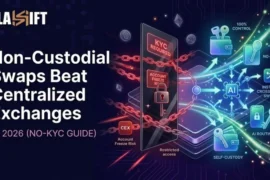
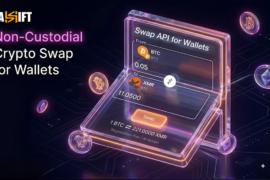
Sovereign Funding Checkpoint: Instead of risking your privacy score on heavily monitored centralized exchanges, you can fund your Monero, Zcash, or Bitcoin wallets directly through Flashift’s co-aggregation terminal. By utilizing advanced AI routing, the execution engine scans deep decentralized liquidity pools and instant non-custodial networks simultaneously. You can swap USDT or any standard EVM token directly into your chosen privacy wallet in under 3 minutes—with zero account creation, zero email tracking, and absolute freedom from KYC blockades.
The Best No KYC Crypto Wallets for Privacy
When you’re looking for a no KYC crypto wallet, the choice isn’t just about storing coins. It’s about protecting your identity, staying in control of your funds, and avoiding the creeping centralization of crypto. Below are some of the most reliable options that don’t force you to hand over your passport just to use your own money.
Read More: Top 5 Privacy Coins 2026
Monero GUI Wallet
For Monero (XMR) users, the official GUI wallet is still the gold standard. It’s open-source, actively maintained by the Monero community, and doesn’t require any form of KYC to download or use. The GUI wallet gives you full control of your private keys and integrates directly with Monero’s privacy features, such as stealth addresses and ring signatures.
The learning curve is a little steeper than with lightweight wallets, but that’s the trade-off for maximum control. Once set up, it’s rock-solid. If you’re serious about financial privacy and want to ensure that your Monero stays truly untraceable, this wallet belongs on your shortlist.
Zecwallet Lite
Zcash has always walked the line between optional privacy and mainstream adoption. If you want a no KYC crypto wallet specifically for ZEC, Zecwallet Lite is the most practical option. It supports shielded transactions, meaning you can send and receive ZEC without leaving transparent trails on the blockchain.
Because it’s a lightweight client, you don’t need to download the entire blockchain, which makes it easy for everyday use. The downside is that shielded transactions can be resource-intensive, but if privacy is your goal, that’s a small price to pay. No KYC, no centralized control—just Zcash the way it was intended.
Sparrow Wallet (Bitcoin)
Bitcoin isn’t known for privacy, but the wallet you use can change how traceable your transactions are. Sparrow Wallet is one of the no kyc bitcoin wallets, because it gives you advanced control over coin selection, address management, and integration with Tor for anonymized network activity.
It’s a wallet built by people who care about sovereignty, not convenience. While it may look intimidating to beginners, Sparrow makes it possible to use Bitcoin in a more private way than most mainstream wallets ever will. No identity checks, no gatekeepers—just Bitcoin under your control.
Electrum
Electrum is one of the oldest and most respected Bitcoin wallets, and it’s still a strong choice for users who value privacy. It’s a no KYC crypto wallet and one of the most secure crypto wallet that lets you connect to your own server, giving you far more control than hosted wallets ever could. Advanced features like multisig and hardware wallet integration also make it a favorite among experienced users.
The interface is plain, almost spartan, but that’s intentional. Electrum is about function, not flash. If you want a battle-tested wallet with no corporate oversight or identity requirements, Electrum delivers exactly that.
Wasabi Wallet
For those who want cutting-edge privacy on Bitcoin, Wasabi Wallet is a serious contender. It’s a no KYC crypto wallet designed around CoinJoin, a mixing technique that breaks the link between sender and receiver addresses. Every transaction you send through Wasabi gains an extra layer of anonymity.
It does take time to understand how CoinJoin works, and transaction fees can be higher compared to standard transfers, but the trade-off is worth it if privacy is your priority. No KYC barriers, full open-source transparency, and an active community backing it make Wasabi a strong choice.
Samourai Wallet
If Wasabi is about CoinJoin, Samourai Wallet is about taking Bitcoin privacy to the extreme. It’s a no KYC crypto wallet available on Android that integrates with tools like Whirlpool (its own CoinJoin implementation) and STONEWALL (transaction obfuscation). It even discourages address reuse and promotes best practices for staying off the radar.
Samourai has always been outspoken about resisting surveillance, which makes it a polarizing but highly respected wallet in the privacy community. For mobile Bitcoin users who don’t want their transactions easily tracked, Samourai is a clear winner.
Wrapping It Up
You have selected your privacy wallet and secured your recovery phrase. Do not compromise your setup by funding it through a KYC-enforced centralized exchange.
🛡️ Sovereign Funding Terminal: Flashift’s non-custodial co-aggregation engine bridges the gap between your transparent assets and your new secure storage. Swap USDT, ETH, or standard Bitcoin directly into your chosen privacy wallet (XMR, ZEC, or BTC) in under 3 minutes. Zero accounts. Zero tracking.
Advanced OpSec: Protecting Your Network Layer
Utilizing a no-KYC wallet secures your on-chain identity, but your network-layer privacy remains vulnerable. Advanced operators must enforce the following strict parameters:
- Run Your Own Node: Connecting wallets like Sparrow or Electrum to public servers broadcasts your IP address and entire transaction graph. Always route your wallet through your own local node.
- Tor/I2P Routing by Default: Never broadcast a transaction over the clearnet. Ensure your wallet’s network settings forcefully route all traffic through Tor or I2P networks.
- Zero Metadata Leaks: Never export your wallet’s xPub (extended public key) to third-party portfolio trackers or tax software, as this mathematically links all your past and future addresses to a single entity.
FAQ
- Are no KYC crypto wallets legal to use?
Yes. A no KYC crypto wallet is simply software that lets you store and manage your coins without giving up personal information. Wallets themselves are legal; what matters is how you use them. As long as you’re not engaging in illegal activities, keeping your privacy intact through a non-KYC wallet is within your rights.
- What’s the main risk of using a no KYC crypto wallet?
The biggest risk isn’t legal — it’s practical. If you lose your keys or recovery phrase, there’s no customer support to bail you out. Unlike custodial wallets tied to an exchange, you’re fully responsible for your funds. That’s the price of privacy and self-sovereignty.
- How can I swap coins if I’m using a no KYC wallet?
You can’t go through traditional exchanges without giving up your ID. Instead, you need a no KYC swap service like Flashift.app, which connects directly to your wallet and lets you trade coins without registration. Think of it as swapping peer-to-peer, but with professional liquidity behind the scenes.
- Does Flashift support privacy coins like Monero and Zcash?
Yes. Unlike many platforms that have quietly delisted them, Flashift supports both Monero (XMR) and Zcash (ZEC), alongside Bitcoin and other major assets. For privacy-focused users, this is a critical advantage.
- Is swapping without KYC truly anonymous?
It depends on the service. With Flashift, swaps are wallet-to-wallet with no personal data collected. Your privacy level then depends on the wallet you use and your own practices (e.g., avoiding address reuse, using Tor or VPN, etc.).
- Why should I use Flashift instead of a centralized exchange?
Centralized exchanges force you to trade your privacy for access. You hand over IDs, proof of address, even facial recognition data — and all of that is stored somewhere, vulnerable to hacks or government requests. With Flashift, you swap assets directly from your no KYC crypto wallet, without giving away your identity. It keeps the philosophy of crypto intact: your coins, your keys, your privacy.