
Author

Shima Valinia

Browsing

Can you still cash out Bitcoin in Europe without triggering a wall of identity checks? In 2026, the answer is no longer found in legal loopholes, but in understanding how transactional tracking is architected. With the full implementation of the Markets in Crypto-Assets Regulation (MiCAR) and the recast Transfer of Funds Regulation (TFR), the EU has permanently shifted the boundaries of transactional privacy. This guide outlines how the regulatory landscape operates in 2026, provides a…

Why are Web3 developers still forcing users to manually bridge tokens, calculate slippage, and manage gas across isolated networks?  The requirement of the modern market is Chain Abstraction, the ability to run a single logical application that natively spans multiple distinct ledgers. The solution is moving past the primitive “lock-and-bridge” token migration phase and deploying unified execution networks where: A decentralized credit market on Arbitrum can dynamically evaluate collateralized positions on Ethereum mainnet. A gaming…

Derive a Private Key from a Blockchain Transaction | Every time you broadcast a transaction, you expose your wallet address, public key, and cryptographic signature to a global public ledger forever. For high-volume traders and long-term HODLers, this visibility triggers a critical anxiety: Could an observer, an advanced blockchain analytics firm, or a malicious actor analyze this public data to reconstruct your private key? With sovereign custody being the only defense against centralized platform freezes…

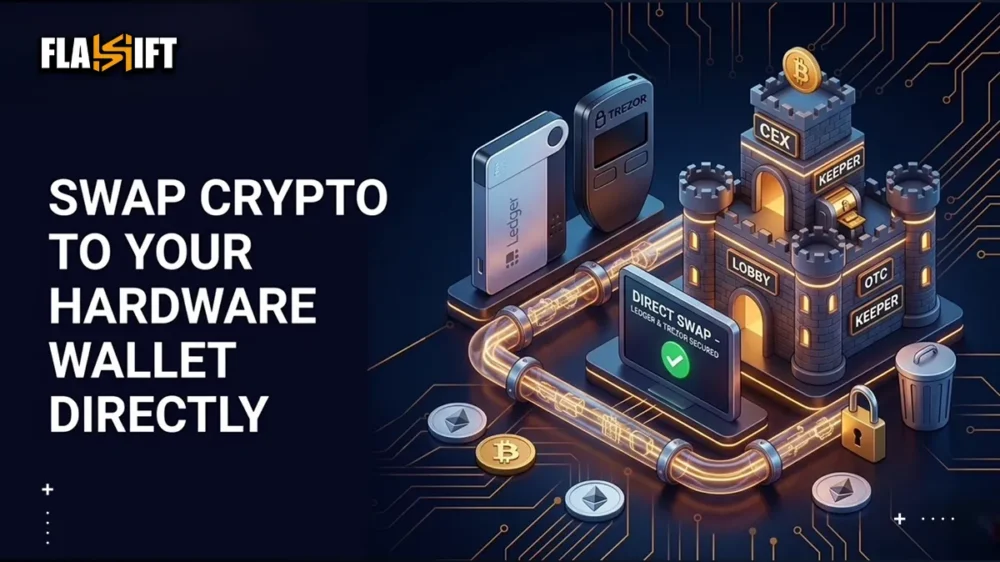
The year 2026 has brought unprecedented liquidity to the crypto markets, but it has also introduced a harsh reality for high-net-worth investors: centralized exchanges (CEXs) are no longer just trading venues; they are aggressive regulatory checkpoints. For whales and long-term HODLers, leaving assets on a custodial exchange—even for the few minutes required to execute a trade—violates the core ethos of decentralized wealth. The modern standard for high-volume traders is the Sovereign Swap. This architecture allows…

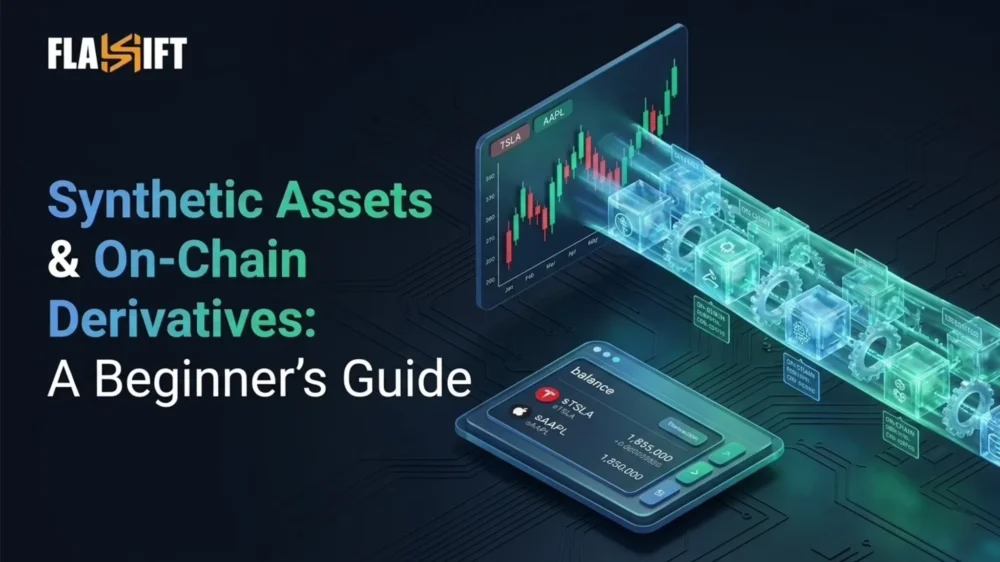
For professional traders and DeFi developers, the primary challenge is no longer understanding what a tokenized contract is, but mastering how to issue cross chain synthetic assets safely, instantly, and without exposure to predatory market friction. When deploying capital into on-chain derivatives, utilizing legacy, single-chain protocols restricts your agility. This data-driven guide bypasses the beginner jargon to focus on advanced cross-chain state updates, liquidity routing, and the modern mechanics of securing pristine non-custodial collateral to…

The year 2026 has marked a turning point in financial history. With the MiCAR (Markets in Crypto-Assets Regulation) now in full effect across Europe, the “safe” centralized exchanges of yesterday have become the data-tracking hubs of today. For users in the UK and EU, the choice is no longer just about which coin to buy, but how to user No-KYC Swap Alternatives to maintain Self-Custody in an era of total transparency. How MiCAR is Changing…

If you hold privacy coins on a centralized exchange, your capital is in immediate danger. Aggressive MiCA and FATF mandates have triggered a wave of privacy coins regulatory risks delisting in 2026. Leaving your privacy assets on these custodial platforms now guarantees sudden account freezes, mandatory proof-of-source interrogations, and total liquidity lockups. Privacy is not dead; it has simply migrated to sovereign, decentralized execution layers. You do not have to surrender your assets or your…

If you have to ask for permission to withdraw your own money, it isn’t yours. In April 2026, US traders are learning this the hard way. As “Predictive Risk Scoring” turns major exchanges into digital gatekeepers, your “Verified” account is no longer a badge of trust, it’s a liability. If your capital is sitting on a CEX, you’re not trading; you’re holding a permission slip that can be revoked at any moment. Financial sovereignty isn’t…

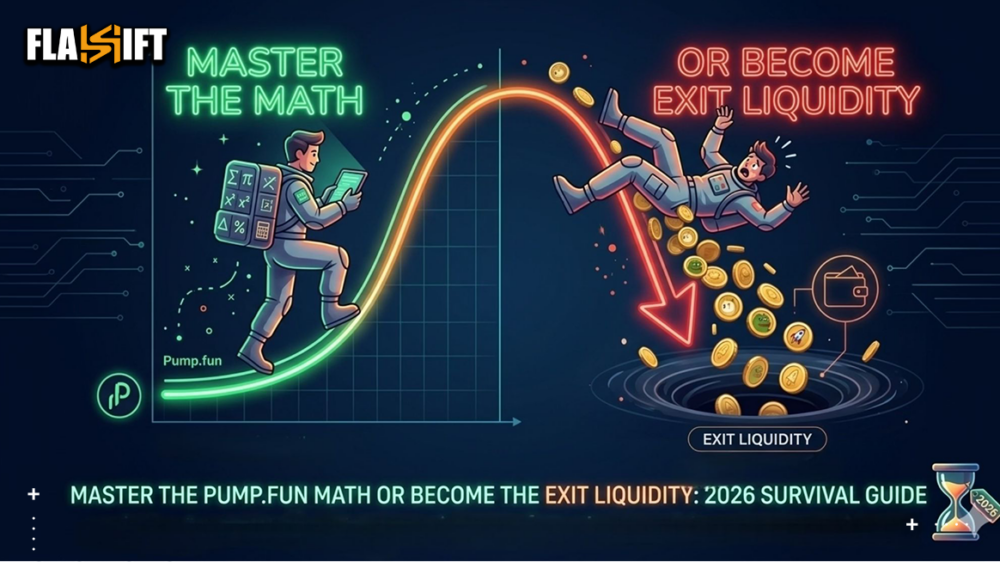
The era of “blind luck” in the Solana ecosystem is completely dead. While Pump.fun remains the dominant launchpad framework, the market in 2026 has matured into a game of pure mathematical speed. Elite traders are no longer guessing a coin’s viral appeal; they are calculating pump.fun bonding curve mechanics and front-running the exact millisecond of the Raydium migration. If you do not understand the exact pump.fun bonding curve formula governing the virtual execution phase, you…

Until recently, professional traders faced a frustrating bottleneck: jumping between DEX aggregators for on-chain swaps and entirely different platforms for cross-chain transfers. This fragmentation not only costs execution speed but also forces users into sub-optimal exchange rates and unnecessary wallet connection risks. If your cross-chain strategy still relies on opening multiple tabs to compare prices or leaving funds in vulnerable lock-and-mint bridge contracts, you are trading in the past. The industry standard is rapidly shifting…