
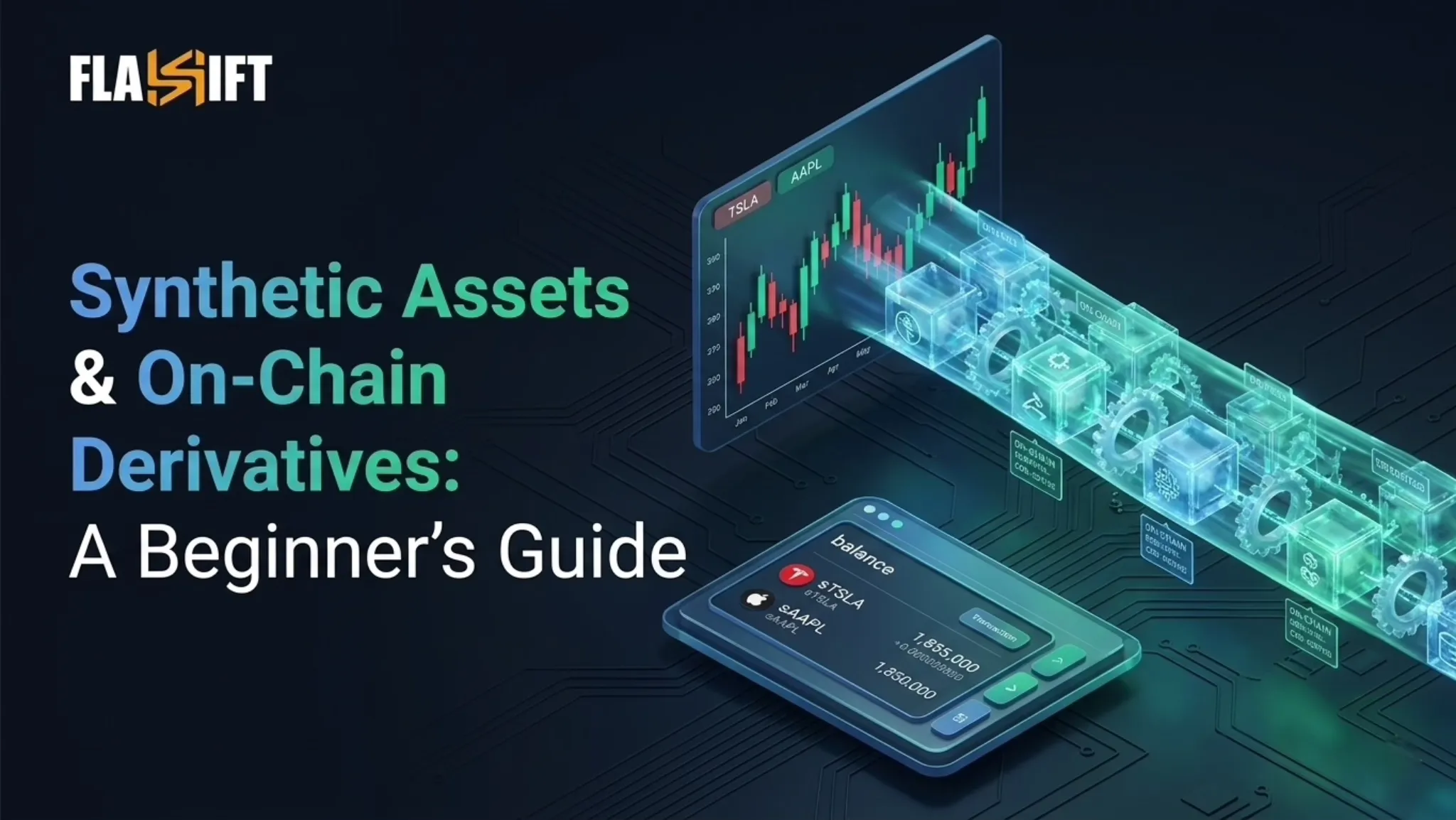
For professional traders and DeFi developers, the primary challenge is no longer understanding what a tokenized contract is, but mastering how to issue cross chain synthetic assets safely, instantly, and without exposure to predatory market friction.
When deploying capital into on-chain derivatives, utilizing legacy, single-chain protocols restricts your agility. This data-driven guide bypasses the beginner jargon to focus on advanced cross-chain state updates, liquidity routing, and the modern mechanics of securing pristine non-custodial collateral to power your synthetic portfolio.
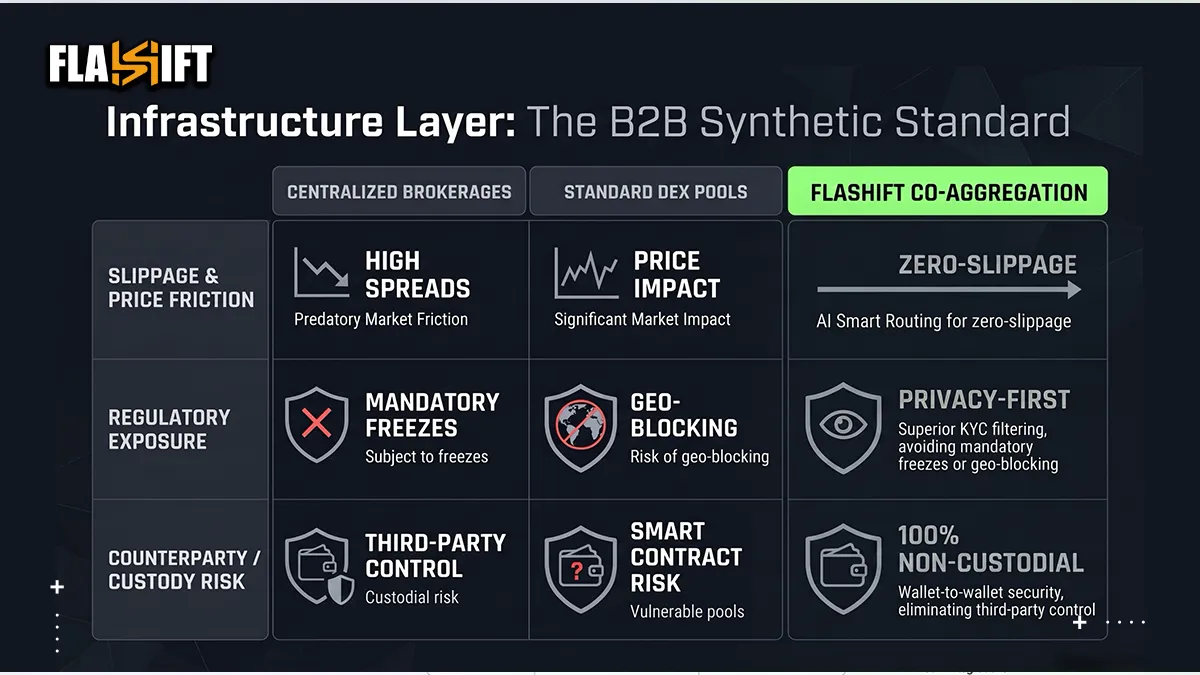
📊 Quick Overview: Synthetic Assets & On-Chain Derivatives
| Infrastructure Layer | Slippage & Price Friction | Regulatory Exposure | Counterparty / Custody Risk |
| Centralized Brokerages | High hidden spreads & broker fees | Absolute (Mandatory KYC / Freezes) | Full Custodial (Third-party control) |
| Standard DEX Pools | High price impact on large RWA swaps | Front-end geo-blocking vulnerabilities | Non-Custodial (Smart contract dependent) |
| Flashift Co-Aggregation | Zero-Slippage via AI Smart Routing | Privacy-First (Best in KYC Filtering) | 100% Non-Custodial (Wallet-to-Wallet) |
🚀Technical Architecture: How to Create Synthetic Assets Cross-Chain
The maturity of modern decentralized finance is directly tied to its integration with tangible, real-world value. Today, identifying real-world synthetic crypto assets with resilient liquidity structures is a core prerequisite for robust portfolio hedging.
The market has shifted toward high-yield tokenized treasuries, sovereign debt instruments, and advanced synth asset bridging to real world commodities. Sophisticated traders are moving away from centralized brokerages to hold synthetic exposure to physical gold (like PAXG), silver, and global fiat indexes straight within their self-custody infrastructure. This multi-chain growth requires deep routing capabilities to ensure that price feeds synced by decentralized oracles remain perfectly balanced across different networks without encountering liquidity blockades.
💡 Mechanics of On-Chain Real-World Assets (RWAs)
In modern decentralized finance, identifying real world synthetic crypto assets with robust backing is essential for institutional-grade hedging. A synthetic asset functions as a cryptographic token that mirrors the exact price performance of a traditional asset without requiring direct ownership of the physical underlying commodity.
This flawless tracking is achieved through decentralized oracle networks. These high-frequency data feeds secure a continuous price stream from global traditional markets directly to the blockchain. If the spot price of gold shifts in London or New York, the smart contract automatically recalculates the on-chain derivative’s value, enabling seamless synth asset bridging to real world commodities with zero centralized intermediaries or execution latency.
⚠️ Advanced Risk Management parameters
While routing capital into on-chain derivatives offers unmatched financial autonomy, executing these strategies requires strict adherence to institutional risk parameters:
- Dynamic Liquidation Thresholds: Synthetic protocols require over-collateralization. If the crypto assets locked as your security deposit (such as ETH or USDC) experience a sudden market drawdown, the underlying smart contract will trigger automated liquidations to protect system solvency. Traders must maintain a healthy collateralization shield to prevent forced closures.
- Oracle Latency and Price Friction: During micro-seconds of hyper-volatility, poor routing can expose your trade to temporary oracle delays. To mitigate this risk, ensuring your collateral is acquired via an AI routing engine for cross-chain swaps is vital to secure the most precise, slippage-free entry rates.
- Regulatory Structural Friction: As global compliance frameworks evolve, centralized front-ends frequently restrict access to synthetic markets. Utilizing decentralized, non-custodial aggregators remains the single most effective strategy to maintain borderless access while keeping your trading intent fully isolated from custodial intervention.
Liquidity Provision: Securing Pristine Collateral Without Intermediary Risks
To mint synthetic commodities or engage with advanced on-chain derivative contracts, your infrastructure requires high-quality, non-custodial collateral—typically in the form of native ETH or major stablecoins. Funding your Web3 wallet via traditional centralized entities introduces massive counterparty risk, unexpected compliance holds, and intrusive data tracking that delays execution.
🛡️ Sovereign Execution Checkpoint: Before deploying your cross-chain synthetic strategy, ensuring your collateral is clean and instantly accessible is paramount. Instead of routing through restrictive centralized venues, you can leverage advanced co-aggregation. The routing engine scans the entire market to pull the optimal rates from both top-tier DEX networks and instant non-custodial channels simultaneously. Secure your necessary collateral directly to your private keys with absolute privacy, zero KYC friction, and zero permanent contract exposure.
❓ FAQ:
Why use Flashift to get my collateral?
Flashift provides a privacy-first, non-custodial gateway. You don’t need to hand over your personal data (KYC) just to get the ETH or USDC required for your DeFi trades.
Do I need a broker for synthetic assets?
No. Everything is handled by smart contracts. You are your own broker.
What is the main benefit of on-chain derivatives?
Borderless, 24/7 access to global markets from any crypto wallet, without centralized permission.