
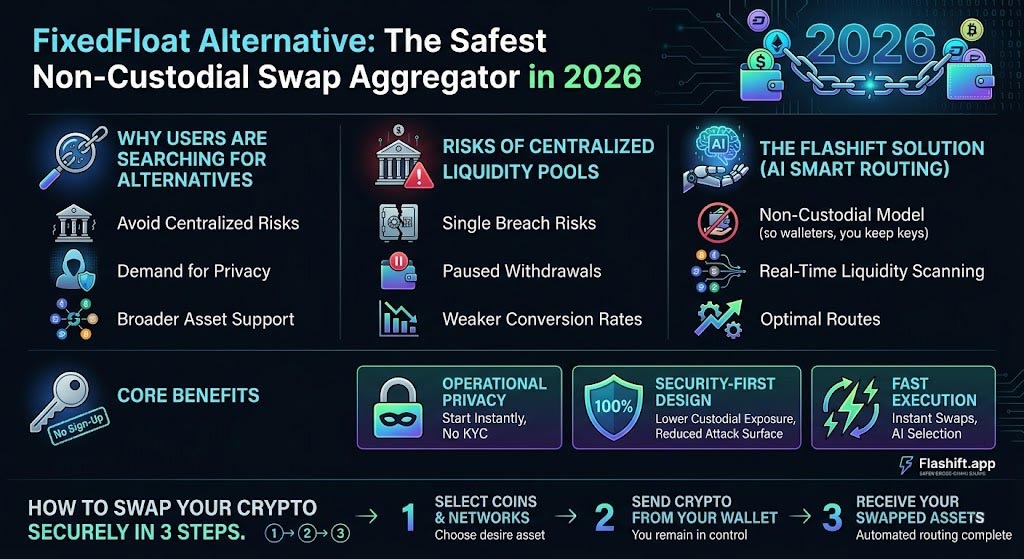
Today, users are paying much closer attention to security when choosing a FixedFloat alternative. Past concerns around centralized risk and platform incidents have made “who controls your funds” more important than ever.
The users’ goal is simple: swap crypto safely without exposing assets to unnecessary platform risk or complex account systems.
This is where non-custodial solutions stand out. Platforms like Flashift don’t hold user funds and instead route swaps through multiple liquidity providers. That means less exposure, faster execution, and more control over each transaction.
In this guide, we’ll look at the best non-custodial crypto swap options in 2026 and why security-first design has become the standard for modern crypto users.
🔍 Why Crypto Users Are Searching for FixedFloat Alternatives in 2026

In 2026, crypto users are becoming far more selective about No-KYC Swap Alternatives. Speed and rates still matter, but security and platform trust now play a much bigger role in decision-making.
One major reason users search for a FixedFloat alternative is risk exposure. After past security concerns and growing awareness around exchange vulnerabilities, many traders no longer feel comfortable relying on platforms that may become single points of failure.
Privacy is another factor. Users increasingly prefer platforms that reduce account dependency and avoid unnecessary monitoring during transactions. This has pushed demand toward non-custodial systems where users stay in control of their own wallets.
Asset support also matters more today. Modern traders move across multiple blockchains and want access to a wider range of cryptocurrencies without using several different services. That’s why platforms like Flashift are attracting attention as a more flexible FixedFloat hack alternative with broad asset coverage and cross-chain swap support.
As crypto adoption grows, users are no longer just looking for a place to exchange coins. They want to swap crypto safely, reduce custodial risk, and avoid unnecessary complications during the process.
⚠️ The Risks of Centralized Liquidity Pools
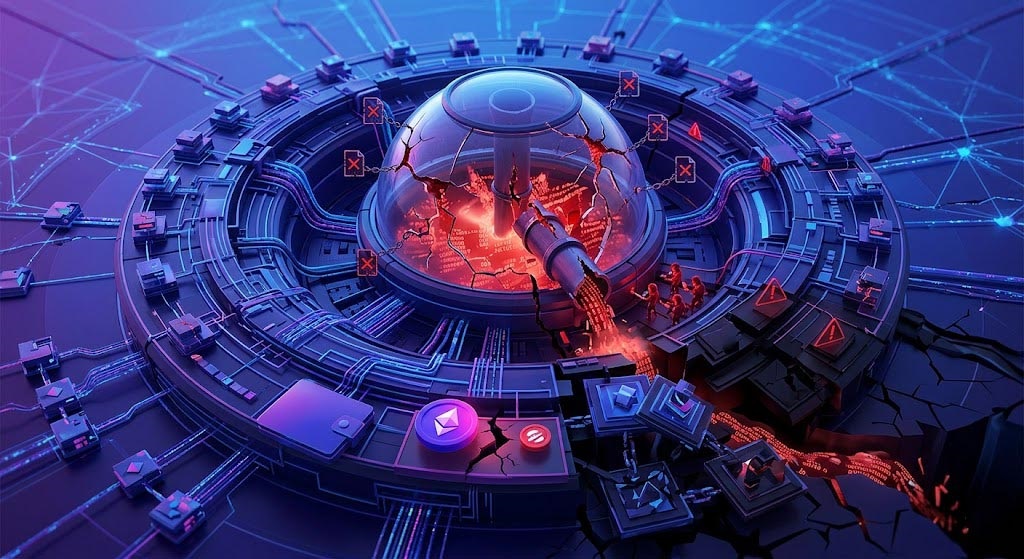
Centralized liquidity systems may look convenient on the surface, but they introduce several hidden risks that many users only notice during market stress or security incidents.
- A single breach can affect thousands of users at once
- Withdrawals may be paused during congestion or technical issues
- User activity is often easier to track and monitor internally
- Pricing can become less transparent during volatile market conditions
- Some platforms route swaps through internal wallets before completion
- Limited liquidity sources may lead to weaker conversion rates
This becomes even more problematic for cross-chain swaps, where users already deal with multiple networks and confirmation times. If one centralized system fails, the entire transaction flow can slow down or stop completely.
That’s why many traders in 2026 prefer non-custodial aggregation models that spread liquidity across multiple providers instead of relying on a single pool. Solutions like Flashift are becoming more attractive for users who want better flexibility, broader asset support, and a safer way to swap crypto across chains. [⚡Use Flashift once, then won’t leave it]
🛡️ Flashift: The Ultimate Secure Alternative (AI Smart Routing)
In 2026, crypto users are moving away from platforms that rely on fixed liquidity systems and custodial transaction handling. Modern traders want faster execution, broader asset access, and stronger protection against centralized risks. This is where AI-powered routing systems are changing the way non-custodial swaps work.
Instead of depending on one provider or one internal liquidity pool, Flashift uses smart aggregation logic to analyze multiple swap providers in real time. The system automatically selects efficient routes based on factors such as available liquidity, network conditions, execution speed, and conversion rates.
This approach improves flexibility during cross-chain swaps and reduces the probability of failed transactions caused by isolated provider issues. It also helps users access better execution paths without manually comparing exchanges themselves.
🔐 No-KYC, No Sign-Ups, No Custody Risks

One of the biggest advantages of Flashift is its non-custodial structure. Users are not required to create accounts, complete registration forms, or store funds inside a centralized platform before swapping.
Here’s why this matters technically:
- 🔑 Users keep direct control of their wallets during the swap process
- 🚫 Funds are not permanently stored on the platform itself
- 📉 Reduced custodial exposure lowers the impact of centralized security failures
- ⚡ Transactions can begin instantly without account approval delays
- 🧩 Less user data collection means fewer identity-related risks
From a security architecture perspective, this model reduces attack surfaces commonly associated with centralized exchanges. Traditional custodial systems usually maintain internal hot wallets, user balances, and stored account databases. These systems become high-value targets during exploits or infrastructure breaches.
Non-custodial routing works differently. Instead of holding long-term user balances, swaps are processed directly between wallets and liquidity providers. This creates a more distributed transaction structure with lower dependence on centralized storage.
Another important factor in 2026 is operational privacy. Many users no longer want to submit unnecessary personal information just to perform basic crypto swaps. A no-sign-up structure simplifies access while maintaining transaction efficiency across multiple blockchains.
Combined with AI smart routing, this makes Flashift a strong FixedFloat alternative for users who prioritize speed, asset accessibility, and safer swap execution without relying on centralized custody systems.
🔄 How to Swap Your Crypto Securely in 3 Steps
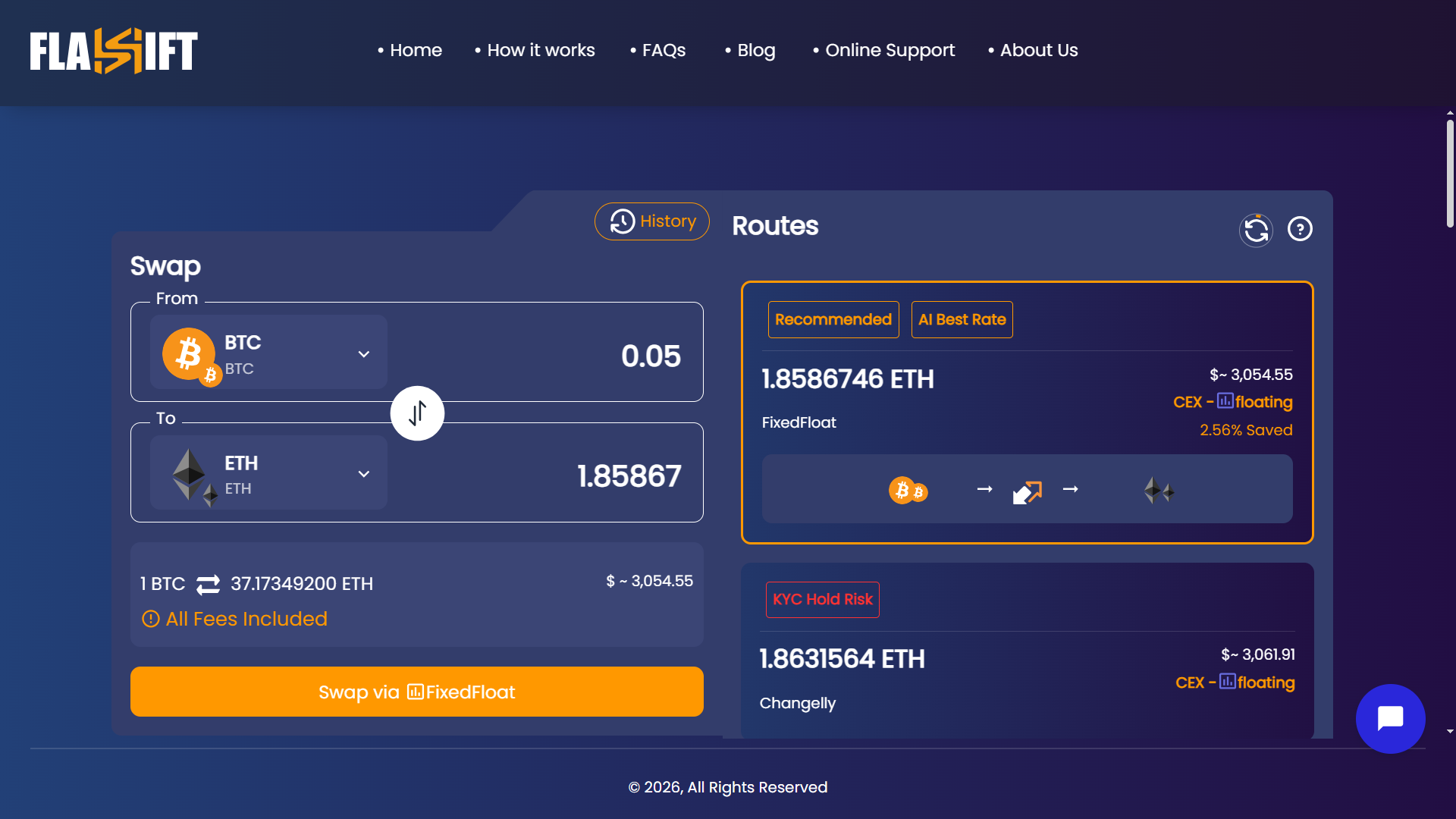
Swapping crypto securely should be fast, simple, and free from unnecessary complexity. With swap aggregators like Flashift, users can complete cross-chain swaps without registrations, custodial deposits, or manual bridge configurations.
1️⃣ Select Your Coins and Networks
Choose the cryptocurrency you want to send and the asset you want to receive.
Flashift automatically scans multiple providers and prepares optimized routing paths for the swap. Choose your desired exchange.
2️⃣ Send Crypto from Your Wallet
After confirming the rate, send your crypto to the generated address directly from your personal wallet.
Since the platform uses a non-custodial structure, you remain in control throughout the process.
3️⃣ Receive Your Swapped Assets
Once the transaction is confirmed on-chain, the system completes the routing automatically and sends the converted assets directly to your destination wallet with no manual intervention required.
🧾 Conclusion
In 2026, choosing the right swap platform is no longer just about rates—it’s about security, control, and transparency. As users move away from custodial systems and legacy exchange models, non-custodial aggregators have become the preferred way to swap crypto safely without exposing funds to unnecessary risk.
Flashift.app combines smart routing, broad liquidity access, and a no-custody structure to deliver faster and more flexible swaps across multiple chains (Thanks to its AI Smart Routing). For users looking for a reliable FixedFloat alternative or a safer way to execute cross-chain transactions, this approach offers a more modern and risk-aware experience.
As the market continues to evolve, the focus is shifting clearly toward platforms that prioritize user control and minimize friction from start to finish.
👉[Once you use Flashift, you’ll see a new world of exchanging and trading cryptocurrencies!]
❓ FAQ
- Why do some swap rates change right before I confirm the transaction?
Rates can shift because liquidity providers update pricing in real time. In 2026, most smart routing systems continuously scan multiple sources, so the final rate reflects the most stable execution point available at confirmation time.
- What makes a non-custodial swap safer than a centralized exchange?
Non-custodial systems don’t hold user funds. This removes the risk of exchange-level hacks, frozen balances, or internal misuse. Your wallet remains the only control point during the entire swap process.
- Why do some platforms still require KYC while others don’t?
KYC is usually tied to custodial infrastructure and regulatory compliance. Non-custodial aggregators avoid storing user assets, which reduces the need for identity verification during basic swaps.
- Can smart routing really improve swap execution quality?
Yes. Smart routing compares liquidity across multiple providers in real time. This helps reduce slippage, avoid weak liquidity pools, and improve the final output amount compared to single-source exchanges.
- What should I check before using any FixedFloat alternative?
Focus on three things: custody model, liquidity sources, and transparency of final output. Platforms that clearly show execution details before confirmation are generally more reliable for safe crypto swapping.