
Top 5 Privacy Coins in 2026 | If you are building a sovereign portfolio, relying solely on legacy assets is a high-risk strategy. Diversification into protocols with specialized privacy-tech is no longer an ideological choice—it is a mandatory risk-mitigation strategy.
Anyone who has worked with privacy coins has undoubtedly heard of Monero (XMR), Dash, and Zcash—three cryptocurrencies that have long been considered pioneers in the privacy coin space and still hold their positions among the top five in this category. In this article, we aim to explore five other privacy coins that have the potential for growth and increasing popularity among enthusiasts in this field. Stay with us.
Which Privacy Coin is Best for Use in 2026?
| Feature | World Coin (WLD) | Oasis (ROSE) | OriginTrail (TRAC) | Beldex (BDX) | Zano (ZANO) |
| Privacy Level | ❌ Low | ✅ High | 🟡 Moderate | ✅ Very High | ✅ Very High |
| Primary Use Case | Digital ID / Identity | DeFi & Data Privacy | Supply Chain Integrity | Private Payments & dApps | Private Transactions |
| Tech Highlights | Biometric verification | Confidential Smart Contracts | Knowledge Graph | RingCT, stealth addresses | Hybrid PoW/PoS, Atomic Swaps |
| Ease of Use | High (but centralized) | Medium (dev-focused) | Low (B2B-centric) | High (user-friendly apps) | Medium (light wallet support) |
| Community Support | Strong but mixed views | Growing rapidly | Institutional | Strong in Asia + dev focus | Small but loyal |
| Financial Anonymity | ❌ No | 🟡 Partial | ❌ No | ✅ Yes | ✅ Yes |
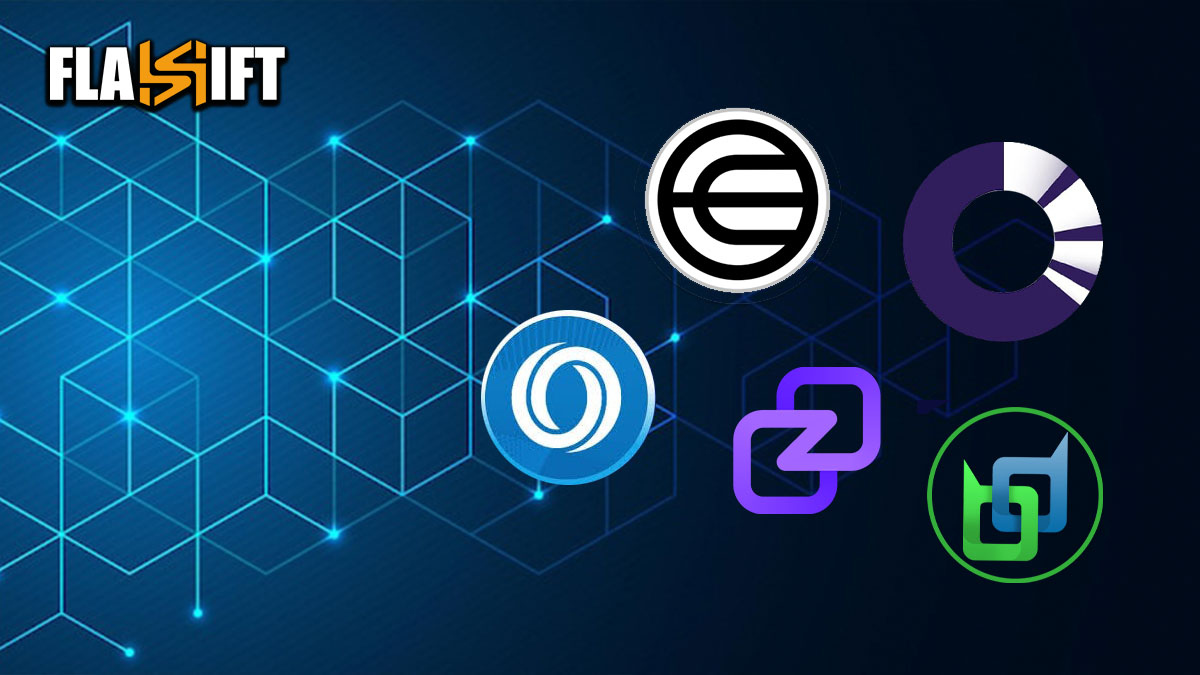
Top 5 Privacy Coins in 2026
- World Coin (WLD)
World Coin is fast emerging as a game-changer in privacy coins, emphasizing biometric identity verification and decentralized access. World Coin project aims to establish a global digital identity system, known as World ID, to verify human authenticity online, particularly in an era increasingly influenced by artificial intelligence.
- Oasis (ROSE)
Oasis Network is a privacy-focused blockchain network for secure sharing of data in addition to DeFi applications. With native confidential smart contracts and computing privacy data, Oasis attracts developers and investors equally to robust privacy solutions.
- OriginTrail (TRAC)
While not classically defined as a privacy coin, OriginTrail’s focus on safe and verifiable data transfer within supply chains grants it a unique place in privacy. Its decentralized knowledge graph offers the safety of confidential data while enabling transparency where necessary.
- Beldex (BDX)
Beldex combines utility with privacy, boasting private messaging, anonymous payments, and a privacy-focused dApp platform. With strong development and community support, Beldex is rapidly becoming a top privacy user choice.
- Zano (ZANO)
Zano is engineered with advanced cryptographic features to offer complete transaction anonymity and resistance to analysis. With its hybrid PoW/PoS consensus and mobile-ready design, Zano is a great 2025 privacy coin contender.
Read More: No-KYC Crypto Swaps: Why Privacy-Focused Traders Prefer Monero
Final Verdict: Beldex (BDX)
While Oasis and Zano offer strong technical foundations, and OriginTrail excels in enterprise data integrity, Beldex strikes the best balance between true financial privacy, everyday usability, and ecosystem development. It’s user-friendly, actively growing, and supports anonymous payments and secure communication, making it the top choice for individuals who prioritize privacy in real-world applications.
Read More: Privacy Tokens Are Back: Zcash, Dash, and Railgun Surge as Traders Revisit 2018 Narratives
Operationalizing Your Privacy Portfolio
The primary hurdle in $2026$ is not the assets themselves; it is the liquidity fragmentation. Moving between $ZEC$, $BDX$, or $ZANO$ across different networks while avoiding KYC-heavy centralized platforms is where most portfolios leak privacy.
To execute your strategy without creating a data trail:
- Avoid Centralized Rails: Do not use exchanges that flag privacy-focused transaction inputs.
- Use Non-Custodial Routing: Instead of moving your assets back to centralized order books, which triggers compliance reviews and multiple withdrawal fees, you can execute direct cross-chain swaps to settle assets straight into your offline cold storage.
- Maintain Sovereignty: Your execution layer should never hold your assets. You swap, you receive, you own.
Read More: Trading Monero (XMR): A Comprehensive Guide to Exchanging XMR with USDT, BTC, and ETH
Regulation Challenges for Privacy Coins in 2026

In 2026, privacy coins face growing regulatory scrutiny as governments and financial institutions worldwide intensify their efforts to combat untraceable transactions.
- Increased Delisting on Major Exchanges: Due to compliance concerns, many centralized exchanges have delisted or restricted the trading of privacy coins such as Monero (XMR), Zcash (ZEC), and Dash (DASH). This trend has only intensified in 2026, particularly in regions like the EU, South Korea, and the U.S.
- Regulatory Pressures from FATF: The Financial Action Task Force (FATF) continues to push its Travel Rule, which requires exchanges to collect and share customer information for transfers above certain thresholds. Privacy coins, by design, obscure this data, making compliance nearly impossible.
- Government Bans and Restrictions: South Korea and Japan have already prohibited listing privacy coins in exchanges. The EU’s MiCA regulation has raised concerns about privacy-preserving technologies, potentially leading to tighter restrictions.
- Shift Toward Decentralized and KYC-Free Platforms: Due to increasing restrictions, many users have migrated to decentralized, non-custodial platforms which allow trading without identity verification.
Conclusion: The Future of Privacy Coins in 2026
As digital surveillance increases and financial data becomes more exposed, the demand for privacy coins rises. In 2025, while Zcash, Monero and Dash remain key players, emerging projects like Beldex, Zano, Oasis, World Coin, and OriginTrail reshape the landscape. Each brings a unique approach to privacy—whether through anonymous transactions, confidential smart contracts, or secure data sharing.
Among them, Beldex is the most practical and user-ready solution for those seeking real-world usability without compromising privacy. As regulatory pressures grow, these coins offer an alternative and represent the future of financial freedom in an increasingly transparent world.
FAQ
- Why are some privacy coins not truly anonymous despite being labeled as such?
Some only offer optional privacy features or rely on outdated encryption. True anonymity requires default obfuscation of transaction data, like Monero or Beldex. - Can privacy coins still be used on decentralized apps (dApps) or DeFi platforms?
Yes. Coins like Oasis and Beldex are building ecosystems that integrate privacy into DeFi, allowing private staking, messaging, and dApp interaction. - Is World Coin an anonymous privacy coin?
Not in the traditional sense. It uses biometric identity (iris scans), which is controversial in privacy circles. Its focus is on digital identity, not transaction anonymity. - How do lesser-known coins like Zano differ from more established ones like Monero?
Zano offers lightweight wallets, mobile-first infrastructure, and hybrid consensus, making it more accessible and scalable than Monero for some use cases. - What happens if privacy coins are banned in my country?
You can still access them via non-custodial platforms like Flashift or through decentralized wallets, but you should understand local regulations to avoid legal issues.